


 Tree: A Life Story by David Suzuki
My rating: 4 of 5 stars
There is an idea that if you know something well enough—if you spend some time learning about it and seeing all of its internal and external connections—you cannot help but loving it. I’m not entirely sure this is true, though I’d like to believe it is. I think it is an important aspect of environmentalism and likely the reason why so many scientists become conservationists: sometimes it is only by careful and deliberate study that the inherent value of an organism or system becomes apparent.
I also think this is the point of good nature writing: making the reader take a long look at something. Really study it. Get to know deeply. By doing so, rational analysis becomes something more: it becomes a form of art, of contemplation, maybe even a form of worship. It certainly can become a form of excellent literature and, in the case of this book, an opportunity for combining knowledge, connection, and empathy.
Trees fascinate me. They are ubiquitous and prosaic, and yet they’re also ancient, silent, and somehow unknowable. Have you ever stopped and simply considered how large they are? How a single specimen can tower over your home physically and cast its sheltering shade over your entire life temporally? And yet, how much do most of us really know about them? What’s going on inside the bark and beneath the soil? What unseen networks do they play a role within?
I write about trees. I titled my first collection of short stories after them. And for a long time I’ve been looking for a book that captures what they are and more importantly teaches me things about them that I didn’t know. This book, by David Suzuki and Wayne Grady, went a long way toward filling that tree-shaped hole in my head I’ve been walking around with. Grady, a Canadian science writer, and Suzuki, a zoologist, academic, and environmentalist, team up to do something that at first blush appears fairly simple: they want to write the life story of a single tree, in particular a Douglas-fir growing outside a British Columbian cabin retreat.
Of course it’s not that simple. Trying to focus on one aspect of nature—let alone a single tree—is like falling down Alice’s rabbit hole. Grady and Suzuki use the life cycle of a single Douglas-fir, from germination to death, as a lens to explore trees in general, the zoology and botany of British Columbia, and the importance of forests throughout the world. Yet the single tree itself functions effectively as a unifying thread throughout the book, and of course along the way we get a wealth of information about the evolution, reproduction, growth, morphology, taxonomy, and mystery of trees.
Tree, A Life Story is a wealth of information, yet it is consistently readable and compelling. As with any good nature book, we learn the object itself and we also learn the impossibility of seeing the object alone or isolated. We get a glimpse of the essential connectivity of trees with each other, with wildlife and fungi, and with other plants. What was most surprising to me—apart from the new facts I picked up, like the fact that scientists are still not quite sure they have a handle on how trees pull water and nutrients up hundreds of feet into the air from roots to canopy—was the way the tree itself became a character of this story. With trees, the authors explain, there is no definite moment of death. A tree’s life is in many ways a long dying. But reading the final acts of this particular tree’s life, I found myself—in a twist on much conservationist writing that witnesses to the loss of entire species or habitats—mourning an individual. Trees are monuments, they’re like rooted ships sailing not through space but through time. And we so often only see still images of their lives. To see the whole story spelled out from beginning to end was quite wonderful and surprisingly moving.
Trees still fascinate me. After reading this book I know them a little better. I also know (as with so much) that to truly understand them I’d need to devote a career to their study. But every little bit helps. Now maybe I love them a little better as well.



My rating: 2 of 5 stars
I wanted something soft to read for the flight over the Atlantic and back. I knew I liked Gaiman’s short fiction, and I had heard good things about some of his novels. When I ducked into the library to grab a book for the trip, Neverwhere was the only Gaiman novel I could find. It had an epigram at the beginning by G. K. Chesterton, which was an encouraging sign.
As it turned out though, reading Neverwhere for me was like climbing up a hill. If it wasn’t the only book in my backpack, I would have put it down several times during the first half. It’s not that it wasn’t good. The first chapter was compelling. It’s just that it wasn’t great, and yes– I’ve gotten that picky about the novels I read. After the pleasant surreality of the first chapter, the only thing drawing the story along was how bizarre and weird London Below, the mysterious and magical realm that exists somehow beneath or beside or behind the real London, was. And London Below really wasn’t that whimsical or bizarre. It was London viewed through the lens of Chesterton, assuming that the picturesque and odd names of London Underground stops corresponded to actual, physical truths. Black Friars at Black Friars. Etcetera.
It is fun. And Gaiman is a good writer. But the strange nature of the world itself– which never really seemed to have teeth or take on a deep characterization– wasn’t enough. It reminded me very much of Mirrormask, Gaiman’s Labyrinth-like movie that I finally turned off because one bizarre and lovely scene after another just wasn’t enough to make a compelling story. Apart from that, the main character– a normal guy with a normal job and a normal fiancee, who is pulled into London Below after an act of kindness to another protagonist– spent the first half of the book whining about how weird and scary everything in London Below was and how he just wanted to go home. Not terribly endearing.
So like I said, an uphill climb. Again though, Gaiman is a good writer. The dialogue was only unbearably trite in a few places. There were a couple interesting characters, a few good, solid twists, and a fine resolution. And about halfway through, the story found its feet or I just got swept up in the momentum of it, and the second half of the book was a satisfying read. But not terrific. Not terrifying or wonder-inducing, two of the things I’ve come to expect from Gaiman. Perhaps the surreality that is Gaiman’s distinct voice comes across most effectively in short works. Or perhaps it was just because this was his first novel. And we all know the danger of evaluating an author on his first novel. (Anyone remember Wolfe’s Operation Ares?)
In sum, Neverwhere felt like an exercise, like a solid writer seeing what it was like to write a long work of fiction. There was nothing in here to make one catch one’s breath, to genuinely frighten or awe. There was much to make one smile, a bit to make one groan, and a lot to pass the time in an airport, but it’s not a book to change your life.
Unless, of course, I’m wrong and it does. Because magic sometimes works like that.
My rating: 4 of 5 stars
Many of us who believe that true magic lies in stories know and love Gaiman for his work on Sandman. Sandman itself was built of stories. That was a large part of the wonder of it. But it was still an epic, and I had never gotten around to exploring Gaiman’s short stories.
I’ve had the goal of doing so for a long time, especially as Gaiman is known as a huge fan and protégé of my very favorite crafter of short stories, Gene Wolfe. (In fact, the only time I’ve ever met the two of them in person they were interviewing each other at a Chicago Humanities Festival event several years ago.) I haven’t had much time for reading fiction lately though, so this was a low-priority, long-term goal.
But then my wife brought this book home from the library, and I had a lazy Saturday. And M for Magic is definitely a Saturday book. It’s a single-day read. Don’t take it along for a week’s getaway by the lake (or at least, don’t take only it along). These stories are quick, lovely, and melt-in-your mouth. I could say other things as well. I could say they were dreamlike (as you would expect from Gaiman), haunting, gorgeous, and practically flawless. But I might sound a bit gushy, something I try to avoid.
This particular anthology was built out of stories Gaiman chose for young-adult audiences, but they don’t feel like kids’ stories. This is part of Gaiman’s art, which he has used to good effect in works like his movie Coraline or his children’s book Wolves in the Walls: the ability to tap into some of the things that make childhood filled with equal parts wonder and fear.
There are a lot of voices echoing around in the corners of this anthology. The title is a self-admitted tip of the hat to Bradbury, whose voice haunts works like “October in the Chair” and “How to Talk to Girls at Parties” (which holds the only whiff of science fiction in what is an otherwise straight fantasy collection). Lafferty is clearly laughing through the background of “Sunbird,” one of my favorites in the anthology. And there are strains of Beagle’s Fine and Private Place throughout the longest story in the batch, “The Witch’s Headstone.”
Not to say any of this work is derivative. It is not. We all build our stories on the backs of what we’ve read and loved. And there are pieces in here that are completely unique, with a voice of cats and railroad beds and England and magic that is Gaiman himself, un-distilled, as in “Troll Bridge,” “Chivalry,” and “The Price.” With the exception of the first, bumpy story in this work, nothing here disappointed. All of my other “to read” Gaiman anthologies just climbed up a notch on my list.
If you need a breath of fresh air, and you want to open a window in your skull letting in a breeze on which the metallic tang of rain and the heavy scent of graveyard flowers are mingled, read this book.
 The Idea of a Christian College by Arthur F. Holmes
My rating: 4 of 5 stars
I’m still not convinced there is such a thing as “Christian scholarship.” A weak version of the definition of such a thing might be that it is simply the recognition that all scholars carry presuppositions and assumptions into their work. The Christian’s will be Christian and should have the same bearing as a materialist’s, as long as such presuppositions are acknowledged. A stronger version of the definition of Christian scholarship would be that because all truth is God’s truth, all real scholarship is Christian scholarship. Both of these seem to me so wide as to be non-definitions. At the end of the day, Christian scholarship is simply that which is produced by Christian scholars. Much of it cannot be (and should not be) distinguished from the scholarly work of a secular scholar. The only real difference is the life of the person creating it.
In this respect, to me it seems that more important than the question of what is Christian scholarship are questions of what a Christian scholar looks like, what the role of scholarship in the life of the Christian is, and what sort of environment can best cultivate and articulate answers to these questions. It is the last of these questions that Arthur Holmes, a philosopher who spent the majority of his career at Wheaton College, sets out to explore in his book on the nature of Christian education at Christian colleges. (The cover of my edition says that this is a “Philosophy of Chr. Ed for Laymen,” but the cover also looks like it was designed by a seven-year-old, so I’m not sure how seriously to take that designation.)
For Holmes, Christian scholarship depends on the integration of faith and learning. This can happen in many different contexts, but Holmes is writing specifically for one context: that of a Christian liberal arts college. The distinction between a liberal arts college and vocational schools—seminaries or Bible colleges, for instance, in the Christian tradition—is a very important one. A liberal arts education, Holmes explains, is specially suited for the cultivation of Christian scholarship, because it is here that careful philosophical thought is nurtured and Christians develop the tools for a critical examination of both their own assumptions and those of others. A Christian liberal arts college needs to be a place where the virtue-forming aspects of education are emphasized: not “what can this education do for me?” but “what will this education do to me?”
This is a slender, highly accessible volume, similar in size and scope to the more recent “reexamination” of the topic (with the same title) by Reams and Glazer that I reviewed not long ago. Perhaps because I read the Reams/Glazer work first, there was much of the Holmes volume that did not seem new (though Holmes’ prose is sharper, and his philosophical training shows through to good effect in comparison to the latter volume). The primary point of departure between Reams/Glazer and Holmes is that Holmes focuses on a very specific type of institution, while Reams/Glazer attempt to update and expand this to the “Christian research university.”
Holmes’ book, though originally written in the 70s, remains a very relevant challenge and warning to Christian higher education today. This is encapsulated in a quote that Reams and Glanzer re-use as an epigram for one of their own chapters:
A community that argues ideas only in the classroom,
a teacher whose work seems a chore,
a student who never reads a thing beyond what is assigned,
a campus that empties itself of life and thought all weekend,
an attitude that devaluates disciplined study in comparison with rival claimants on time and energy,
a dominant concern for job-preparation
—these can never produce a climate of learning.
At least from my experience, these warnings ring very true.
I found his articulation of the purpose of a liberal arts education most compelling:
The question to ask about education, then, is not, “What can I do with all this stuff anyway?” because both I and my world are changing, but rather “What will all this stuff do to me?” This question is basic to the concept of liberal arts education.
I want my students to understand this. The goal of education is not to present certain bodies of information by the most entertaining, engaging, and effective means possible. There’s nothing wrong with doing this, but that’s vocational training. A liberal arts education is about beginning a conversation—with scholars and texts and ideas—that will continue for life. Not with the goal of getting a certain type of job or certification but with the goal of becoming a certain kind of person.
Holmes also has vital things to say about academic freedom at Christian colleges and the balance between remaining a community of faith and yet not existing to indoctrinate students into a particular school of thought: A college is Christian in that it does its work in a Christian way, not by encouraging an unthinking faith to counterbalance faithless thought. Students and faculty must have the freedom to question and explore with diligence, reason, and humility. In a Christian college this ideal takes place in the context of community. Liberty without loyalty is not Christian, but loyalty without the liberty to think for oneself is not education.
I’d like to think most Christian college administrators and faculty are familiar with this book. I’d really, really like to think that. In the meantime, I’ll be asking my honors students to read portions of it in the fall.
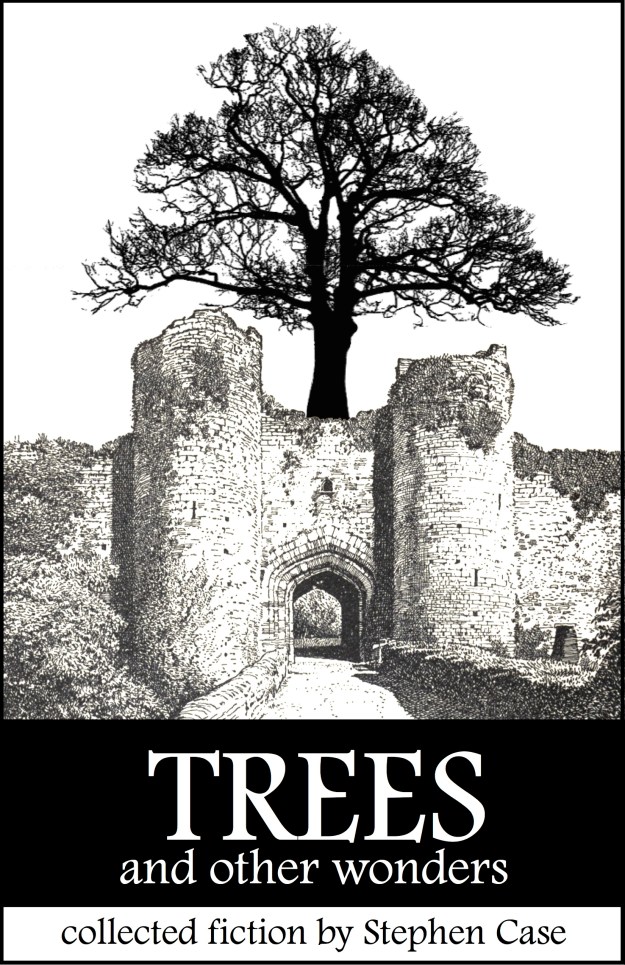
After I had published ten stories in various print and electronic magazines– at least one of which was published on another continent and many of which were quickly out of print– I figured I’d collect them all and try my hand at an anthology. Here they are. Ten of my published pieces from 2008 to 2013, along with two unpublished stories that I felt were worthy of inclusion. This was my experiment with electronic publishing. Currently the work is only available on Kindle, though Kindle as a platform can be downloaded for free on pretty much any operating system. A few people have asked me about getting a print copy. As of right now, I haven’t spent enough time on Createspace to get one worked up, and I haven’t been very pleased with the quality of the print-on-demand books I’ve seen. I did the cover myself and had fun creating an afterword explaining a bit about each piece. I haven’t gotten much feedback, though there are a few nice reviews on Amazon. The one print review I garnered was published in the Australian magazine Andromeda Spaceways Inflight Magazine. I thought it said some pretty nice things, which I’ve quoted below: “There’s a richness of the imagination here, a calmly-measured pace, a solidity. . . . There’s a vivid quality to his writing, and an underlying ability to evoke wonderment at the worlds or tableaux pictured within these pages. There are echoes, too, of a Golden-Age-anything-is-possible kind of sensibility to many of these stories. . . . Case has produced a collection in which almost every story reads like a fable, the moral of which is a secret the reader may hope to discover before the end. There’s an easy acceptance of the fantastical, a hint of the impossible.” I like that. If you’re interested, you can get a copy here.


 Stephen Reid Case