Category Archives: Reviews

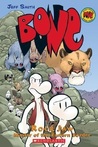
Bone

Bone, Vol. 5: Rock Jaw, Master of the Eastern Border (Bone, #5)Bone, Vol. 5: Rock Jaw, Master of the Eastern Border by Jeff Smith

My rating: 4 of 5 stars

It’s very hard not to like BONE. When people want to know a good place to start as far as graphic novels go, this is always near the top of my list. Especially if the person who is asking has kids or is a kid. Because besides being heart-warming, adorable, compelling, humorous, and well-drawn, BONE is also pretty wholesome. Imagine Mickey Mouse, Goofy, and Donald (or rather, Uncle Scrooge) stumbling upon an enchanted valley where they get mixed up with dragons, rat-creatures, a princess, prophecy, etc., etc. And to add to that level of surreality, throw in some lovable Bambi-esque woodland creatures. Our heroes fighting alongside, for example, some orphaned turtles, raccoons, talking bugs, and possum kids. Yet the drawing and the story-telling make this Disney-meets-Lord of the Rings schtick work. And work as more than schtick. This isn’t simply a fantasy epic drawn through the medium of a cartoon. It’s cartoon characters– with all the slapstick and mayhem that entails– actually entering into a fantasy epic as characters (and of some depth) in their own right.

I’ve read BONE up through Volume 8, though it was a while ago. Our kids have gotten into them now, so I’ve had the chance to re-read them again up to Volume 5, and I’ll take completion of this volume as a chance to review the entire series so far. The Bone cousins– Fone Bone, Phoney Bone, and Smiley Bone (the loosely Mickey, Uncle Scrooge, and Goofy analogues)– were chased out of Boneville after one of Phoney’s schemes to get rich backfired, and at the beginning of Vol. 1 they find themselves in a strange valley and thrust into the center of a conflict that involves everything from a lost kingdom to cow races to an invasion of an army of rat-creatures. Epic really is a fitting description of what Smith does with these volumes. It takes a few volumes of the story to even get a complete picture of the conflict the Bones have found themselves in.

It’s whimsical without being flippant. Smith’s artwork runs the gamut from suitably cartoonish (the minimalist Bone cousins are in some respects ‘toons boiled down to their essential properties) to subtle (as in some of Fone’s dream sequences or the sweeping panoramas of the valley we’re occasionally treated to). Originally black and white, the volumes have been colored, and having never read the black and white versions I can’t imagine them without it. The colors are vivid and bring an additional depth and drama to the artwork.

Smith’s work is somehow, absurdly, a nod to both cartoons along the lines of Ducktales at its best and your standard sword-and-sorcery epics. And perhaps even more absurdly, it works incredibly well. Every character– including Phoney– is likable. The story continues to build in complexity and raise the stakes but in a well-paced manner without throwing out a huge web of characters or inscrutable backstory. By volume 5 we learn that the girl Fone has fallen for is the lost heir of a kingdom, that a Sauron-like power has return to threaten peace in the valley, and that Phoney’s money-making schemes coupled with the townsfolk’s gullibility spell trouble. And that Smiley has adopted a rat-creature cub. Where it will go from here is anyone’s guess, but one thing is certain: Smith proves that there’s nothing at all flat about two-dimensional characters.
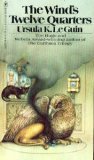
The Wind’s Twelve Quarters

The Wind's Twelve QuartersThe Wind’s Twelve Quarters by Ursula K. Le Guin

My rating: 2 of 5 stars

Le Guin convinced me with the first two volumes of her Earthsea Cycle that she was worth classifying with Tolkien and Lewis as a writer whose fiction stabbed at the deep, bright heart of things. But while Tolkien and Lewis were not known for their short fiction, Le Guin’s first publications were short stories. The Wind’s Twelve Quarters is what Le Guin calls a retrospective sampling of the first decade of her short fiction, spanning 1964 to 1974. I don’t know Le Guin’s complete bibliography, but it’s clear this collection contains the seeds of many of the novels for which she would ultimately gain such recognition.

The collection shows a growing author playing in the wide fields of science fiction and fantasy. Some of the tropes, especially in the early stories, are almost painfully worn now, the plots predictable, but it’s hard to tell whether this was because Le Guin was young or because the field itself was young and what seems prosaic now was ground-breaking then. The language is always layered, lovely, and descriptive, but stories like “Semley’s Necklace,” with its relativistic twist, or “The Masters,” with its theme of forbidden science, have not aged well. There were others stories– “The Good Trip” and “A Trip to the Head”– that were largely inscrutable to me. And “The Word of Unbinding” and “The Rule of Names” set out some of the groundwork for the later Earthsea work but without the depth or beauty held by the full-fledged novels.

Yet the collection got better and better the further I read. “Winter’s King” finally convinced me of something I had long suspected– that I need to read The Left Hand of Darkness. “Vaster than Empires and More Slow” was a truly excellent story about forests and a planetary intelligence that I’ve been trying to write for years. “The Ones Who Walk Away from Omelas” shows Le Guin at her best as the poser of riddles based on magic and morality, and “The Stars Below” was my favorite story by far: the haunting tale of an astronomer in a skyless world, looking for the light below that he once saw above.

The thing I keep coming back to in Le Guin is this sense of light in the universe, never far from the surface in her work. “Beyond all imagination,” the astronomer says in “The Stars Below,” “in the outer darkness, there is light: a great glory of sunlight. . . . There is no place bereft of light, the comfort and radiance of the creator spirit. There is no place that is downcast, outlawed, forsaken. There is no place left dark. . . . There is light if we will see it.” My suspicion is that this belief informs much of Le Guin’s work. There is a huge strata of speculative fiction, far too much to wade through in a single lifetime, but there are certain authors in whose work veins of gold and brightness run thick, and I think Le Guin is one of these.

More than Meets the Eye

Transformers: More Than Meets The Eye Volume 1Transformers: More Than Meets The Eye Volume 1 by James Roberts

My rating: 5 of 5 stars

This is it. All your best friends from childhood getting on a spaceship and heading out who-knows-where to have adventures. The main characters you’re tired of are out of the way. The second-stringers you always wanted to get more development are getting exactly that. With a real story. And humor. And fantastic artwork. This makes all the badness that was the live action movies go away. You can even ignore the disappointing Dreamwave reboot. I haven’t had so much fun with a comic since Titan Books reissued the original Simon Furman Marvel run, and if I’m completely honest– this is better.

Transformers: More Than Meets The Eye Volume 2 (Transformers (Idw))Transformers: More Than Meets The Eye Volume 2 (Transformers by James Roberts

My rating: 5 of 5 stars

I’ve read more Transformers comics than I would readily admit, always trying to get back to the wonder that was the finale of the original Marvel series scripted by Simon Furman. I’ve always been disappointed, until this series came along. I purchased the first volume for my son for Christmas and sat down to preview it. I quickly realized that a) this was not a comic for kids and b) it was amazing.

The second volume just gets better. Finally, someone actually building characters and writing stories that explore what it might be like to be a mechanical life-form involved in a six-million-year-old war. There are three “episodes” in this volume. The first involves Rachet solving a medical mystery on an Autobot outpost devastated by plague and actually uses the fact that Transformers transform as a pivotal plot point. The second involves the ship’s psychiatrist and a damaged patient, and– impossibly– makes you start to like Whirl. And the third– which shifts the focus from the primary players– surprises by taking some of the misfit Decepticons that usually sat forlorn in the bottom of your toy chest and making real characters out of them.

I still read more Transformers comics than I would readily admit, but now it’s usually the volumes from this series, which repay a careful re-reading.

Transformers: More Than Meets The Eye Volume 4Transformers: More Than Meets The Eye Volume 4 by James Roberts

My rating: 2 of 5 stars

I have been following this latest (and by far best) comic incarnation of the Transformers since it began, and with each volume I have been more impressed. Finally real story-telling and fantastic artwork combined to bring my favorite characters to life once again. This volume though was the first that disappointed. It was still quite good, and I liked it even better on the second read, but I have some major complaints:

1. The artwork. Not up to the standards of the previous volumes. Milne’s name was on the spine, but so were a few others, and it made me realize how much the previous storytelling has been married to the artwork. There are some things you just can’t do well without the art to back it up. The final scene of the “guys night out” issue, for instance, with Cyclonus teaching Tailgate ancient Cybertronian ballads at a table in an empty bar. It just doesn’t work if the art isn’t strong enough to carry it, and it wasn’t.

2. The resolution of the Overlord story arch. This had been building for a while, and the issue leading up to the final confrontation built it even more (and was perhaps the most effective issue in this volume). But then, when he finally faced off against the crew, it was over so quickly, and a good part of the action happened off panel. I felt we were entitled to more here. There were deaths, but it was that of a minor character that I found the most effective. Later, the ship dropped five coffins, but we never even really learned who.

3. The drama. I know all these characters have been together on a ship for quite a while now, but the drama is starting to get old. If you’re going to hang so much on the relationship between Chromedome and Rewind (which, to be fair, is quite well done), then ease back on everyone else. Magnus opening up to Swerve. Tailgate’s attachment to Cyclonus. Rodimus’s not growing up. Ratchet and Drift’s love-hate thing. I love it that these characters are being developed, but this volume in particular just seemed to be laying it on a bit thick.

None of this, of course, will stop me from scooping up Volume 5 as soon as possible.

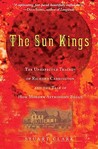
The Sun Kings

The Sun Kings: The Unexpected Tragedy of Richard Carrington and the Tale of How Modern Astronomy BeganThe Sun Kings: The Unexpected Tragedy of Richard Carrington and the Tale of How Modern Astronomy Began by Stuart Clark

My rating: 3 of 5 stars

I don’t get to read a lot of popularizations in the course of my research on nineteenth-century astronomy, so when this one came across my desk I was on the one hand excited about a change of pace (“captivating, fast-paced” says Dava Sobel on the cover) and on the other figuring I’d be skimming much of it and rolling my eyes a lot. I tend to do this with books that have long and overly-dramatic subtitles like “The Unexpected Tragedy of Richard Carrington and the Tale of How Modern Astronomy Began.”

I was half right. I did indeed do a lot of skimming, but I also did much less eye-rolling than I anticipated. Clark weaves a compelling tale, even if you don’t consider an understanding of the dynamic Earth-Sun relationship (think SOHO and Spaceweather.com) to be the beginning of modern astronomy. (I don’t.) The book is a bit less than the subtitle makes it out to be, as I’m still not  sure what Carrington’s “unexpected tragedy” was or how it relates to the scientific quest to understand the Sun’s interaction with the Earth, but it was a quite enjoyable romp through the world of Victorian astronomy.

Because it’s such an interesting place, Victorian astronomy, you almost can’t help to tell a compelling story if you go into it with some historical grounding and a flair for narrative. Clark treats one aspect of what was happening during this period: the development of solar astronomy. At the beginning of the 1800s, no one had any idea what the structure of the Sun was or how it generated its energy. One prevailing theory was that it was composed of a solid (and possibly inhabited!) core surrounded by a luminous atmosphere. Sunspots were rifts in this solar atmosphere. Clarke recounts how a series of dedicated astronomers– both professional and amateur– deduced a link between sunspots, the solar cycle, and effects on the Earth such as magnetic disturbances and auroral activity. Carrington is simply one of a cast that includes many important astronomers from this period, though Carrington’s drive and complex personal life, as well as his final demise (and this is likely the tragedy referred to in the subtitle, though seemingly unrelated to solar physics) make him an especially compelling figure.

Even if you’re not interested in the ins and outs of the interaction between the Sun and the Earth’s magnetic field or the advances in spectroscopy and photography that made the discoveries documented in this book possible, it’s the historical characters like Carrington who make studies in Victorian science so readable. Carrington was one of many amateur astronomers during this period who made their fortune in business (in Carrington’s case a brewery) and then used this wealth to build elaborate personal observatories where they could pursue astronomy as a hobby. Carrington devoted himself to solar astronomy and became a recognized authority on the subject. Besides him though, the pages are filled with other characters equally interesting: Airy, the Astronomer Royal and the story’s villain, storming about at Greenwich pursuing mathematical accuracy and largely dismissive of the new physical astronomy; de la Rue laboring in Spain to photograph the Sun’s atmosphere for the first time during a solar eclipse; Maunder taking up Carrington’s work after Carrington’s death and marrying the young mathematician hired to aid his calculations. Interesting characters pursuing interesting work. Maybe exaggerated or characatured just a bit, but they all come in and out of the story so quickly and in such succession that Clark can’t be blamed much for emphasizing their most interesting features.

It was an exciting time in astronomy, and Clark captures this. I’ll keep it on the shelf, because it would be ideal book report material for an undergraduate astronomy course. A historian will find Clark’s lack of careful documentation maddening and his rhetoric at times excessive or overblown, but a student (or reader) with a passing interest in the history of astronomy might find it a door to a truly remarkable period in history.

Earthsea vol. 1 and 2

A Wizard of Earthsea (Earthsea Cycle, #1)A Wizard of Earthsea by Ursula K. Le Guin

My rating: 4 of 5 stars

The blurb on the book said Le Guin was to be ranked among Lewis and Tolkien, which was probably why the tattered paperback had survived through so many shelf purges even though I had never yet read it. I finally did, and I think the blurb was correct. There’s a richness, a thickness to the prose coupled with a simplicity in the telling. It’s a simple story, lacking the complexities and mechanics of much of contemporary fantasy, but it’s better for it. It’s about growing up, friendship, learning wisdom, learning to take responsibility for one’s choices. It is also about magic and the wonder of a new world. I think the magic here might be one of the most compelling aspects, because again, it’s simple and somehow true without a bunch of trappings. Magic is about knowing things, about naming things truly. That seems right. I read it, and I should have read it when I was twelve, so I immediately passed it along to a bright twelve-year-old I know.

The Tombs of Atuan (Earthsea Cycle, #2)The Tombs of Atuan by Ursula K. Le Guin

My rating: 3 of 5 stars

Do you remember the scene in The Horse and His Boy where Shasta has to spend the night at the tombs outside the city of Tashbaan and how creepy it was and how Lewis never really explained the tombs but you knew they were old and foreboding and had entire dark stories of their own? The Tombs of Atuan, the setting for the second book of the Earthsea trilogy of the same title, have that same feel, but we as readers spend the greater portion of the book exploring their secrets. The book focuses on Arha, the Eaten One, the high (and only) priestess of the Nameless Ones who live in the Tombs. Taken from her family at a young age, the only life she knows is that of service to these gods almost forgotten by all outside the desert shrine that houses the Tombs.

The book starts slowly. Coming on the heels of the first volume, it almost lost me in the first two chapters. The main character of the previous novel, Ged, does not make his appearance until almost halfway through the book. But soon the mystery of the tombs themselves makes itself felt, and you’re drawn into Arha’s world and the Gormenghast-like rituals of the tombs and the labyrinth beneath. When Ged finally does show up, the sense of incongruity he represents as a foreigner and stranger to this dark world is effective and dramatic. From there, the plot unfolds quickly (though somewhat predictably).

Where was LeGuin when I was a kid looking for “Christian” fantasy? According to Family Christian Stores, this genre extended to pretty much Lewis, Stephen R. Lawhead, and Frank Peretti. Why wasn’t LeGuin there, bringing some literary depth to these shelves? If the theme of the previous volume, A Wizard of Earthsea, was growing into wisdom and true friendship, this one is redemption. Consider what Ged tells Arha upon leaving the Tombs: “You were the vessel of evil. The evil is poured out. It is done. It is buried in its own tomb. You were never made for cruelty and darkness; you were made to hold light, as a lamp burning holds and gives its light.”

Highly recommended, especially if you know a young person looking for some quality fantasy that speaks wisdom and goodness without beating you over the head with an explicitly Christian metaphor or allusion every other page.

Calendar of the Correspondence of Sir John Herschel

A Calendar Of The Correspondence Of Sir John HerschelA Calendar Of The Correspondence Of Sir John Herschel by Michael J. Crowe

My rating: 3 of 5 stars

John Herschel was the most famous scientist you never heard of. His name may sound familiar (especially if you’ve spent much time around me), but if so you’re likely thinking of his father, the astronomer famous for discovering the planet Uranus. Yet during his lifetime John Herschel, whose life and career spanned most of the nineteenth century, was Britain’s leading scientist (though the term itself is a bit anachronistic here) and a prime player in the international scientific community. I tell people he was the Stephen Hawking of the nineteenth century: an astronomer himself and the person people thought of when they envisioned the epitome of the scientific life. His generation considered him second to Newton in English science, so much so that he was buried next to the famous physicist in Westminster Abbey upon his death.

So why has no one heard of him today? There are lots of likely reasons. Though his career spanned decades, he was the last of the natural philosophers, the scientists who could still expect to have a mastery of all scientific fields. In astronomy, he was the first (and perhaps the only) to closely survey the entire northern and southern skies with a large optical telescope. But despite his influence he had no single large discovery (like his father’s planet), and his work was quickly overshadowed by the developments of spectroscopy and photography. In mathematics, he is largely the reason we use the Continental form of calculus instead of the Newtonian fluxions that held sway in England until the early 1800s, but the history of mathematical analysis doesn’t make great cover. He did important work in optics, chemistry, and photography as well, before they were considered separate fields. He coined the phrases snapshot, negative, and positive. His very omnicompetence may have helped efface his memory. He doesn’t have one specific theory or field of speciality to attach to him, like Maxwell or Darwin.

This breadth also contributes to another aspect of Herschel’s current anonymity: lack of a good biography. An adequate biography of Herschel would be a huge undertaking. The only attempt so far is a book-length sketch by a German librarian, which has been translated into English (Gunther Buttmann’s The Shadow of the Telescope). Herschel is starting to get more treatment though. He features prominently in Laura Snyder’s The Philosophical Breakfast Club and Richard Holmes’ Age of Wonder. In both of these however, Herschel himself is not the primary focus.

Several years ago Dr. Michael Crowe, a scholar on my dissertation committee, decided he would attempt a Herschel biography. What he realized very quickly though was that the amount of material that needed to be processed for such a project was immense. Correspondence to and from Herschel alone (not to mention his published works and his journals) amounted to more than 14,000 letters scattered in repositories, libraries, and archives all over the world. The first task would be to assemble and organize this correspondence, and the results (after a decade of work involving dozens of graduate students) was the massive Calendar of the Correspondence of Sir John Herschel.

This is not a book to be read straight through (unless you’re writing your dissertation on Herschel). It is truly massive, for one thing, weighing in at over 700 pages. And the content is not narrative but instead chronological summaries of all of Herschel’s correspondence. Every letter (known at the time) that he wrote or received has been read, dated, and summarized. And then indexed, which is perhaps the most useful thing of all. Because Herschel really was at the center of an immense network of scientists, and if you are interested in any aspect of what might loosely be termed Victorian science (and why wouldn’t you be, because this is the age of steam, electricity, exploration– science becoming the science we know today) you’re likely to find that Herschel corresponded with someone about it. Pretty much every big name (and several smaller ones) in the history of nineteenth-century science makes an appearance.

For a Herschel scholar, this is an absolutely essential resource. Besides a complete guide to his letters, Crowe also includes very large and very useful appendices listing all of Herschel’s published works as well as a bibliography of secondary works on Herschel up to the time of publishing (and while there is still no book-length treatment of Herschel’s life, the huge amount of papers and essays written about him shows his enduring influence on a wide range of fields). Though the book is currently out of print, the information entailed is available in an even more useful form, fully searchable and online, as a database hosted by the Adler Planetarium.

Venture forth: http://historydb.adlerplanetarium.org.

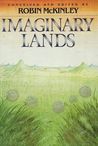
Imaginary Lands

Imaginary LandsImaginary Lands by Robin McKinley

My rating: 3 of 5 stars

My wife brought this anthology home because it was edited by her favorite author. I’ve never been enthralled by McKinley myself, but I recognized several of the authors in this collection and decided to give it a chance. Also, my wife made the task easier by marking those stories she felt were particularly enjoyable. So, my caveat to this review is that I’ve actually only read 5/9ths of the entire volume.

The highpoint for me was “Flight” by Peter Dickinson, which was quite wonderful. It was a well-crafted, meticulously “researched” essay exploring the relationship between an Empire and one recalcitrant tribe stretching over hundreds of years, from the Empire’s mythical origins through the Industrial Revolution, political revolution, and the Nuclear Age. It accomplished what the best fantasy should: holding up a mirror to the real world in a thoughtful and entertaining way. (I think the mirror analogy is especially apt. The most mundane scene takes on an entirely new aspect when seen in reflection. Dickinson’s work does this with our history.)

There were other good stories as well, but nothing that stood out like Dickinson’s contribution. “Rock Candy Mountain” was cute, as “The Stone Fey” was haunting. In all, I wondered what the common theme was holding these together beside a strong sense of place– yet some of the stories lacked it. I think I was most disappointed with “Paper Dragons,” which started the collection. The language in this piece was evocative and effective, but the story never gathered steam and eventually came to pieces like the dragon in Filby’s garage.

Some Contemporary Christian Poetry: Seigel & Mariani

A Pentecost of Finches: New and Selected PoemsA Pentecost of Finches: New and Selected Poems by Robert Siegel

My rating: 3 of 5 stars

Siegel is what St. Francis might be like were St. Francis alive right now and writing contemporary poetry. There are lots of poems about animals here, and animals that you might not expect would be poem-worthy. A silverfish? A worm? A daddy-long-legs? But Siegel has an eye for the beauty in the everyday, which I guess you kind of need to be a poet. Not every poem captured me. Those that were most effective were those that read like hymns, and again he was reminiscent of St. Francis– calling the sun, the morning, the aroma of coffee and breakfast, the feel of a razor on the face, to praise the Lord.

Deaths and Transfigurations: PoemsDeaths and Transfigurations: Poems by Paul L. Mariani

My rating: 3 of 5 stars

My final attempt at modern Christian poetry. I’m still rather lost, but I found quite a bit to enjoy in this short volume. Many of Mariani’s poems– as the title implies– revolve around death. There are pieces here that make you face the reality of death, as Mariani examines his father’s illness and decrepitude and final passing. Mariani himself is aging, and you feel this in his words– the realization that death comes for everyone: for his parents, for his wife’s parents, and somewhere on the horizon for him as well. Yet these are Christian deaths, and Mariani’s treatment works because it is not couched in common platitudes about hope and resurrection but simple, steady reflection on the Incarnation. The tone lightens near the volume’s conclusion, as Mariani includes odes written upon the weddings of his children. Death is a part of life, and Mariani’s poems hint at the deeper transfiguration of death itself as witnessed to in Catholic theology.

The Fifth Head of Cerberus

The Fifth Head of CerberusThe Fifth Head of Cerberus by Gene Wolfe

My rating: 5 of 5 stars

I can’t keep beginning reviews of Gene Wolfe’s work with “one of the best books I’ve ever read” or “one of my favorite books of all time,” so I’ll begin instead with Ursula K. Le Guin’s blurb on the cover of my edition. She says that The Fifth Head of Cerberus is “a subtle, ingenious, poetic, and picturesque book; the uncertainty principle embodied in brilliant fiction.” I like that, especially the first part: this book is a subtle and ingenious puzzle, but it’s one clothed in poetic and picturesque language of the highest quality. So, yeah, I will go ahead and say it after all: one of my favorite books of all time.

The work is actually three separate novellas or novelettes. (I’m unsure of the word count, though the shortest, the middle one, is about sixty pages, while the final and longest is over one hundred.) I say separate, but they fit together like the pieces of a well-crafted and interlocking puzzle. Certain words or hints dropped in the first will only make sense after the final story is completed.

The stories take place on the twin worlds of St. Anne and St. Croix against a backdrop of colonialism, slavery, and (possible) genocide. The first story, set in a brothel in one of the cities of St. Anne, captures a rusticity and faded gentrification reminiscent of New Orleans. The first wave of settlers on St. Anne were French, but since then there’s been a war, and the setting (which spans much of the city) has a flavor of faded glory and isolation. The narrative centers around the narrator coming of age and his relationship with his brothel-master and geneticist father. Besides the science fiction elements, which remain subtle, the story is most striking in its tone– the mystery and mystique of an antique house filled with tall, silent women; the city and the slave market– all seen from the point of view of a child growing up and colored with by the dream-like perceptions of one who finds himself the subject of a years- (and perhaps generations-) long experiment.

There are deeper mysteries as well, perhaps only tangential to the first story but central to the second and third. The narrator of the first tale encounters one of these in the course of his childhood schooling, which is simply: what became of the aboriginal natives of St. Croix? There are theories that they did not die out but instead replaced the first wave of settlers and now masquerade as humans. Late in the story, the narrator encounters an anthropologist who has been on St. Croix and accuses him of being one of these native Annese. Yet this is not the riddle central to the first story, which reaches an oedipal conclusion involving cloning, entropy, and regeneration.

In the second story the scene shifts to St. Croix, ostensibly before the wave of French colonization. The narrative here straddles the boundary of history and legend in what seems a relatively straightforward account of the aboriginals on the eve of colonization. There’s a quality about it that makes me recall stories of the Dreamtime among Australian aboriginals, heightened by hints that the aboriginals can change form and the presence of the enigmatic Shadow Children– who may be the actual pre-French, original human settlers or perhaps the aboriginals who replaced them, depending on who is asking and when. This story concludes with the arrival of the new wave of colonists and the realization that a culture will be complete, inexorably lost.

Finally, the third story brings together the strands of the first two and picks up additional pieces in what I thought was the most effective of the trio (on this read). The narrative here is stitched together from interviews, journals, and interrogation recordings being sifted through by a bored official on St. Anne. You quickly come to learn that these are documents related to the case of the anthropologist we met in the first story. He traveled from Earth to St. Anne to attempt to document any surviving evidence regarding the fate of the aboriginal Annese, who have now all but disappeared. Here the aboriginals have the feel of the Fair Folk from European legend, and the blend of science fiction, folklore, and field research is rich, non-linear, and incredibly fun to read. The anthropologist heads into the wilderness in search of lingering aboriginals, certain events transpire, and he reemerges years later to travel to the university on St. Croix, where he is incarcerated as a spy.

Wolfe is doing multiple things with this particular story. There’s the unnamed official himself, flipping back and forth through the materials forming the narrative, slowly allowing us to re-create the events along with him. There’s the account of the anthropologist and his studies and his venture into the wilderness, which reads in places like a nineteenth-century travelogue, and then the 1984-esque accounts of him in interminable detention on St. Croix and subject to random and ominous interrogations. There’s commentary on colonialism and politics and slavery (which is ubiquitous on St. Croix), interviews with early colonists who may or may not have interacted with the aboriginals, and finally the puzzle itself of what happened to the Annese and what happened to the man who came to study them (which I think Wolfe gives us just enough in the second two stories to piece together).

It’s an incredibly gorgeous, subtle, brilliant, lovely book. This is the book that put Wolfe on the map, and if you like good storytelling and beautiful riddles, regardless of how you feel about science fiction, it should put him on yours.

Spoilers: Here’s my own answer to the riddle, in case you care. The first story is still largely inscrutable to me, but it’s pretty clear from the second and especially the third that by the time the anthropologist comes to St. Croix, he has been replaced by an aboriginal (specifically, the boy whom he hired as his guide into the wild). The Shadow Children are the original human colonists who came to the St. Anne, perhaps centuries before the French. They have dwindled until they’re almost a thing of legend to the aboriginals themselves, though their original coming influenced the Annese to take human form. When the French come, the first French colonists are indeed replaced by the Annese. (The narrator speaks of a war, which the French lost. Colonists of other nationalities come after this war, and the French survivors they encounter are actually the Annese.) Certain descriptions by early settlers of the “aboriginals” (who are seen as little better than animals and killed on sight) are prime example of Wolfe’s subtle treatment of horror and identity when you realize they are instead the remaining Shadow Children and indeed human.

View all my reviews

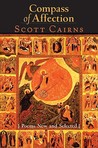
Compass of Affection

Compass of Affection: Poems New and SelectedCompass of Affection: Poems New and Selected by Scott Cairns

My rating: 3 of 5 stars

I often don’t “get” modern poetry, and I’d like to think it’s not from lack of trying. I miss the rhyme and the rhythm that makes poetry fun to read aloud, or I simply don’t pick up on the deeper or more subtle rhythms of contemporary poetry. But I heard that Cairns was supposed to be the greatest Christian poet alive, and that he was Orthodox to boot, so I thought I’d give this a chance. This volume collects poems from several of his previous volumes with some new poetry as well. It wasn’t until the poems from PHILOKALIA (2006) that I started to really enjoy it, to pick up on the symbolism and the meanings, and this likely had to do with the fact that his poems from that point get distinctly religious and distinctly Orthodox. So I had a leg up on deciphering the metaphors, understanding his language. And he does indeed speak the language very well. He has a gift for distilling the mythos and praxis of much of Orthodox spirituality into half a dozen spare lines. As for example when he discusses repentance, in “Adventures in New Testament Greek: Metanoia”, here the last stanza:

as if the slow pilgrim
has been surprised to find
that sin is not so bad
as it is a waste of time.

“Possible Answers to Prayer” was another favorite and illustrates what Cairns is able to often do when discussing prayer: convict the shallowness of so much contemporary prayer while simultaneously giving a call to the sea depths of true prayer:

Your intermittent concern for the sick,
the suffering, the needy poor is sometimes
recognizable to me, if not to them.

There was much here I did not understand. There was the frustration I often run into when reading poetry of trying to extract some meaning from a handful of lovely metaphors. But there’s obviously a great deal of wisdom as well.

This passage, from “Late Apocalypse” struck me as well

… I turned and saw before me
seven bright convenience stores, each laden with a hoard
of sugars and of oils, fuels devised by economics to obtain
the most satisfaction with the least actual good . . .

His poetry is not perfectly happy, because the world is broken (and what poet, ever, is perfectly happy?). And yet behind so many of the poems there is a hint of that golden glow in Orthodox icons (which he writes about as well), the light of the world to come, or of this world if we can train the eyes of the heart to see.

View all my reviews