Category Archives: Reviews

The Black Corridor

The Black CorridorThe Black Corridor by Michael Moorcock

My rating: 3 of 5 stars

The name Michael Moorcock has been on my list of authors to read for so long that I can’t remember why or when he ended up there. I also can’t quite figure out why he’s so well-known or what kind of writer he is, exactly, and reading several entries on him in various fantasy and science fictions encyclopedias hasn’t helped much. Suffice to say he’s British, he was influential in the New Wave, and his writings are extensive and pretty hard to pigeon-hole.

I grabbed The Black Corridor from the science fiction section of my local library, the last of my Christmas break reading that included Benford, Swanwick, and Reynolds. I can’t remember if there were other Moorcock books there and I grabbed this one because it was short and because the cover was obviously by the same artist who did the cover of my edition of Lafferty’s Nine Hundred Grandmothers or because it was the only one they had. Either way, the description intrigued me.

This was an easy read, but it felt dated. The story is about a single human aboard the first colonizing craft traveling to an Earth-like planet around a (relatively) nearby star. Part of it is a psychological exploration of the emptiness of space, of the long, lonely passage (the corridor of the title) to the first habitable worlds. The environment of the ship is sterile, empty technology, a backdrop upon which the single inhabitant is struggling against loneliness and a self-conscious slide into madness. His only defense is a retreat into routine and rationalism.

Yet this isolated existence, we learn through a long series of flashbacks, is only the culmination of a larger slide into madness. The single ship’s inhabitant is actually the only waking member of a crew (the rest are in hibernation) composed of his family and small group of friends who fled a disintegrating Earth. The end-of-times scenario outlined here is a fractious, nationalistic British apocalypse descending into chaos like in Children of Men. In the midst of this, the main character—who built his fortune as a toy manufacturer—sees himself as an isolated island of rationality against this moral and social decay. Together with his companions, they see stealing the only UN ship capable of interplanetary flight and setting off from Earth in the face of and in spite of a nationalistic, atomic holocaust their effort to save not only themselves but the best of humanity.

Two main trends take place over the course of the novel. The first is the narrator’s constant battle against paranoia and loneliness and his gradual descent into possible insanity. Has he woken the other crew members up? Is he having hallucinations because of his sensory isolation or because of the emotionally-stabilizing drugs he feels forced to take? The second is the gradual revelations of what he had to do to secure the crew’s escape from Earth, what he felt justified to do to get them off the planet. There are interesting developments throughout in what is largely a psychological thriller, but some of the most intriguing take place in the final few pages of the book, when we’re forced to ask the question of why he’s the only one awake on the ship in the first place.

In all, there are lots of subtle and troubling themes touched on here but not explored. Parts of the novel make it seem as though we’re dealing with themes of overpopulation or ecological disaster, but these are never front and center. Technology is not a major motivation here, just a sterile backdrop against which the events play out. Mainly The Black Corridor offers a surprisingly troubling treatment of the inevitably isolating results of a self-justifying rationalism.

The Best of Michael Swanwick

The Best of Michael SwanwickThe Best of Michael Swanwick by Michael Swanwick

My rating: 4 of 5 stars

Michael Swanwick is a hero. He’s apparently (unless this has changed very recently) the only living person to win five Hugo awards for his writing in six years. From what I can tell he doesn’t have an enormous output, and his works haven’t made him a household name among nerds like Gaiman or Le Guin, but he’s still a literary hero. His novel Stations of the Tide was critically acclaimed by people who like literary science fiction (and those are the kind of people I like). I knew he had written short stories, but most of them I had never read. So I was quite excited when I stumbled across Subterranean Press’s Best of Michael Swanwick anthology among the stacks at my local library.

Reviewing anthologies is difficult, especially when an anthology by a writer who can do as many different things as well as Swanwick can in his writing. Each story in this collection is a winner (literally, as all the Hugo winners are included). Each one cuts like a piece of glass in your mind’s eye, scintillating and lovely and dangerous. Each one puts you in your place and reminds you however much you like to think of yourself as a writer of science fiction and fantasy you should settle down and shut up because this is how it’s done. (Or at least, each one did for me.)

Anything you want is in here. Weird future versions of the United States in the vein of Gene Wolfe’s “Seven American Nights”? You get it from the start with “The Feast of St. Janis.” Science fiction that does new things with the idea of identity and technology applied to the human mind? You get that scattered throughout, starting with my favorite piece in the collection, “Ginungagap.”

In Swanwick’s science fiction, technology is not just FTL and spaceships. It’s at perhaps its most prescient with the idea of technology that is able, for better or worse, to re-map and re-wire the human mind. This becomes something of a theme in the anthology, treated at most length in “Wild Minds,” a subtle little piece that detonates like a mental hand-grenade.

Apart from questions of identity and mind, you also get science fiction pieces (and two of these won Hugos) that examine scenarios of encountering intelligent life— weirder and larger than the tropes you expect— within our own solar system: “The Very Pulse of the Machine” and “Slow Life.” Here Swanwick’s realism comes into play as he offers scientifically accurate vistas of worlds in our own solar system and thoughtful physical and philosophical treatments of what encountering life there might be like. Which is probably why they were so well received. They’re doing what science fiction is supposed to do: taking what we know about humans and what we know about our universe and putting them into possible and challenging juxtapositions to see what emerges.

Another theme I noticed in these stories in retrospect is an accident, an injury, or a death that plays a central role in transforming characters and their environment. It comes out in both of the first contact stories mentioned above, as well as “Trojan Horse,” “Griffin’s Egg,” “Radio Waves,” and “Mother Grasshopper.” The idea of knowledge through wounding or brokenness is sort of a tautology in literature in general, but science fiction often seems to feature (at least classically) the best and healthiest of humanity facing the worst the universe can offer. In Swanwick’s work, there’s something about being broken, wounded, less than whole that allows touching, interacting, and perceiving the universe in an important way. No one faces reality in these stories unbroken. (Does anyone really face reality another way?)

Swanwick also knows time-travel, and he knows what to do with it: either set up a perfect and heart-wrenching paradox (“Scherzo with Tyrannosaur”), use it to create an idyllic eternal (sort of) summer (“Triceratops Summer”), or go all mythic-poetical and throw out epic yarns that stretch time like taffy (“The Raggle Taggle Gypsy-O” and “Legions in Time”).

And then there are the tales that are most effective of all because they’re singularities. You can’t lump them into a group with anything. They’re alive and awful (as in both awe-filling and the other meaning but in a good way) and will stick with you long after you’ve closed the cover. I’m talking about “A Midwinter’s Tale,” which seems in my mind definitely a homage to Wolfe. It takes something of the strangeness of the alzabo from the New Sun and puts it in the atmospheric haze of Fifth Head of Cerberus or even Peace. “The Edge of the World” is a perfect story that is grimy and magic and reminiscent simultaneously of Bradbury, the Arabian Nights, and Stand By Me. “North of Diddy-Wah-Diddy” is a perfect story about hell and the train that goes there.

And then finally “The Dead” and “Radiant Doors” are horror stories that are horror not because of the creepy future-things in them (and there are creepy things and horrifying futures) but because the creepy things are mirrors. The creepy things are us, and they’re already here.

So this is a book to read (and preferably to own) if you want to surround yourself by living, breathing stories that can kick the crap out of you as a reader and hopefully let some of their technique rub off on you while they’re doing it. They’re aspirational stories in that sense. At least for me, as a writer, they made things start clicking and sparking in my brain (probably because they were kicking it so hard). Swanwick is a master, and this is a book of masterworks. If you love Gene Wolfe’s short stories, you should read this book.

But it’s not perfect, and the perfection of the stories within made a few glaring shortcomings of the book itself obvious. Firstly, there were typos. And not just little typos: huge, embarrassing typos that at times threatened to obscure the meaning of pivotal sentences. At one point, a character is making an important conclusion about understanding something that is “yours” when every other clue in the story and the context indicates he must have meant “ours”. If this was a carefully-edited volume I’d just assume there was a subtly in this exchange I must have missed (like in a Gene Wolfe story), but this is a volume that elsewhere put “arid” for “and” as well as a host of other mistakes. For the work of a wordcraft like Swanwick, that’s a crime. (Though either the editing got better as the volume went on or I stopped noticing it, because it didn’t seem as a bad in the second half— though misplaced, reversed, or dropped quotation marks continued to abound.)

Secondly, there was no listing at the beginning of where the stories first appeared. There was a copyright attribution that told when they were published, but not where. This is a shame, as one of my favorite things about anthologies is seeing where these stories first saw print. In my opinion at least, it’s kind of an essential historical record that goes along with story anthologies.

Editing faults aside though, the book is still worth its weight and shelf-space. It’s like a writer’s guide on how to be awesome. How to tell devastating stories with huge ideas.

But put it on a top shelf, out of reach of the kids, because another big theme in this work is sex. And not sex that’s just sort of a thing that happens to characters to keep things spicy but left sort of narratively vague. Nothing vague here. There’s pretty much a detailed climax scene in almost every story.

I don’t consider myself too much of a prude (I probably am) but to be honest after a while this was kind of off-putting. If there was a male protagonist, and a female character was introduced, you knew what was coming. To be fair, sometimes the details were essential to the plot or tone (as in the general dreadfulness of “The Dead” or the central paradox of “Scherzo with a Tyrannosaur”) but in most of the other cases it wasn’t. Yet that’s not to say it’s in there just for kicks. Michael Swanick obviously likes sex, his characters enjoy it, and he writes about it with the same vigor and description as he does the other aspects of his stories.

I’m not sure how I feel about this (besides prudishly embarrassed). It might be, I think, an illustration of what my colleague who teaches English and who wrote his dissertation on the work of the Catholic author Graham Greene has often said about Catholic literature. (And though Swanwick was raised Catholic I have no idea if he practices.) My friend says that a characteristic of Catholic authors (and perhaps a reason there are few real literary giants among evangelical Christians) is that for a Catholic writer nothing is off-limits. Everything in the created order belongs to God. It can therefore all be used in all its gritty and vivid reality. The camera never needs to pan away, as it were. All the physicality (sexual and otherwise) in all its brutality and beauty is okay to use to build story.

And Swanwick does.

Great Sky River

Great Sky River (Galactic Center, #3)Great Sky River by Gregory Benford

My rating: 3 of 5 stars

Warfare between man and machine has become something of a trope in science fiction, from the future apocalypses of the original Terminator (which scared me to death as a kid) to the more recent, sexy and subtle conflicts of Ex Machina. Often these man-vs-machine dystopias play out against the ruins of our own civilization, with landmarks or blasted-yet-familiar vistas driving home the fact that our own creations have destroyed what we had previously built. Gregory Benford’s classic science fiction novel Great Sky River takes these tropes but adds a layer with an exotic locale and far-future setting that manages to be an even more effective backdrop to the conflict than the near-future alone.

On a world called Snowglade near the center of the galaxy, the remnants of a thriving human civilization eke out a desperate existence in the shadow of a mechanical civilization that has displaced and now disinterestedly hunts them. The machines are not, as in the Terminator and many other incarnations of this story, consciously seeking humans out for extermination. Rather, human cities have been destroyed as one would destroy the infestation of a pest, and the survivors are haphazardly hunted like you would a few remaining cockroaches. Over the course of the novel though something begins to change, and the remaining bands of humans realize a new mech is beginning to take a special interest, herding and harvesting the remaining human population. (You might get glimmers of The Matrix here, though you wouldn’t be quite right.)

What makes this work especially fascinating and haunting is that we learn the history of the human rise and fall on Snowglade along with the main character, Killeen, through memories and legends. The knowledge is as foreign to us as it is to him, who grew up when humans were confined to a few remaining Citadels and is now on the run after the last human strongholds have fallen. It means we start to see the wonder of this far-future, now-fallen civilization through his own eyes as he, for instance, gets his first glimpse of the now-abandoned orbital space stations humans occupied when they first came to the planet centuries ago. And the vistas glimpsed here are immense: humans voyaging across tens of thousands of light years to settle these new worlds near the galactic core, a legacy only now remembered in a few lingering cultural artifacts.

It’s atmospheric elements like this (apart from a gripping plot) that make this novel work. Another example is the lexicon Benford develops for his characters. It’s a language atrophied in some ways, and it fits with a band of desperate warriors who have been struggling to survive against a mech encroachment for generations. It also contrasts nicely with the voices in the main character’s head: digitalized Aspects of humans of past generations who live on in embedded electronics and serve as sources of information regarding Snowglade’s past.

Which brings me to the technology: Killeen and his band belong in a well-crafted first-person video game. They’re more or less cyborgs themselves, unthinkingly using exoskeletons, downloaded personas who ride in their minds, enhanced vision, and implanted radio transmissions. This is all blended seamlessly into the narration of Killeen’s experience, making it feel as natural to us as it does to him, a society that has lived with such modifications for centuries but is running out of the knowledge to keep it functioning. It feels like the gritty technology of weaponry and heads-up displays that would translate well into a first-person shooter or rather that the creators of games like Halo had Benford’s descriptions in mind.

Benford also brings his expertise as a professional astronomer to the fore in describing the celestial backdrop upon which this all plays out: a world orbiting a star that orbits the supermassive black hole at the galaxy’s center. Like Snowglade’s history, this isn’t spelled out explicitly: it comes in pieces through Killeen’s observations of what for him is a standard sky by day and night. Benford uses this exotic stellar locale for a far-flung deus ex machine that I can only trust will be explained (and probably very scientifically and rigorously) in a later volume.

I was gripped from the first chapter. The gritty, desperate situation in which we find the characters, coupled with the unfamiliarity of a far-future dystopia simply worked. I was hooked the entire time and couldn’t stop reading. (He uses the tried-and-true method Cormac McCarthy uses in The Road, another gripping dystopia, of a man’s overriding concern for his son in this dark future.)

That said, I didn’t like the way Benford’s book ended. It wasn’t the parabolic ending that disappointed me. You could see it coming for quite some time, and it flung our heroes into even wider and broader vistas that Benford certainly explores with success in the later volumes.

No, what disappointed me and seemed to sap much of the urgency of the survivor’s plight was the ghost in the machine that was revealed as their ultimate antagonist. Without giving anything away, I’ll just say that after spending the first half of the book constructing a scenario in which the mech civilization was utterly non-human and obliviously hostile, it felt strange and somehow deflating (and also just sort of weird) in the way the primary antagonist was eventually revealed. Part of what made the book compelling was how un-anthropocentric it was: even though it followed the story of these humans, we were seeing them in a world that didn’t care at all about them and had almost unthinkingly wiped them out. But of course, it turns out that humans are actually quite special and central. (Who would have thought?)

In all, Benford is definitely worth keeping on my “to read” list, and I’m eager to dig into the rest of his novels set in this universe and answer the riddles of humanity’s fate at the center of the galaxy.

The Incal

The IncalThe Incal by Alejandro Jodorowsky

My rating: 3 of 5 stars

It was a good Christmas this year. Among other things, I found beneath the tree a book sometimes said to be the greatest comic ever written, The Incal. I don’t know about that, but it does seem a sort of Citizen Kane of science fiction graphic novels. It’s written by Jodorowsky with art by Moebius, both of whom are names that loom large in the background of lots of science fiction whether or not you’ve actually heard of them. The comic was originally published in the 1980s in French and is supposed to have been pivotal in defining the scope and possibility of the medium for doing epic, genre-bending science fiction. Jodorowsky was at one point working on an screen adaptation of Dune (late 1970s, prior to the David Lynch version) and though abandoned you can see the influences here. Moebius went on to do art and storyboards for things like Tron, Aliens, and The Fifth Element, which is why much of The Incal seems eerily familiar. It was a test bed for much of what defined scifi for the next decade.

As far as narrative goes though, the bones are bare. We’re abruptly dropped into the life and mishaps of John DiFool, a rumpled, selfish, slovenly private investigator, who stumbles upon a powerful conscious entity/artifact called the Incal and who quickly becomes the target of random groups and forces angling to get their hands on it. Characters are introduced just as abruptly as well, without any real backgrounding or development: evil swamp queen, superhuman bounty hunter, dog-headed marauder, and topless animistic love interest. Dialog is clunky, with characters frequently explaining themselves, their feelings, and their motivations. Like Citizen Kane, looking back on it now it seems pretty wooden.

But in the midst this Jodorowsky spins out a dizzying, fractal-like story that spans multiple galaxies and ranges from slum planets (with loads of social satire) to the gold-encrusted galactic capital to watery prison worlds and beyond. Even though the first half of the book is basically one long chase scene and the second a lot of random things happening in quick succession, each thing is brilliantly new, fusing fantasy, science fiction, and mysticism (the main characters are supposed to each embody characters or aspects from the Tarot), making it a worthy read.

It’s the art of Moebius though that marks this a classic. Jodorowsky’s writing is haphazard and exuberant, but he doesn’t provide any depth of character or real explanations of plot. The only revelations that come in the book are in the shattering, full-page vistas by Moebius. What could in prose be a run-of-the-mill deus ex machina, for instance, becomes in this medium a gorgeous and sublime epiphany.

Moebius’s art is multi-form and morphic. It’s gritty when necessary, cartoonish when appropriate, and epic, sweeping, or detailed as needed. Packed crowd scenes feel almost Where’s Waldo-esque, aspects of the Great Darkness foreshadow the segmented horrors of Aliens, and the detailed techno panels feel familiar from classic Star Wars story boards or concept sketches. Overlaid with this all, the colors are sharp and vivid, making the whole sweeping dream-like tableau electric and lively. It’s easy to see why this was groundbreaking at the time (and scandalous, considering some scenes made it originally censored in its first US release) .

The edition of the work I found under the Christmas tree is packaged in hardcover with high-quality printing that I can only imagine helps recapture what it must have originally felt like reading it. With that and the added touch of a ribbon bookmark, the outside of The Incal feels as weighty and significant and the interior is trippy and avante garde, like you’re holding a piece of visual and literary science fiction history (as you are).

Wittgenstein’s Vienna

Wittgenstein's ViennaWittgenstein’s Vienna by Allan Janik

My rating: 3 of 5 stars

Wittgenstein is a name that looms large on the landscape of twentieth-century philosophy, and one day I’ll get around to actually reading his work. For now though, I’m still dancing around the edges. I’ve written about Logicomix before as a creative introduction to the mathematical and philosophical scene in which Wittgenstein appeared, and about a year ago that led me to an excellent biography on Wittgenstein. This latest book on the philosopher, which had come up several times before in references to Wittgenstein, I found at a university library used book sale. I grabbed it immediately, possibly uttering a small shriek of excitement.

Wittgenstein’s Vienna is a cultural and social contextualization of Wittgenstein’s work. The authors are self-consciously unapologetic that their study is interdisciplinary and not well-suited to the lens of professional philosophy that would view Wittgenstein’s work in terms of the development of analytical philosophy alone. Rather, they say it’s important—essential—in understanding Wittgenstein’s major work to first understand the context in which Wittgenstein wrote, the final days of the Habsburg Empire and its capital Vienna just before the Great War.

By examining the culture of the period—the aesthetic revolts against insincerity and ostentation in music, literature, and architecture centered on the writings of the social critic Karl Kraus—they claim Wittgenstein’s Tractatus Logico-Philosophicus as a similar cultural artifact, a philosophical response to this environment. Instead of being intended (as it was perceived by the Logical Positivists) as a groundwork for analytical philosophy, Wittgenstein meant the Tractatus to rigorously define the boundary between facts and values. Critically though this was not to exclude values from the realm of importance (as the Logical Positivists took his famous closing phrase, “of what we cannot speak we must pass over in silence”) but rather to protect ethics and all that was truly important (and unspeakable) in the human experience from the encroachment of logic.

For the authors, Wittgenstein’s work is primarily a cultural, philosophical, and even artistic response to his social environment similar to that of Adolf Loos in architecture and will be (and has been) misunderstood without this broader context. As an example of an interdisciplinary study—and in itself a strong critique of philosophy divorced from context—Wittgenstein’s Vienna is wonderful. It takes a real problem—the interpretation of a famously eccentric man and his undeniably influential work—and it offers an answer grounded in full-bodied exploration of that man’s time and context.

My complaint is that though the arguments are compelling and even a pleasure to read, and though the authors make Habsburg Vienna come to life and illuminate things from the origins of modernism to the perils of political stagnation and the linguistic relations between subject peoples at the dawn of Eastern European nationalism, they tend to let a general zeitgeist form the mode of connection between all this and Wittgenstein. That is, a stronger argument would have connected the dots more firmly, including perhaps more of Wittgenstein’s correspondence and biographical links between Wittgenstein and the key cultural players, Kraus in particular. The authors argue that Kraus was central to creating and fostering the cultural critique in which they’re placing the Tractates—going so far as to call the Tractates a Krausian work—but I still was left with questions about the contacts and connections between the two men.

The work is multifaceted and branched off into lots of interesting side-trails along the way of contextualizing Wittgenstein and his work. There were, for instance, arguments related to the birth of modernism, particularly modern architecture. The authors claim, for instance, that the architecture of Loos was a revolt against ostentation and ornament for it’s own sake, that Loos thought use should dictate design. But they say once this mode was established, its minimalism became itself a new orthodoxy: modernism for its own sake, which gave rise to the Cartesian office buildings and apartments of today in which function is completely masked by uniformity, exactly the opposite of what early modernists like Loos had intended.

This work is compelling because it mixes together so many disciplines. Whether or not you’ve heard of Wittgenstein, if you’re interested in the history of philosophy and in particular the philosophy of language, Habsburg Europe, cultural history, art history, or even social criticism, there’s something in here that you can latch onto. Good books have lots of doors that open outward; this one is full of them.

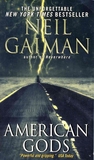
American Gods

American GodsAmerican Gods by Neil Gaiman

My rating: 3 of 5 stars

Neil Gaiman’s work is a good example of the law of conservation of narrative: story is neither created nor destroyed; it is simply transformed from one form to another. Gaiman’s novel American Gods could have been a hundred different things, representing the new gods of America in a hundred different ways. But instead it’s something significant, because Gaiman knows the first rule of original story-telling: know the original stories.

This is what’s wrong with a lot of writing today: it’s shallow. Much of it seems to be written in a vacuum. But the thing about writing (and especially fantasy) is that for it to be really alive, for the story to be rich, it needs to draw on deep wells. And these wells— as American Gods illustrates— go all the way back to the beginning. Gaiman weaves a new and compelling story, a story about the new gods and the old gods in America, but he does it because he understands the building-blocks of the oldest tales.

If you’re looking for a modern story-teller archetype, Neil Gaiman is it. He accumulated a nearly inexhaustible supply of capital and credibility with the classic Sandman series of graphic novels, where he showed he had the knowledge and skill to weave with a rich and textured fabric, pulling in literary figures from Orpheus to Chesterton. To be honest though, after Sandman I found most of Gaiman’s work— Neverwhere, Stardust, the movies Coraline and Mirrormask— to be a bit disappointing (though I liked M is for Magic). Like I said though, he has inexhaustible credibility, so I when I found American Gods in paperback on my sister’s tall brick shelves, I took it home.

This is the Gaiman I remember from Sandman: raw, epic, and dark in a way that shimmers toward opalescence, like the sheen on a serpent’s back. Gaiman’s world is haunting and beautiful; it’s elegant and terrifying; it draws on the deep joy of Chesterton and the riddled wisdom of Gene Wolfe (both of whose words make appearances in this book) with a more pagan flavor. But not an anti-Christian paganism; more like a pre-Christian paganism, a paganism of the deep forests where Christ is still a rumor of Rome on the horizon.

American Gods is the story of a man named Shadow (and this is where Gaiman’s narrative credibility comes in: only he could give a protagonist in a fantasy novel such a trite name and have it stick and work). Shadow has just gotten out of prison and is traveling home, when he runs into a figure who recruits him for a coming war. It turns out that our country has become a battleground between gods of the old world (Europe, Asia, and Africa, primarily) and the new gods of America (things like Media, Internet, and other intangibles as well as gods of industry, railroad, and transportation).

If it sounds a bit transcendental, it’s not. Gaiman keeps it grounded in physicality. Apart from Shadow’s annoying tendency to have significant plot points revealed through dreams (though in fairness he’s spending a lot of time in communication with Native American deities), Gaiman’s gods are very physical: they screw, smoke, swear, throw punches, and try to assassinate each other.

Like I said, a master of old stories. Look some up. This is what the gods spent their time doing.

I can’t go into the plot much at all without dropping spoilers, because even in the very first chapter there are twists and turns. The whole book is a riddle, and there are pleasing knots throughout. The narrative follows Shadow, about whom we continue to learn more, as he works with a man named Wednesday (whose identity readers familiar with mythology will work out fairly quickly) to recruit the old gods— those brought to America by immigrants— in a coming battle against the new.

If you know your mythology, you’ll recognize figures as they’re introduced, but you certainly won’t recognize everyone. Gaiman doesn’t keep his mythology confined to a specific ethnicity. There are gods and monsters from all across the map, several of whom I didn’t know. And Gaiman isn’t one to spell everything out for you, putting nice labels on each god as it is introduced.

That said, it’s the riddles that really make this book work. When gods battle, they tend to do it out of sight of mortals, which is why Shadow— a human more or less like us— makes a good lens through which to view the story. We’re forced to figure things out along with him. And the riddles envelop this story like those Russian dolls that fit inside each other. The big riddle of the entire book is revealed at the end, and it’s flawlessly done, something you don’t expect but that you see clues for throughout once you know it. And the smaller, nested riddles— such as the mystery that Shadow stumbles upon in the middle third of the book in a small Northern town— you can amuse yourself by figuring out as you go. In this, Gaiman is definitely a student of Wolfe, though unlike his master Gaiman is more merciful in that by the end of the book he’ll show you how the trick is done.

If you know Gaiman primarily through his softer stuff, be warned: this book is raw. The language is that of a Brit who seasons liberally with profanity (effectively, to be fair). And there’s plenty of sex. And not mere mortal sex either: god-sex. If you blush easily, keep this book on the shelf.

But the book is strong, and besides an excellent tale, Gaiman is saying something here about the nature of narrative and belief itself and even something about the essence of America. It’s a story by someone who loves America with the wide open eyes of an outsider. Gaiman writes about an America that actually exists, as he explains in his introduction, about real roadside attractions and about a culture (albeit one already slightly dated) we’re sure to recognize. More than that though, he talks about what’s happening beneath the surface: what happens to gods and beliefs and stories when they find themselves in this new world.

This is where his work has the most depth, and this is where you get a glimpse of Wolfe and Chesterton peering over his shoulders (or perhaps perched on his shoulders, like the ravens of Odin). In this non-Christian (but not necessarily anti-Christian) polytheistic world, Gaiman’s sympathies are clearly with the old gods with all their arrogance and faded glory, with all their personality. They have something the new, brash, neon gods of commerce and industry lack. As Gaiman has his character Shadow say: I’d prefer the sad roadside attraction to the new gleaming hotel, because there’s something more real there.

America, it turns out, is a bad place for gods. As Gaiman spells out several times, the land isn’t fertile for them. And it’s the land itself lurking in the background of the story, a shadowy figure that’s never a player in the same sense as the (ultimately revealed) figures pulling the strings of even the gods. Gods don’t flourish here like they did in the Old World, and even the new gods arise quickly and fade fast. But this isn’t a work of comparative religion, so Gaiman never really chases this idea or offers us reasons why. And because this is a story to which the monotheistic gods aren’t invited, they’re not a part of Gaiman’s narrative.

But the book isn’t an explanation. It’s a story. The best stories explain some things, but they don’t explain everything. (This is what Biblical literalists forget about the Bible.) It’s a really, really good story about gods in America. It’s also, more significantly, a story about stories: what they do, what they’re for, how they have the power to shape cultures, and what happens to them (or might happen to them) in this brave new world in which we find ourselves.

The Orthodox Liturgy

The Orthodox Liturgy: The Development of the Eucharistic Liturgy in the Byzantine RiteThe Orthodox Liturgy: The Development of the Eucharistic Liturgy in the Byzantine Rite by Hugh Wybrew

My rating: 4 of 5 stars

A friend and I have been having an enduring, good-natured disagreement on the nature of the Church and Christianity. He sees the history of Christianity as the accumulation of dogmatic and hierarchical barnacles that must be scraped away in order to get back to the pure, original Christianity of Christ and the first apostles. If you look at the history of the institutionalized church, he says, you see accretion, abuse, and general messiness that wasn’t an initial part of what Christ intended. The history of the Church, I think he might say, is a long history of missing the mark.

There’s certainly some truth to this. But if we’re using the analogy of barnacles encrusting something original and true, my answer to this metaphor is that I don’t think Christ came to entrust the apostles and the early Church with a boat. That is, I don’t think His purpose was to create or deliver something whole and entire that was supposed to be passed down, static and unchanging.

Don’t get me wrong. I’m not saying Christ did not come to deliver the truths of the kingdom of God or that those truths evolve or develop over time. I’m talking about the Church itself. It did not spring whole and mature at Pentecost like Athena from the mind of Zeus. Christ did not deliver a boat that we have to scrape the barnacles off to get back to the original shape. Rather, something was born at Pentecost, something given life by the descent of the Holy Spirit, and that thing is better represented (in my mind) as a thing living and growing in history (like a tree) than a shape or structure that needs to be restored.

This difference comes out most clearly when we talk about the actual practices of the Church. What is it here to do? My friend might say that all the dogmatic and ecclesiastical elaborations— incense and vestments and hierarchy and everything else that goes with liturgical worship— are examples of encrustations that need to be cleared away. It’s obvious these were not what the apostles were doing in the generation or two after Christ’s ascension.

On the other hand though, neither was the Canon of Scripture established, the dual nature of Christ articulated, or the trinitarian dogma formalized in those first generations. These were things the Church did in response to the historical events of the life and resurrection of Christ. They didn’t fall out fully formed and articulated. They were the result of the Church wrestling with what they knew to be true under— we believe— the guidance of the Holy Spirit. Christ didn’t deliver a body of beliefs or a structure of worship; he birthed a Church: a living, organic, growing, evolving thing.

To me, this view is necessary for understanding the work of the Holy Spirit in the narrative of history. It’s never made sense for me to see the Church as almost immediately “going wrong,” though proponents of this view often disagree about just when it started to depart from the “pure” faith of the apostles. If, as many do, they point to the reign of Constantine, this is also the same point at which the Nicene Creed is first articulated. So if we want to throw up our hands at the Church getting in bed with Imperialism, we also have to throw up our hands at the first attempts to formalize statements of Christian belief, which came about by the instigation of the Emperor.

I say all this to say that whichever view you take— barnacles or growth— will influence how you interpret the work of Hugh Wybrew in The Orthodox Liturgy: the Development of the Eucharistic Liturgy in the Byzantine Rite. Either it’s a story of how multiple encrustations of liturgical worship grew up from the first to the fourteenth century to obscure the Church’s early and pure form of worship, or its a story of the development of the liturgy to the rich, vibrant form it has today. Enrichment or encrustation is a matter of perspective and teleology.

Wybrew, former Anglican bishop of Jerusalem, offers a comprehensive, in-depth survey of the development of the liturgy in the East— the liturgy celebrated by Orthodox Christians each Sunday around the world— from the the earliest Christian documents until its more or less fully developed form in the fourteenth century. One the one hand, you can’t read this book and then maintain that your Church worships in the same way as the apostles, or in the first generations after them, or even as the Church did in seventh century Byzantium. The liturgy has evolved. On the other, you’ll find surprising consistencies throughout. Wybrew follows both these aspects, change and continuity from the apostolic days until the fourteenth century, in this work.

The study is chronological, drawing on surviving documents and accounts to give a representation of liturgical worship (which, it needs to be pointed out, was not simply one way of worshiping but the structure of Christian worship) in different periods in the Byzantine Empire. Early on there are different forms of the liturgy, all with certain common traits, but by the seventh century the form practiced in Byzantium comes to dominate and become the standard throughout the Eastern Empire. Here the book’s focus is delineated: Wybrew isn’t looking at the rites of other non-Chalcedonian Christianities, nor is he doing a detailed comparison between the liturgy of the Greek East and the Latin West. It’s the evolution of a single species, albeit one that for various reasons became the dominant form of worship still practiced in almost all Orthodox churches around the world.

Wybrew— himself not an Orthodox— does not idealize this process, though he clearly sees the liturgy itself as a meaningful, historically rich, and important aspect of Christian worship. He points out places, for example, where changes over time have obscured the ritual’s original form, where certain important practices (such as Old Testament readings) have been dropped, or where vestigial practices (for instance the intonation of “the doors” before the reading of the Creed) have lost their original meanings. The most problematic trend that Wybrew sees though is the move throughout the centuries to separate the clergy from the laity, making the liturgy clergy-centric to the exclusion of the common people. Aspects of this include the practice of saying certain prayers inaudibly, closing off of the alter from the rest of the church, and infrequent communion by the people. All of these things served to separate the laity from the liturgy itself and make them more and more simply spectators of things they couldn’t fully hear or see or understand. (This perspective though also helps one appreciate how important are recent trends to correct this.)

Another helpful part of this work is that Wybrew doesn’t only provide a historical narrative of how the liturgy developed; he also outlines a history of its interpretation. That is, as the liturgy developed, it became something itself interpreted by theologians, linking the different aspects of the liturgy with scenes from the life of Christ, for instance, or with various representations. Like Scripture itself, the liturgy has an superabundance of meaning. The Great Entrance, for example, may historically be a vestigial practice that grew out of bringing the bread and wine from a separate building where they had been deposited by members of the congregation to the church itself, but today it is seen as also symbolizing the entrance of Christ into the temple, for example, or the beginning of His earthly ministry, or more generally simply the coming of the Word of God into the World.

Which illustrates something important about the Orthodox Liturgy, and something that brings us back to the idea of barnacles and boats. Is something like the Entrance a piece of encrustation that obscures the original practices and life of the Church? If by this question one is asking whether it’s something that was practiced from the very beginning or something vital to an understanding of Christianity, then the answer is probably no. So should it then be abolished? An Orthodox Christian would say no, because it’s a part of the organic growth of the practice of the Church. It has a place and a significance and a meaning. The Holy Spirit was the gift of God to the Church at Pentecost, and that Holy Spirit has been continually creating the Church and its realities in our world since. Things like the Entrance are part of a living heritage of faith.

The liturgy, as Wybrew shows so well in this text, has been a process of growth and development. It has been an evolution. It continues to evolve. It’s alive.

A random and perhaps theologically-flawed analogy: in some ways my view of the Church is like my view of marriage. Sure, I want to remain focused on the faith and the promise of my marriage and at times work to get back the simplicity of love that drew my wife and me together. But marriage isn’t something static; it’s the beginning of a unified life. I don’t look on everything that’s developed over our years together, all the practices and realities of a relationship and family and the traditions that have grown up in our home, as barnacles I need to scrape away to get back to the true purity of our original wedding day. I wouldn’t even know what that means.

A theologian could probably point to flaws in my analogy, and Wybrew’s work is certainly not an argument toward this understanding of the liturgy or the faith itself. Wybrew’s work is simply information: a comprehensive and well-researched outline of how the liturgy has developed and been interpreted over the centuries. How you view that information— as illustrating pointless accumulation of dead ritual or organic growth of living worship— is up to you.

The Rewind Files

The Rewind FilesThe Rewind Files by Claire Willett

My rating: 4 of 5 stars

I stay away from espionage. I also (at least in my own writing) tend to stay away from time-travel. Things get far too complicated too quickly, and it’s all I can do to try to wrap my mind around the paradoxes inherent in even a simple time loop. I also– to my shame– tend to avoid twentieth-century history in particular and American history in general in my own work, which revolves around astronomy in the 1800s. The Rewind Files, by Claire Willett, involves all of these.

On the other hand though, I do love a good scifi yarn.

In this instance, I was in no way disappointed.

Claire, who among other really cool things has written plays on the history of astronomy, has quite simply written a very smart, very compelling, very impressive 20th-century, time-travel, espionage adventure. It fits together beautifully, it has dizzying twists and turns, and it has sharp characters with crackling dialogue. It’s just really, really good.

But that’s not a very insightful review, so let me try to unpack that a bit.

First, let’s start with the nuts and bolts: the history and the time-travel. I’m embarrassed by how little I know about my own nation’s history and in particular the Watergate scandal, which forms the historical backdrop to this misadventure. But it’s clear Claire has done her research– and not simply as a dutiful student but as someone who is passionately interested in the characters and the narrative of these events. She doesn’t just make this history come alive: she plays with it, dances around it, and makes it give her a quick peck on the cheek. But it works because she knows what she’s talking about. And she loves what she’s talking about.

Now the time-travel: this is where she gives even classic popular time travel treatments like Back to the Future or pick your favorite Babylon 5 story-arch a run for its money. All the loops (and there are several of them) get tied up and make all of the questions from earlier make sense. All of the snakes bite their own tails quite nicely. And the complexity of the time-hops and transporting (superimposed on the additional complexity of a branch of the government dedicated to preserving the integrity of the timeline) is handled with the dexterity of someone fluent in technobabble: creating a system of constraints and then playing fairly within it but also surprising the reader. I might even use the term elegant.

But those are the nuts and bolts of a good episode of Dr. Who: what about the things important in a novel, characters and plot? Claire gets awards for writing plays, so you’re in good hands here as well. The plot is solid, and though I admit it was a bit slow to start, a) by the time the penny dropped about halfway through I was hooked and couldn’t put it down for the rest of the novel and b) my confusion in the first half from getting dropped right into things cleared up with the reveals in the second half. As soon as Gemstone hits, we don’t get another breath until the end of the book. The twists are satisfying because though nothing is out of left field (you have some inkling of some of the big reveals), they’re handled in an unexpected manner that makes them all the more effective.

And then there are the characters. I put the book down several times while I was reading and told my wife, “You have to meet Reggie.” Claire’s main character is nearly flawless (not as a person, but as a character). She’s snarky, self-deprecating, and competent. She loves her family, all of whom play a major role in the action. The cadre of time-bandits Claire builds up around Reggie are the most endearing part of the story, and more than anything else you get the sense that all the deftly-handled history and time-twists are more than anything to give these characters a fascinating canvas to run around on. You like Reggie, but more than anything else you believe in Reggie.

The Rewind Files being a time-travel odyssey of course could have a sequel tacked on, though it’s more structured to allow a prequel or even a concurrent novel following the exploits of Reggie’s famous father. I don’t know if I want this though. I want Reggie and her friends to have an enduring happy ending, one no longer threatened by major distortions in the timeline.

More than anything, I just want Claire to create some more characters and do this again– only completely different this time.

Baylor at the Crossroads

Baylor at the CrossroadsBaylor at the Crossroads by Donald D. Schmeltekopf

My rating: 4 of 5 stars

I’m coming to realize how much has been written about the nature, state, and ultimate fate of Christian higher education. Universities and colleges– my own included– seem to be at a kind of crossroads, with several tensions at play. Some of these are financial pressures, the forces that compel a university to take a hard look at its bottom line and dig into best practices from business and administration (often to faculty dismay). But there’s also the related tension between the liberal arts approach and professional training, as well as the tension between teaching and research, and between a school’s historic religious or denominational affiliation and a slide toward secularism.

Things are messy and complicated in the academy.

In other words, business as usual.

Against this background, the few Christians schools that have successfully navigated a transition from traditional undergraduate college to thriving research university while remaining true to their Christian identity markedly stand out. Chief among these in evangelical circles is Baylor University.

Baylor at the Crossroads: Memoirs of a Provost is a slender volume written by Donald D. Schmeltekopf, Baylor’s provost for more than a decade during the key period in the school’s transformation. His readable, straightforward recollection outlines his role in the transition of Baylor from a traditional undergraduate university with strong professional programs and a few graduate degrees to the premier research university in the evangelical tradition. Central to this though, as Schmeltekopf is anxious to make very clear, is a consciously maintained commitment to Baylor’s Baptist and Christian identity.

In some ways, this book provides a good counterpoint to Benjamin Ginsberg’s Fall of the Faculty, which I reviewed several weeks ago. In that book, the author rails against administrative bloat and the growing power of bureaucratic administrators interested in little beyond the pursuit of their own agendas. Schemltekopf’s account is certainly one of a dizzying array of meetings, provosts, vice provosts, assistant vice provosts, committees, centers, and campus initiatives, but it offers an example (at least through Schmeltekopf’s eyes) of how this administrative arsenal can be arrayed to effectively lead a university, catalyze research, and set a guiding course for the integration of scholarship and faith.

This doesn’t take place without bumps in the road, of course. Schmeltekopf is honest in his retrospective in examining the resistance among the faculty to some of the changes he helmed and in particular administrative endeavors such as the Polyani Center, created for foster scholarship on the relationship between science and Christianity and but becoming quickly embroiled in controversy related to exploring questions of intelligent design. In many of these cases, he admits that problems arose when administration didn’t get enough “buy-in” from faculty or were too top-down in their practices.

Some of the details in this book will be tedious to those unfamiliar with either the ins and outs of life on in university in general or with Baylor in particular. Schmeltekopf goes into detail on many of his initiatives, to the degree of what was discussed at specific faculty retreats and who the speakers were. At the same time, it’s interesting to see the curtain drawn back on the nuts and bolts of what from most external signs looks like a very successful provostship.

It’s also interesting to hear Schmeltekopf’s clear appeal that the missional emphasis of Baylor’s Baptist heritage not be lost. This is a primary theme in the work and throughout Schmeltekopf’s career: finding the balance between academic rigor and success in the academy without the drift into secularism that often accompanies. For Baylor, this meant an awareness of the difficulty in walking this line, campus and faculty dialogue on these issues, and a careful hiring practice in which provost and president played a close role in the hiring of faculty and were not hesitant to block hires they did not feel were missional fits.

There’s not a lot of Schmeltekopf’s philosophy of education in here; rather, it comes across in the account of his praxis. He writes on his initiatives to promote the liberal arts at Baylor, resulting in the formation of an Honors College and great books major, but here the book is most helpful in offering reading suggestions that shaped the thinking of someone who put these things into practice in his own institution.

For me, this book was also helpful in formulating my own vision and wish list for my own institution, a place in a situation somewhat similar to where Baylor found itself a few decades ago: a teaching university with some strong professional programs, a few graduate programs, and a proud denominational heritage.

But where to go from here?

Like Schmeltekopf’s Baylor, I feel we’re at a crossroads. Will we go on to be the “Baylor” of our own denominational affiliation? Or the University of Phoenix of the evangelical world? Or maybe something more like a tiny, Christian MIT– focused on producing engineers and scientists of excellence? None of these would necessarily be a wrong choice, but we can’t become all three.

Luckily for me, that decision and casting of that kind of vision are well above my pay grade. But I still look at Schmeltekopf’s account for ideas I think would benefit my own context, recognizing the important difference between us, a difference that remained a block box in Schmeltekopf’s account: money. Whatever else can be said about Baylor’s transition to a world-class institution, it certainly seemed to have all the money necessary to make this possible (or at least connections to that money).

Whether or not these can be instituted in my own particular setting, at least according to Schmeltekopf’s work the following seem things necessary in the transition from denominational college to world-class institution:

1. external advisory committee – One of the things Schmeltekopf talked about was the importance of having a large group of external but invested individuals help provide guidance in steering Baylor toward the future. This is different than hiring consultants; these seemed to be primarily well-placed, influential alumni who had important connections and experience but who also a genuine interest in seeing the university succeed. Involving this large group and giving them an official capacity as an advisory board not only generated good external insights, but it also made this group even more invested in Baylor’s future, something I imagine had monetary pay-offs eventually as well.

2. internal faculty panel – In addition to this large external group of advisors tapped to help plot Baylor’s course and review its priorities at its 150th year, Schmeltekopf talked about less official faculty advisory groups that met regularly throughout his tenure with no specific goal or objective but to dialogue about the relationship between faith and scholarship and how that played out on Baylor’s campus. This was a rotating group that met for breakfast regularly with the provost, and by the time it was done it had allowed the majority of faculty-members on campus a chance to dialogue closely and informally with their administrators. An institution will not move toward being a world-class university without enthusiastic participation of the faculty, and keeping a wide variety of avenues of communication open and consistent seems essential.

3. fund-raising for academic positions (attracting quality professors) – Baylor under Schmeltekopf moved from fund-raising focused on building projects alone to securing funds to attract and maintain the best qualified professors, primarily through the funding of endowed chairs. Besides the resources to attract quality candidates in academia though, Baylor also had to have the confidence in its own identity and mission to maintain its missional standards while doing this. It didn’t feel it had to hire faculty only through prior connections to Baylor or Baptist contacts. It did what it needed to attract the best faculty out there, and then it maintained its standards in who it hired. This is a tough stance, and it can’t happen at all without financial resources invested in drawing and retaining the best teachers and researchers.


Again, these aren’t necessities everywhere, and they might not even be necessities where I am. There’s no clear consensus that we want to follow in Baylor’s footsteps. But if we decide that we do, Schmeltekopf’s account is a good place to being looking for ideas of how to craft an outstanding research university that keeps faith with its Christian heritage.

Fill These Hearts

Fill These Hearts: God, Sex, and the Universal LongingFill These Hearts: God, Sex, and the Universal Longing by Christopher West

My rating: 3 of 5 stars

What do a bunch of celibate men have to tell the world about marriage, love, and sex? Apparently quite a bit if those celibates are men like Popes John Paul II and Benedict XVI. Christopher West’s slender text, Fill These Hearts: God, Sex, and the Universal Longing is an attempt to unpack the Catholic Church’s richly developed and under-appreciated theology of the body, though his desire to make this theology accessible to the widest audience possible at times makes it feel an exposition writ in crayon.

Plus, he starts off very much on the wrong foot from an astronomical point of view. So, pardon a astronomer’s annoyance, but first a short rant:

The opening sentence in West’s book states that “In 1977 NASA launched Voyager 1 and Voyager 2 to explore the galaxy.”

Ack.

There’s so much wrong here. Granted, this isn’t a book about science and West only makes this comment in passing to talk about how the music samples carried by these spacecraft testify to humanity’s universal longing. But it is the opening line of his book . . .

The Voyager missions were launched to explore the outer planets of our own solar system, not the galaxy. But more than that, that there’s a staggering problem of scale here. Imagine tossing an Oreo cookie into the center of a football field. That cookie is roughly the radius of our solar system. (The Sun would be a candy sprinkle at Oreo’s center, and Neptune would be a microscopic dot skimming around the cookie’s edge.) On this scale, the nearest planetary system is another cookie two football fields away. The galaxy is about 200 billion of these cookies spread over an area about the size of North America. And where are the Voyagers on this scale? In the decades they’ve been in space, they’ve drifted less than a yard away from our own cookie– er, solar system.

Saying that we sent them out to explore the galaxy is a bit like imagining sending a paramecium to explore New York City.

End rant.

Okay, so it’s not a book about science. It’s a book about theology. West’s major point is that we as humans are built with certain longings and desires and that this isn’t a bad thing. We have these desires for a reason, but we have three possible responses to this reality, two bad and one good. We can either ignore and suppress those desires (what he calls the “starvation diet”) or we can indulge them (what he calls the “fast food diet”). Though Christianity is often portrayed as leaning toward the first option, West says this is as wrong as the improper indulgence of desires. (And to be clear, throughout the book he’s mainly talking about romantic and sexual desires.)

The proper response, West says, is to recognize these desires as pointing toward something beyond themselves, as indicative of an eternal banquet to come, to realize the things of this world cannot satisfy our desires, and to see romantic and sexual desires as a way of stretching our hearts so God can satisfy us. There’s weirdness here and mysticism and even some discomfort. But there’s also quite a bit of solid theology and biblical exposition. Song of Solomon, for instance, is in the Bible for a reason.

West’s alliterative thesis is that our desires— when understood correctly– point toward God, our design shows we’re meant to exist in relationship, and our destiny is that God wants to expand our desires and longings toward infinity where they can be filled with His love.

Along the way we’re treated to passages from Scripture and Catholic theology interspersed with painful analogies from Spider-Man 2 and lyrics from U2 (see the comment above about being writ in crayon). The most compelling portions for me were the final chapters where West provides an outline of the Catholic view of chastity and sexual ethics. In West’s interpretation, chastity is a promise of immortality. It’s a way of rightly ordering desire here on Earth, of keeping human nature free of the addictive aspects of sexual desire and oriented toward eternity. (If it seems like a futile and desperate hope, it kind of is.)

There are lots of issues here, primarily related to the point that West seems to think humans all have more or less the same sort of desires and takes this as the starting point for his exposition. This is in keeping with what I understand of Catholic theology often beginning from a “natural laws” treatment of the world, something that I’m not sure remains tenable.

If nothing else though, besides bringing a taste of some of the deeper aspects of Catholic theology, West does call attention to the undeniable fact that many of the central themes and symbols in the Bible have to do with sex and marriage– and wine. Sex and alcohol, often shunned in puritanical circles, are central to a Biblical view of desire and satisfaction. Christ’s first miracle, as West points out, was at a wedding feast, and it was to provide that feast with a fine vintage. This is West’s central claim: that God isn’t interested in starving us or in seeing us waste ourselves seeking after pleasures that can’t satisfy. Rather, He wants to provide a real, eternal banquet and (though the analogy becomes strained, at least to me) a real, eternal marriage relationship.