Tag Archives: review

The Farthest Shore

The Farthest Shore (The Earthsea Cycle, #3)The Farthest Shore by Ursula K. Le Guin

My rating: 4 of 5 stars

The Earthsea books are old. The Farthest Shore, third in the trilogy, was published in 1972. But they’re old like a healthy tree is old, like a house with character. You can tell their age in their strength, in the slow, steady pace of the language, in the deep rootedness of the characters. Le Guin writes in an age that harkens more to Tolkien and Lewis, maybe even Peake, than to Jordan or the guy who writes the Game of Thrones books. The pacing is slow, the action is sparse, and the world-building is one of scattered lands and horizons as opposed to complex politics or equally complex magical systems. They take a while to get into.

I found this to be true for all three of these novels. They don’t grab you in the first or even the second or the third chapter. You move into them, charmed by the language but perhaps a bit—not quite bored, but certainly not enthralled. But you’ve heard them spoken of before in the same sentence with Lewis and Tolkien, and you want to find out why. Le Guin sets the stage slowly, introduces the characters, paints a world that always smells strongly of the sea and feels of the vague presence of dragon wings beating just over the horizon. And then by about halfway through you’re hooked and the remainder of the book feels like a painting, like a journey, like the things that solid fantasy is supposed to feel like—not an action movie, not a soap opera. But a tale.

Ged, now the Archmage of Roke, is once again at the center of this third tale. (I assumed the last of Earthsea, as these books were presented as a trilogy. Checking Wikipedia, however, I see that apart from a collection of short stories set in Earthsea there are an additional two novels.) I’ve written on the previous two volumes before, where I stated the volume one, A Wizard of Earthsea, could be generalized as being about wisdom, about finding maturity and true friendship. Ged grows up. Volume two, The Tombs of Atuan, is about redemption and mercy. Ged saves a slave from a life of darkness and servitude. This last volume is about despair and faith.

I think I’ve also said this in writing about the first two volumes: these books are great books because they touch the springs of truth, of something deep and real and beautiful. The best fantasy, I think, tells us something about the real world. In this novel, Ged and a young servant set off to find the source of lifelessness and despair leaking into the land of Earthsea. They travel to islands where joy and art are forgotten, where the wizards no longer know the words of magic that give them their power. (Magic, for Le Guin in Earthsea, is knowing the true names of things.) They find a wizard whose lust for life unending has upset the balance between life and death and has dragged along others who follow out of fear of death.

And Le Guin uses this stage of magic and journeying to pose what may be one of the central questions in our own art and theology and philosophy: is life the source of meaning or is it all an illusion, simply words that we give to things because we cannot stand the idea that they may have no meaning at all? Ged’s servant faces this in the course of their journeying, and he lets the despair overwhelm him. The questions he ask are ones that we all face—if we’re truly awake—at some point in our lives:

“ . . . he knew in his heart that reality was empty; without life or warmth or color or sound: without meaning. There were no heights or depths. All this lovely play of form and light and color on the sea and in the eyes of men, was no more than that: a playing of illusions on the shallow void.
They passed, and there remained the shapelessness and the cold. Nothing else.”

Again this despair and this craving for safety and assurance, for life without end and without danger, the character of Ged is a voice of hope and faith. But this is not a pat, safe, Sunday-school answer. This is a realization that life cannot exist outside of the reality of death, that the two are opposite sides of the same coin, and that we cannot understand either apart from the context of the other. Ged’s answer to his servant’s fear is poignant and true:

“There is no safety, and there is no end. The word must be heard in silence; there must be darkness to see the stars. The dance is always danced above the hollow place, above the terrible abyss.”

But the word is spoken, and the dance is danced nonetheless. I’m reminded of Narnia again, of the incredulous question of whether you hoped to find a safe, tame reality in a Lion’s mane. Phillip Pullman wrote his Dark Materials trilogy as in some respects a secular answer to the Narnia books. But to me the Earthsea novels read as a classical Christian answer to contemporary Christian fantasy that would represent God as the ultimate safety net, as the overwhelming force for good that will erase or correct all badness and emptiness without danger and without cost.

These are good, old books. They read like old stories. You’re not going to find sharp, sparking dialogue. You’re not going to find a riveting plot in the first three pages. But you’re going to go places and you’re going to see things that shape you. You’re going to meet people you want to be like. You’re going to—if you stay the course—see at last the wings of dragons over the Isles of the West.
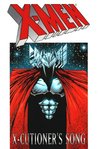
X-Cutioner’s Song

X-Men: X-Cutioners Song TPBX-Men: X-Cutioners Song TPB by Fabian Nicieza

My rating: 1 of 5 stars

I’m not a fan of crossovers. At the core, what is a giant comics crossover other than simply an attempt to get you to buy more comic books? If done right, I suppose, a crossover might also be a chance to bring different characters together and spin a story that spans a couple universes or intertwines a few storylines, but honestly—I don’t think I’ve ever seen a crossover done well. (The Great Fables Crossover was certainly a disappointment, and I’m viewing Dark Cybertron as an unwelcome interruption in my favorite regularly-scheduled comic book.)

There’s so much that can go wrong. Crossovers often have the feeling of being written by a committee and then being put together on the page by a subcommittee, or an entire handful of subcommittees. And this is often I imagine exactly how it’s done. Because each comic title has its own writers and artists, usually with their own vision for the feel of the series and where the stories are going, the pacing and how they’re developed, and oftentimes slamming them together ends up just feeling like a train wreck. Now imagine trying to do that with something as huge and unwieldy as the various X-People Marvel lines, in their early-90s heyday. That’s pretty much exactly what you get with X-Cutioner’s Song.

There’s one reason I bought this volume: nostalgia. I picked it up at a Marvel-themed gift-shop at Universal Studios as a teenager because as a kid I had been on the ground-floor of the launch of Marvel’s second X-Men title. I think I still have issue #1 of that “mutant milestone” floating around somewhere. As a young reader though, I was the primary target of this, the first major crossover involving the title, which was engineered solely to get a kids like me to shell out money for not just the normal X-Men comics but also the Uncanny X-Men, X-Factor, and X-Force. (They were doing the same thing with Spider-Man titles at the same time, calling it Maximum Carnage, and I remember a few of my friends scrambling to piece together the story through Amazing Spider-Man, Web of Spider-Men, and whatever other Spider-titles were running then.) Of course I couldn’t do this, and so there were always holes in the narrative. I wondered what had happened to my characters during their appearances in the other issues. And I had lost many of the issues I had managed to collect anyway, so I bought the volume.

I re-read it again this summer for the same reason: nostalgia. That’s really the only reason there is to pick up this particular collection. The train wreck analogy actually works quite well here. In fact, I think I may have stumbled onto the solution for the X-Men’s faltering transition to the big screen: get Michael Bay to make this into a movie. Everything is ready for him: the thin veneer of plot involving Cyclops and Jean Grey getting kidnapped, Xavier being nearly assassinated, no one knowing what’s going on, and a confrontation between Cable and his clone Stryfe. Pieces of information are dangled but never really resolved. (We learn pretty much nothing about the origins of Cable and Stryfe, though they dance around it the entire book.) The lurching narrative is liberally interspersed with wild melees in which X-Factor fights X-Force, X-Men fight X-Force, X-everyone fights various villains, and Cable and Stryfe fight each other. Apocalypse and Mr. Sinister make random, fairly inexplicable appearances and disappearances. Women (and men!) wear spandex. Cable, Wolverine, and Bishop hang out on a space station. Listing all these things actually makes it sound like more fun than it was.

I think part of the problem with the various X-Men titles is that there’s just so much backstory that at some point it gets nearly impossible to keep track of it all. I looked up the entries for Cable and Cyclops on Wikipedia after reading this, for example, to see if I could answer the questions that this volume did not. It was dizzying. There’s something very compelling to such a Byzantine history, but it also makes it largely inaccessible. It also makes something like X-Cutioner’s Song incredibly unsatisfying as a stand-alone piece. (Though at the end of the day, this is what comic book companies want, right? Because otherwise you might not buy the next issue.) This volume was especially maddening as it didn’t even tie up the crossover pieces that it developed. The story “began,” for instance, with the X-Force on the run because X-everyone-else though that the X-Force leader, Cable, had assassinated Xavier. X-Force, which consists of the younger, next generation of mutants, go head to head with some of their former mentors and trainers. This wrinkle was actually kind of compelling. There was also some good tension as the X-Force de facto leader, Cannonball, accompanied the X-Men to carry out missions while the rest of his team languished in captivity.

But you know what? The volume ended with absolutely no resolution on this score at all. Some of the heroes end up on the Moon to witness the final Cable/Stryfe confrontation, and then that’s it. We don’t even get a hint or an afterword or something explaining what happens to the kids in X-Force (or why Cable had abandoned them in the first place or what happens to them after he disappears). There’s a distinct impression that the compilers simply did not care enough to tell us. Another indication of this lack of care: a table of contents to help keep all the different issues in this volume straight and then the omission of page numbers from any page in the volume.

If there’s a bright spot in this volume (besides the nostalgia for trading comic books on the playground and creating our own X-characters during recess), it’s the art in the X-Factor issues. I don’t know who was drawing those issues and I don’t care enough to wade through all the names to find out, but it’s a marked departure from the generic (though not bad) comic book art throughout the rest of the book. I remember that as a kid though it drove me nuts. It was almost too noir, definitely not as realistic as the artwork in the other X-titles (using the term realistic, of course, very loosely). Looking back though, it seems the freshest and most original part of the book.

I wonder what happened to those characters after this chapter was complete. Because on the one hand that’s the appeal of long-running comic titles like these: you know the stories keep going on and on and on. On the other hand though, that’s the problem: the stories go on, but the characters never change, not really. Wolverine will always be the exact same person. Apocalypse will always come back. We’ll go through the same variations of the same stories over and over again, but—since (in some respects) I’m no longer twelve—I find I don’t have the patience to play.

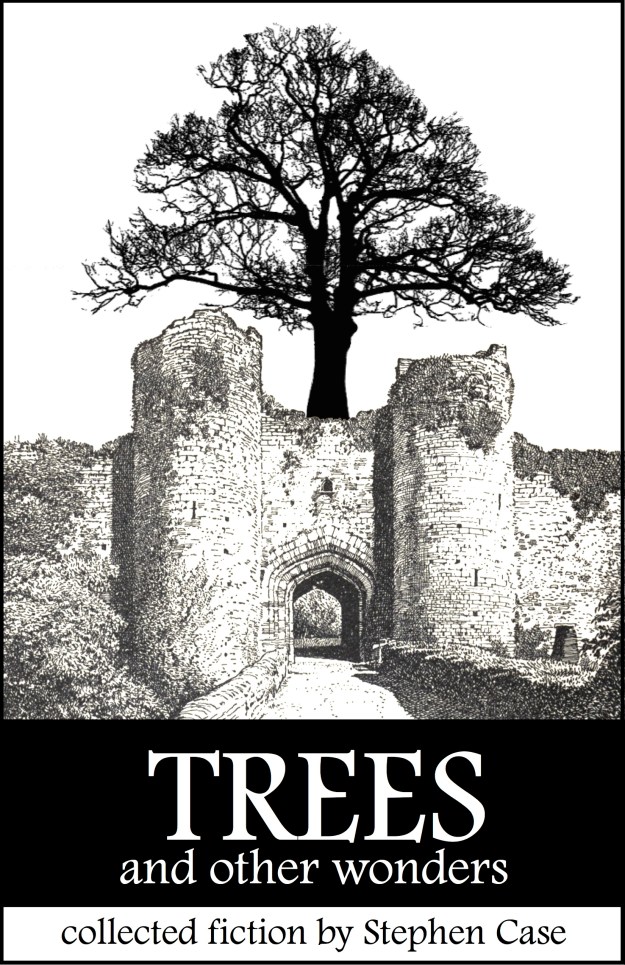
Trees and Other Wonders

castle version

After I had published ten stories in various print and electronic magazines– at least one of which was published on another continent and many of which were quickly out of print– I figured I’d collect them all and try my hand at an anthology. Here they are. Ten of my published pieces from 2008 to 2013, along with two unpublished stories that I felt were worthy of inclusion. This was my experiment with electronic publishing. Currently the work is only available on Kindle, though Kindle as a platform can be downloaded for free on pretty much any operating system. A few people have asked me about getting a print copy. As of right now, I haven’t spent enough time on Createspace to get one worked up, and I haven’t been very pleased with the quality of the print-on-demand books I’ve seen. I did the cover myself and had fun creating an afterword explaining a bit about each piece. I haven’t gotten much feedback, though there are a few nice reviews on Amazon. The one print review I garnered was published in the Australian magazine Andromeda Spaceways Inflight Magazine. I thought it said some pretty nice things, which I’ve quoted below: “There’s a richness of the imagination here, a calmly-measured pace, a solidity. . . . There’s a vivid quality to his writing, and an underlying ability to evoke wonderment at the worlds or tableaux pictured within these pages. There are echoes, too, of a Golden-Age-anything-is-possible kind of sensibility to many of these stories. . . . Case has produced a collection in which almost every story reads like a fable, the moral of which is a secret the reader may hope to discover before the end. There’s an easy acceptance of the fantastical, a hint of the impossible.” I like that. If you’re interested, you can get a copy here.

Manalive

ManaliveManalive by G.K. Chesterton

My rating: 5 of 5 stars

What does optimism look like? What would be the result of a life lived in absolute goodness and innocence? Do you have to be blind and stupid (or intolerably dull) to imagine the world is an unspeakably good place and behave accordingly? This is the paradox of reading Chesterton. These are the questions that Chesterton, in all his blustering bigness, wrestles with in every one of his writings. And we shade our eyes, and we laugh or we sigh, and we ask ourselves: was he serious? And we hope desperately that he was.

I can’t do Chesterton justice. He’s a wonderful, frustrating, bigger-than-life character who himself belongs in a fairy tale (and, fittingly enough, Neil Gaiman puts him there in The Sandman). He has inspired and exasperated generations of Catholic apologists. He was a columnist, a journalist, a writer of pseudo-fantastic tales, a Christian apologist, and author of the greatest long-form modern poem in the English language. He is C.S. Lewis with a bit more swagger. He’s hard to swallow, wonderful to read, and always painfully refreshing.

Chesterton believes that the world is good. Unflinchingly, undeniably good. You can find his apologetics in Orthodoxy, but you can find his philosophy distilled to the best effect in his novel Manalive, one of my all-time favorite books. Manalive—for reasons I still don’t understand—is not as well known as The Man Who Was Thursday or even The Napoleon of Notting Hill. But if you want Chesterton at his brightest, if you want to know what all the fuss is about, start here. It’s not all smooth going, especially if you’re not up to speed on late-Victorian literary forms (because no one outside of Masterpiece Theatre really talks like this, do they?). Much of the story is told through letters and nested flashbacks, and the characters spend most of the duration of the novel in a single room. It’s short though, and it would make a fine play.

I maintain that it’s a great book. I’ve read most (all?) of Chesterton’s novels, and I think this is the best elucidation of what he was trying to convince people of regarding the nature of reality. Perhaps not the most compelling plot, but still fun to read and (once you get used to it) laugh out loud funny.

The plot is fairly straightforward. A group of world-weary adults are living together in a boarding house in London called Beacon Hill. An old acquaintance of one of them shows up and with his madcap antics convinces them that they’re not really living and that they should spend more time climbing trees, playing games, and having picnics on the roof. The boarding house is transformed into a place where anything is possible—where its inhabitants realize that anything always was possible—and, among other things, they pair off and start planning weddings. Innocent Smith, the newcomer, is the model of Chestertonian Christianity: very much alive and very much convinced of the goodness of the world. This is Chesterton at his best: making you stand on your head to see that the world was a magical place all along.

But what’s this? Smith attacks a visitor to the boarding house in the process of planning an elopement with one of the boarders. New information comes to the surface. It turns out Smith has attempted murder before. He’s a criminal. A thief. And, apparently, a polygamist, abducting unfortunate girls all over the country. An inquest is held. The boarders, so recently enchanted by Smith’s antics, decide to investigate the matter themselves, and through a series of eye-witness accounts and flashbacks that form the second half of the novel, each of the charges against Smith—attempted murder, robbery, marital abandonment, and polygamy—are examined in turn. Is Smith a villain, or is he simply the exemplar of true goodness and innocence that seems madness in the eyes of the world?

If you know Chesterton, you know the answer. All of Chesterton’s paradoxes are trotted out and displayed in the life of Innocent Smith. Smith shoots at people, but only because he’s sure he’ll miss and to show them the value of life. He breaks into houses, but only his own, because it’s by climbing through a window or down a chimney that you can see what is yours from a new perspective. He leaves home, but only to find it again for the first time. He courts his wife again and again under different guises, because only marriage is the true, unending romantic adventure. He refuses to settle into a life of dull contentedness; he continually shocks himself into true life, into true awareness and appreciation of his world, his home, and his family, by a sort of constant cartwheeling of innocent amazement.

Does it work, we ask along with the other characters in the novel. Is it possible that being so perfectly good and perfectly innocent will result in such exuberant happiness? Well, Chesterton asks us through the lips of one of his characters, how many of us have ever tried it? Smith in this novel is Chesterton’s challenge to world-weariness and ennui, which were always for him among the greatest sins. But does it work? I can suspend disbelieve in a novel. I can, as through the wide, bright windows of Beacon House, look out for a time on Chesterton’s world of sunlight and dizzying clouds. I can try to believe the world is as good as he says it is.

But I doubt. This is my Chestertonian paradox, and I don’t know enough about Chesterton’s biography to answer it. Manalive was written before the Great War, which killed the optimism of millions of lesser men than he. (For some reason I have it in my head that Chesterton was a war correspondent during the Boer War, but I can’t find a citation that establishes that right now. If so, it would mean he had experienced some fairly gruesome things firsthand.) Did it kill his? Probably not, but what about a kid dying of cancer? What about all the rotten, shitty realities of the world that make Chesterton’s radical optimism seem ludicrously naïve?

I love Chesterton. I think he’s right. I hope he’s right, and maybe that’s what it comes down to: hope and choice, choosing to believe the world is better at the core than we can sometimes perceive or conceive. And if you can take that from a dead, sometime overtly racist, Catholic white guy, read this book.

Our books become the windows through which we see our world. You might find Borges and Wolfe (who modeled my favorite character in literature, Patera Silk, after Chesterton’s famous priest-detective Father Brown) sitting on the sill of Chesterton’s stories. And the view through these windows is indeed bright. That’s certainly worth something, since so many of ours have become broken or are looking out onto grisly, post-apocalyptic scenes. Read Chesterton to try to believe the world is that good, and then go out into it to see for yourself. I can’t promise he’s right, but I hope to God he is.

Life of Pi

Life of PiLife of Pi by Yann Martel

My rating: 3 of 5 stars

Sometimes I think a good author simply comes up with an incredible situation and then writes to see how the characters respond to it, what they do, how they eventually get out of it. In this case the situation is a lifeboat in the middle of the Pacific with a tiger aboard. Pi is the only human survivor of a sunken ship, which was carrying his family and a small menagerie to a new life in Canada. After the accident he finds himself on the ship with the tiger, a hyena, a zebra, and an orangutan– and very soon with only a tiger.

So much you can learn from the back cover. What the back cover (at least the back cover of my edition) doesn’t mention is the twist at the end that casts the entire story into a new, more sinister light. It’s a twist worthy of a Gene Wolfe novel, the hook that makes you flip back through the pages, wondering how much of what you read you really understood, whether you are even now interpreting the signs correctly. Without that twist, it would have been an interesting and compelling novel. It would have been beautiful even. But it would not have been haunting. You would not wake up in the middle of the night thinking about the novel, uneasily considering the stories Pi told.

The novel is broken up into three main sections. The first talks about Pi’s life growing up in India. This portion of the story is told as though the author is interviewing Pi years after his ordeal, though at this point we’re still not sure what that ordeal is. Only that it is a story that will “make us believe in God.” Pi certainly believes in God. His enthusiasm for God leads him to actively pursue and practice three faiths, that of Christianity, Islam, and his native Hinduism, much to his parents’ perplexity. We also learn a lot about zoo-keeping here, as this is where Pi grows up, the son of a zookeeper in Pondicherry. Martel gives us lots to think about regarding our relationship with animals and the subtle, complex, and nuanced universe that is a zoo.

The second and longer portion of the work is Pi’s story about what happened in the lifeboat, how him and the tiger (named Richard Parker) survived their several-month ordeal. We already know the story is going to have a happy ending. (Remember, Martel is telling this as though getting it all from Pi himself, now married and with children and living in Toronto.) Our universe telescope’s down to Pi’s lifeboat, the day-to-day details of surviving at sea and living in close proximity to a Bengal tiger who is always hungry. This is where all the background regarding animals and zoo-keeping comes in handy. The book fits together well in that respect.

It doesn’t fit together as well regarding all the background we got about Pi’s religious faith in the first section of the story. The zoo-keeping stuff blended with survival at sea with the tiger. I kept waiting for Pi’s faith to likewise come into play in some deep existential way during his time on the ocean, but it never happened. Pi was simply there, with God, surviving. No epiphanies or visitations. No deep meaning welling up from his ecumenical perspectives on Vishnu, Jesus, and Muhammed. That’s fine, I just felt the first portion of the book was setting us up for something along those lines.

The third and by far shortest portion of the book was Pi’s interview with two Japanese officials who came to find out what he could tell them regarding the shipping accident. This is where the book twisted, where it showed a hidden depth I had not expected. Up until this point it was an enjoyable, imaginative novel with great description, a clever situation, and splashes of lovely surreality (because the Pacific, after all, is a huge and fairly unknown place to be drifting across). But the details of the story Pi tells are too fantastic, too unbelievable to these polite Japanese officials. Pi says some things about faith, about what we chose to believe.

And then he tells another story.

Perhaps this is the point of the book, the crux of the story that “will make us believe in God.” Because– and I don’t want to give too much away here– there are multiple ways to understand what actually happened to Pi while he was at sea. Pi asks the Japanese officials which story they think is better, which one they choose to believe. Pi knows what happened though, while his hearers have to make a decision. I’m not sure the analogy is perfect here, but in some sense this is us with life. We know what happened. We see (at least pieces of) the complex system of cause and effect we’re snarled within. Crazy, random, maddening, and sickening things happen. But we have to decide what story to believe– a story of chaos and meaninglessness or a story of significance.

This is a story that will make you believe in God, he said. I’m not sure it did. Maybe Martel is just telling us an excellent story about a boy and a tiger (and an ocean and a cannibalistic castaway and a carnivorous island and a tiny zoo in India). But maybe he’s also telling us a story about how life works and how we choose which stories to believe.

More than Meets the Eye

Transformers: More Than Meets The Eye Volume 1Transformers: More Than Meets The Eye Volume 1 by James Roberts

My rating: 5 of 5 stars

This is it. All your best friends from childhood getting on a spaceship and heading out who-knows-where to have adventures. The main characters you’re tired of are out of the way. The second-stringers you always wanted to get more development are getting exactly that. With a real story. And humor. And fantastic artwork. This makes all the badness that was the live action movies go away. You can even ignore the disappointing Dreamwave reboot. I haven’t had so much fun with a comic since Titan Books reissued the original Simon Furman Marvel run, and if I’m completely honest– this is better.

Transformers: More Than Meets The Eye Volume 2 (Transformers (Idw))Transformers: More Than Meets The Eye Volume 2 (Transformers by James Roberts

My rating: 5 of 5 stars

I’ve read more Transformers comics than I would readily admit, always trying to get back to the wonder that was the finale of the original Marvel series scripted by Simon Furman. I’ve always been disappointed, until this series came along. I purchased the first volume for my son for Christmas and sat down to preview it. I quickly realized that a) this was not a comic for kids and b) it was amazing.

The second volume just gets better. Finally, someone actually building characters and writing stories that explore what it might be like to be a mechanical life-form involved in a six-million-year-old war. There are three “episodes” in this volume. The first involves Rachet solving a medical mystery on an Autobot outpost devastated by plague and actually uses the fact that Transformers transform as a pivotal plot point. The second involves the ship’s psychiatrist and a damaged patient, and– impossibly– makes you start to like Whirl. And the third– which shifts the focus from the primary players– surprises by taking some of the misfit Decepticons that usually sat forlorn in the bottom of your toy chest and making real characters out of them.

I still read more Transformers comics than I would readily admit, but now it’s usually the volumes from this series, which repay a careful re-reading.

Transformers: More Than Meets The Eye Volume 4Transformers: More Than Meets The Eye Volume 4 by James Roberts

My rating: 2 of 5 stars

I have been following this latest (and by far best) comic incarnation of the Transformers since it began, and with each volume I have been more impressed. Finally real story-telling and fantastic artwork combined to bring my favorite characters to life once again. This volume though was the first that disappointed. It was still quite good, and I liked it even better on the second read, but I have some major complaints:

1. The artwork. Not up to the standards of the previous volumes. Milne’s name was on the spine, but so were a few others, and it made me realize how much the previous storytelling has been married to the artwork. There are some things you just can’t do well without the art to back it up. The final scene of the “guys night out” issue, for instance, with Cyclonus teaching Tailgate ancient Cybertronian ballads at a table in an empty bar. It just doesn’t work if the art isn’t strong enough to carry it, and it wasn’t.

2. The resolution of the Overlord story arch. This had been building for a while, and the issue leading up to the final confrontation built it even more (and was perhaps the most effective issue in this volume). But then, when he finally faced off against the crew, it was over so quickly, and a good part of the action happened off panel. I felt we were entitled to more here. There were deaths, but it was that of a minor character that I found the most effective. Later, the ship dropped five coffins, but we never even really learned who.

3. The drama. I know all these characters have been together on a ship for quite a while now, but the drama is starting to get old. If you’re going to hang so much on the relationship between Chromedome and Rewind (which, to be fair, is quite well done), then ease back on everyone else. Magnus opening up to Swerve. Tailgate’s attachment to Cyclonus. Rodimus’s not growing up. Ratchet and Drift’s love-hate thing. I love it that these characters are being developed, but this volume in particular just seemed to be laying it on a bit thick.

None of this, of course, will stop me from scooping up Volume 5 as soon as possible.

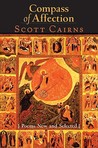
Compass of Affection

Compass of Affection: Poems New and SelectedCompass of Affection: Poems New and Selected by Scott Cairns

My rating: 3 of 5 stars

I often don’t “get” modern poetry, and I’d like to think it’s not from lack of trying. I miss the rhyme and the rhythm that makes poetry fun to read aloud, or I simply don’t pick up on the deeper or more subtle rhythms of contemporary poetry. But I heard that Cairns was supposed to be the greatest Christian poet alive, and that he was Orthodox to boot, so I thought I’d give this a chance. This volume collects poems from several of his previous volumes with some new poetry as well. It wasn’t until the poems from PHILOKALIA (2006) that I started to really enjoy it, to pick up on the symbolism and the meanings, and this likely had to do with the fact that his poems from that point get distinctly religious and distinctly Orthodox. So I had a leg up on deciphering the metaphors, understanding his language. And he does indeed speak the language very well. He has a gift for distilling the mythos and praxis of much of Orthodox spirituality into half a dozen spare lines. As for example when he discusses repentance, in “Adventures in New Testament Greek: Metanoia”, here the last stanza:

as if the slow pilgrim
has been surprised to find
that sin is not so bad
as it is a waste of time.

“Possible Answers to Prayer” was another favorite and illustrates what Cairns is able to often do when discussing prayer: convict the shallowness of so much contemporary prayer while simultaneously giving a call to the sea depths of true prayer:

Your intermittent concern for the sick,
the suffering, the needy poor is sometimes
recognizable to me, if not to them.

There was much here I did not understand. There was the frustration I often run into when reading poetry of trying to extract some meaning from a handful of lovely metaphors. But there’s obviously a great deal of wisdom as well.

This passage, from “Late Apocalypse” struck me as well

… I turned and saw before me
seven bright convenience stores, each laden with a hoard
of sugars and of oils, fuels devised by economics to obtain
the most satisfaction with the least actual good . . .

His poetry is not perfectly happy, because the world is broken (and what poet, ever, is perfectly happy?). And yet behind so many of the poems there is a hint of that golden glow in Orthodox icons (which he writes about as well), the light of the world to come, or of this world if we can train the eyes of the heart to see.

View all my reviews

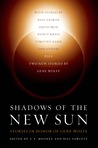
Shadows of the New Sun

Shadows of the New Sun: Stories in Honor of Gene WolfeShadows of the New Sun: Stories in Honor of Gene Wolfe by Bill Fawcett

My rating: 2 of 5 stars

If you love Gene Wolfe, read this book. If you don’t know who Gene Wolfe is, or if you haven’t yet gotten around to reading his stuff, don’t read this book. Read his stuff. Because, consider: for what other contemporary science fiction and fantasy author could you publish an anthology with original contributions by such well-known and respected names all somehow influenced by and tributing him? Even if you don’t believe all your nerdy and literary friends about how great Gene Wolfe is, you should believe Gaiman and Brin and Haldeman and Zahn.

That said, I only gave the anthology two stars. As much as I wanted to like every story in here, I was less than impressed by many of them. It’s probably not fair to compare them to Wolfe’s own stories (the anthology is Shadows of the New Sun, after all), but I couldn’t help it. A story written about Severian by someone other than Wolfe? Someone else trying to play with myth and allegory in a Latro tale? A view of Ushas through non-Wolfean eyes? They felt flat to me. Even Gaiman’s contribution was a bit of a disappointment. I would also have enjoyed hearing more about Wolfe’s life and influence; the introductory paragraphs before each story weren’t enough, especially when each story was followed by author bios two or three times as long.

There were bright spots. I especially enjoyed the contributions by Brin, Allston, Swanwick, and Zahn. Maybe because they were original pieces, and to me that seems the best tribute to Wolfe: be original. Do fine writing, but be original. Not that the others were totally derivative, they just weren’t Wolfe enough to play in Wolfe’s worlds or to play the kind of literary games that Wolfe does so well. Or I’m just picky when it comes to my favorite writer. If anything, this anthology (in particular Swanwick’s story) did inspire me to re-read The Fifth Head of Cerberus, and that may be the best gift of all.

View all my reviews