Tag Archives: reviews

Great Sky River

Great Sky River (Galactic Center, #3)Great Sky River by Gregory Benford

My rating: 3 of 5 stars

Warfare between man and machine has become something of a trope in science fiction, from the future apocalypses of the original Terminator (which scared me to death as a kid) to the more recent, sexy and subtle conflicts of Ex Machina. Often these man-vs-machine dystopias play out against the ruins of our own civilization, with landmarks or blasted-yet-familiar vistas driving home the fact that our own creations have destroyed what we had previously built. Gregory Benford’s classic science fiction novel Great Sky River takes these tropes but adds a layer with an exotic locale and far-future setting that manages to be an even more effective backdrop to the conflict than the near-future alone.

On a world called Snowglade near the center of the galaxy, the remnants of a thriving human civilization eke out a desperate existence in the shadow of a mechanical civilization that has displaced and now disinterestedly hunts them. The machines are not, as in the Terminator and many other incarnations of this story, consciously seeking humans out for extermination. Rather, human cities have been destroyed as one would destroy the infestation of a pest, and the survivors are haphazardly hunted like you would a few remaining cockroaches. Over the course of the novel though something begins to change, and the remaining bands of humans realize a new mech is beginning to take a special interest, herding and harvesting the remaining human population. (You might get glimmers of The Matrix here, though you wouldn’t be quite right.)

What makes this work especially fascinating and haunting is that we learn the history of the human rise and fall on Snowglade along with the main character, Killeen, through memories and legends. The knowledge is as foreign to us as it is to him, who grew up when humans were confined to a few remaining Citadels and is now on the run after the last human strongholds have fallen. It means we start to see the wonder of this far-future, now-fallen civilization through his own eyes as he, for instance, gets his first glimpse of the now-abandoned orbital space stations humans occupied when they first came to the planet centuries ago. And the vistas glimpsed here are immense: humans voyaging across tens of thousands of light years to settle these new worlds near the galactic core, a legacy only now remembered in a few lingering cultural artifacts.

It’s atmospheric elements like this (apart from a gripping plot) that make this novel work. Another example is the lexicon Benford develops for his characters. It’s a language atrophied in some ways, and it fits with a band of desperate warriors who have been struggling to survive against a mech encroachment for generations. It also contrasts nicely with the voices in the main character’s head: digitalized Aspects of humans of past generations who live on in embedded electronics and serve as sources of information regarding Snowglade’s past.

Which brings me to the technology: Killeen and his band belong in a well-crafted first-person video game. They’re more or less cyborgs themselves, unthinkingly using exoskeletons, downloaded personas who ride in their minds, enhanced vision, and implanted radio transmissions. This is all blended seamlessly into the narration of Killeen’s experience, making it feel as natural to us as it does to him, a society that has lived with such modifications for centuries but is running out of the knowledge to keep it functioning. It feels like the gritty technology of weaponry and heads-up displays that would translate well into a first-person shooter or rather that the creators of games like Halo had Benford’s descriptions in mind.

Benford also brings his expertise as a professional astronomer to the fore in describing the celestial backdrop upon which this all plays out: a world orbiting a star that orbits the supermassive black hole at the galaxy’s center. Like Snowglade’s history, this isn’t spelled out explicitly: it comes in pieces through Killeen’s observations of what for him is a standard sky by day and night. Benford uses this exotic stellar locale for a far-flung deus ex machine that I can only trust will be explained (and probably very scientifically and rigorously) in a later volume.

I was gripped from the first chapter. The gritty, desperate situation in which we find the characters, coupled with the unfamiliarity of a far-future dystopia simply worked. I was hooked the entire time and couldn’t stop reading. (He uses the tried-and-true method Cormac McCarthy uses in The Road, another gripping dystopia, of a man’s overriding concern for his son in this dark future.)

That said, I didn’t like the way Benford’s book ended. It wasn’t the parabolic ending that disappointed me. You could see it coming for quite some time, and it flung our heroes into even wider and broader vistas that Benford certainly explores with success in the later volumes.

No, what disappointed me and seemed to sap much of the urgency of the survivor’s plight was the ghost in the machine that was revealed as their ultimate antagonist. Without giving anything away, I’ll just say that after spending the first half of the book constructing a scenario in which the mech civilization was utterly non-human and obliviously hostile, it felt strange and somehow deflating (and also just sort of weird) in the way the primary antagonist was eventually revealed. Part of what made the book compelling was how un-anthropocentric it was: even though it followed the story of these humans, we were seeing them in a world that didn’t care at all about them and had almost unthinkingly wiped them out. But of course, it turns out that humans are actually quite special and central. (Who would have thought?)

In all, Benford is definitely worth keeping on my “to read” list, and I’m eager to dig into the rest of his novels set in this universe and answer the riddles of humanity’s fate at the center of the galaxy.

The Incal

The IncalThe Incal by Alejandro Jodorowsky

My rating: 3 of 5 stars

It was a good Christmas this year. Among other things, I found beneath the tree a book sometimes said to be the greatest comic ever written, The Incal. I don’t know about that, but it does seem a sort of Citizen Kane of science fiction graphic novels. It’s written by Jodorowsky with art by Moebius, both of whom are names that loom large in the background of lots of science fiction whether or not you’ve actually heard of them. The comic was originally published in the 1980s in French and is supposed to have been pivotal in defining the scope and possibility of the medium for doing epic, genre-bending science fiction. Jodorowsky was at one point working on an screen adaptation of Dune (late 1970s, prior to the David Lynch version) and though abandoned you can see the influences here. Moebius went on to do art and storyboards for things like Tron, Aliens, and The Fifth Element, which is why much of The Incal seems eerily familiar. It was a test bed for much of what defined scifi for the next decade.

As far as narrative goes though, the bones are bare. We’re abruptly dropped into the life and mishaps of John DiFool, a rumpled, selfish, slovenly private investigator, who stumbles upon a powerful conscious entity/artifact called the Incal and who quickly becomes the target of random groups and forces angling to get their hands on it. Characters are introduced just as abruptly as well, without any real backgrounding or development: evil swamp queen, superhuman bounty hunter, dog-headed marauder, and topless animistic love interest. Dialog is clunky, with characters frequently explaining themselves, their feelings, and their motivations. Like Citizen Kane, looking back on it now it seems pretty wooden.

But in the midst this Jodorowsky spins out a dizzying, fractal-like story that spans multiple galaxies and ranges from slum planets (with loads of social satire) to the gold-encrusted galactic capital to watery prison worlds and beyond. Even though the first half of the book is basically one long chase scene and the second a lot of random things happening in quick succession, each thing is brilliantly new, fusing fantasy, science fiction, and mysticism (the main characters are supposed to each embody characters or aspects from the Tarot), making it a worthy read.

It’s the art of Moebius though that marks this a classic. Jodorowsky’s writing is haphazard and exuberant, but he doesn’t provide any depth of character or real explanations of plot. The only revelations that come in the book are in the shattering, full-page vistas by Moebius. What could in prose be a run-of-the-mill deus ex machina, for instance, becomes in this medium a gorgeous and sublime epiphany.

Moebius’s art is multi-form and morphic. It’s gritty when necessary, cartoonish when appropriate, and epic, sweeping, or detailed as needed. Packed crowd scenes feel almost Where’s Waldo-esque, aspects of the Great Darkness foreshadow the segmented horrors of Aliens, and the detailed techno panels feel familiar from classic Star Wars story boards or concept sketches. Overlaid with this all, the colors are sharp and vivid, making the whole sweeping dream-like tableau electric and lively. It’s easy to see why this was groundbreaking at the time (and scandalous, considering some scenes made it originally censored in its first US release) .

The edition of the work I found under the Christmas tree is packaged in hardcover with high-quality printing that I can only imagine helps recapture what it must have originally felt like reading it. With that and the added touch of a ribbon bookmark, the outside of The Incal feels as weighty and significant and the interior is trippy and avante garde, like you’re holding a piece of visual and literary science fiction history (as you are).

The Orthodox Liturgy

The Orthodox Liturgy: The Development of the Eucharistic Liturgy in the Byzantine RiteThe Orthodox Liturgy: The Development of the Eucharistic Liturgy in the Byzantine Rite by Hugh Wybrew

My rating: 4 of 5 stars

A friend and I have been having an enduring, good-natured disagreement on the nature of the Church and Christianity. He sees the history of Christianity as the accumulation of dogmatic and hierarchical barnacles that must be scraped away in order to get back to the pure, original Christianity of Christ and the first apostles. If you look at the history of the institutionalized church, he says, you see accretion, abuse, and general messiness that wasn’t an initial part of what Christ intended. The history of the Church, I think he might say, is a long history of missing the mark.

There’s certainly some truth to this. But if we’re using the analogy of barnacles encrusting something original and true, my answer to this metaphor is that I don’t think Christ came to entrust the apostles and the early Church with a boat. That is, I don’t think His purpose was to create or deliver something whole and entire that was supposed to be passed down, static and unchanging.

Don’t get me wrong. I’m not saying Christ did not come to deliver the truths of the kingdom of God or that those truths evolve or develop over time. I’m talking about the Church itself. It did not spring whole and mature at Pentecost like Athena from the mind of Zeus. Christ did not deliver a boat that we have to scrape the barnacles off to get back to the original shape. Rather, something was born at Pentecost, something given life by the descent of the Holy Spirit, and that thing is better represented (in my mind) as a thing living and growing in history (like a tree) than a shape or structure that needs to be restored.

This difference comes out most clearly when we talk about the actual practices of the Church. What is it here to do? My friend might say that all the dogmatic and ecclesiastical elaborations— incense and vestments and hierarchy and everything else that goes with liturgical worship— are examples of encrustations that need to be cleared away. It’s obvious these were not what the apostles were doing in the generation or two after Christ’s ascension.

On the other hand though, neither was the Canon of Scripture established, the dual nature of Christ articulated, or the trinitarian dogma formalized in those first generations. These were things the Church did in response to the historical events of the life and resurrection of Christ. They didn’t fall out fully formed and articulated. They were the result of the Church wrestling with what they knew to be true under— we believe— the guidance of the Holy Spirit. Christ didn’t deliver a body of beliefs or a structure of worship; he birthed a Church: a living, organic, growing, evolving thing.

To me, this view is necessary for understanding the work of the Holy Spirit in the narrative of history. It’s never made sense for me to see the Church as almost immediately “going wrong,” though proponents of this view often disagree about just when it started to depart from the “pure” faith of the apostles. If, as many do, they point to the reign of Constantine, this is also the same point at which the Nicene Creed is first articulated. So if we want to throw up our hands at the Church getting in bed with Imperialism, we also have to throw up our hands at the first attempts to formalize statements of Christian belief, which came about by the instigation of the Emperor.

I say all this to say that whichever view you take— barnacles or growth— will influence how you interpret the work of Hugh Wybrew in The Orthodox Liturgy: the Development of the Eucharistic Liturgy in the Byzantine Rite. Either it’s a story of how multiple encrustations of liturgical worship grew up from the first to the fourteenth century to obscure the Church’s early and pure form of worship, or its a story of the development of the liturgy to the rich, vibrant form it has today. Enrichment or encrustation is a matter of perspective and teleology.

Wybrew, former Anglican bishop of Jerusalem, offers a comprehensive, in-depth survey of the development of the liturgy in the East— the liturgy celebrated by Orthodox Christians each Sunday around the world— from the the earliest Christian documents until its more or less fully developed form in the fourteenth century. One the one hand, you can’t read this book and then maintain that your Church worships in the same way as the apostles, or in the first generations after them, or even as the Church did in seventh century Byzantium. The liturgy has evolved. On the other, you’ll find surprising consistencies throughout. Wybrew follows both these aspects, change and continuity from the apostolic days until the fourteenth century, in this work.

The study is chronological, drawing on surviving documents and accounts to give a representation of liturgical worship (which, it needs to be pointed out, was not simply one way of worshiping but the structure of Christian worship) in different periods in the Byzantine Empire. Early on there are different forms of the liturgy, all with certain common traits, but by the seventh century the form practiced in Byzantium comes to dominate and become the standard throughout the Eastern Empire. Here the book’s focus is delineated: Wybrew isn’t looking at the rites of other non-Chalcedonian Christianities, nor is he doing a detailed comparison between the liturgy of the Greek East and the Latin West. It’s the evolution of a single species, albeit one that for various reasons became the dominant form of worship still practiced in almost all Orthodox churches around the world.

Wybrew— himself not an Orthodox— does not idealize this process, though he clearly sees the liturgy itself as a meaningful, historically rich, and important aspect of Christian worship. He points out places, for example, where changes over time have obscured the ritual’s original form, where certain important practices (such as Old Testament readings) have been dropped, or where vestigial practices (for instance the intonation of “the doors” before the reading of the Creed) have lost their original meanings. The most problematic trend that Wybrew sees though is the move throughout the centuries to separate the clergy from the laity, making the liturgy clergy-centric to the exclusion of the common people. Aspects of this include the practice of saying certain prayers inaudibly, closing off of the alter from the rest of the church, and infrequent communion by the people. All of these things served to separate the laity from the liturgy itself and make them more and more simply spectators of things they couldn’t fully hear or see or understand. (This perspective though also helps one appreciate how important are recent trends to correct this.)

Another helpful part of this work is that Wybrew doesn’t only provide a historical narrative of how the liturgy developed; he also outlines a history of its interpretation. That is, as the liturgy developed, it became something itself interpreted by theologians, linking the different aspects of the liturgy with scenes from the life of Christ, for instance, or with various representations. Like Scripture itself, the liturgy has an superabundance of meaning. The Great Entrance, for example, may historically be a vestigial practice that grew out of bringing the bread and wine from a separate building where they had been deposited by members of the congregation to the church itself, but today it is seen as also symbolizing the entrance of Christ into the temple, for example, or the beginning of His earthly ministry, or more generally simply the coming of the Word of God into the World.

Which illustrates something important about the Orthodox Liturgy, and something that brings us back to the idea of barnacles and boats. Is something like the Entrance a piece of encrustation that obscures the original practices and life of the Church? If by this question one is asking whether it’s something that was practiced from the very beginning or something vital to an understanding of Christianity, then the answer is probably no. So should it then be abolished? An Orthodox Christian would say no, because it’s a part of the organic growth of the practice of the Church. It has a place and a significance and a meaning. The Holy Spirit was the gift of God to the Church at Pentecost, and that Holy Spirit has been continually creating the Church and its realities in our world since. Things like the Entrance are part of a living heritage of faith.

The liturgy, as Wybrew shows so well in this text, has been a process of growth and development. It has been an evolution. It continues to evolve. It’s alive.

A random and perhaps theologically-flawed analogy: in some ways my view of the Church is like my view of marriage. Sure, I want to remain focused on the faith and the promise of my marriage and at times work to get back the simplicity of love that drew my wife and me together. But marriage isn’t something static; it’s the beginning of a unified life. I don’t look on everything that’s developed over our years together, all the practices and realities of a relationship and family and the traditions that have grown up in our home, as barnacles I need to scrape away to get back to the true purity of our original wedding day. I wouldn’t even know what that means.

A theologian could probably point to flaws in my analogy, and Wybrew’s work is certainly not an argument toward this understanding of the liturgy or the faith itself. Wybrew’s work is simply information: a comprehensive and well-researched outline of how the liturgy has developed and been interpreted over the centuries. How you view that information— as illustrating pointless accumulation of dead ritual or organic growth of living worship— is up to you.

The Rewind Files

The Rewind FilesThe Rewind Files by Claire Willett

My rating: 4 of 5 stars

I stay away from espionage. I also (at least in my own writing) tend to stay away from time-travel. Things get far too complicated too quickly, and it’s all I can do to try to wrap my mind around the paradoxes inherent in even a simple time loop. I also– to my shame– tend to avoid twentieth-century history in particular and American history in general in my own work, which revolves around astronomy in the 1800s. The Rewind Files, by Claire Willett, involves all of these.

On the other hand though, I do love a good scifi yarn.

In this instance, I was in no way disappointed.

Claire, who among other really cool things has written plays on the history of astronomy, has quite simply written a very smart, very compelling, very impressive 20th-century, time-travel, espionage adventure. It fits together beautifully, it has dizzying twists and turns, and it has sharp characters with crackling dialogue. It’s just really, really good.

But that’s not a very insightful review, so let me try to unpack that a bit.

First, let’s start with the nuts and bolts: the history and the time-travel. I’m embarrassed by how little I know about my own nation’s history and in particular the Watergate scandal, which forms the historical backdrop to this misadventure. But it’s clear Claire has done her research– and not simply as a dutiful student but as someone who is passionately interested in the characters and the narrative of these events. She doesn’t just make this history come alive: she plays with it, dances around it, and makes it give her a quick peck on the cheek. But it works because she knows what she’s talking about. And she loves what she’s talking about.

Now the time-travel: this is where she gives even classic popular time travel treatments like Back to the Future or pick your favorite Babylon 5 story-arch a run for its money. All the loops (and there are several of them) get tied up and make all of the questions from earlier make sense. All of the snakes bite their own tails quite nicely. And the complexity of the time-hops and transporting (superimposed on the additional complexity of a branch of the government dedicated to preserving the integrity of the timeline) is handled with the dexterity of someone fluent in technobabble: creating a system of constraints and then playing fairly within it but also surprising the reader. I might even use the term elegant.

But those are the nuts and bolts of a good episode of Dr. Who: what about the things important in a novel, characters and plot? Claire gets awards for writing plays, so you’re in good hands here as well. The plot is solid, and though I admit it was a bit slow to start, a) by the time the penny dropped about halfway through I was hooked and couldn’t put it down for the rest of the novel and b) my confusion in the first half from getting dropped right into things cleared up with the reveals in the second half. As soon as Gemstone hits, we don’t get another breath until the end of the book. The twists are satisfying because though nothing is out of left field (you have some inkling of some of the big reveals), they’re handled in an unexpected manner that makes them all the more effective.

And then there are the characters. I put the book down several times while I was reading and told my wife, “You have to meet Reggie.” Claire’s main character is nearly flawless (not as a person, but as a character). She’s snarky, self-deprecating, and competent. She loves her family, all of whom play a major role in the action. The cadre of time-bandits Claire builds up around Reggie are the most endearing part of the story, and more than anything else you get the sense that all the deftly-handled history and time-twists are more than anything to give these characters a fascinating canvas to run around on. You like Reggie, but more than anything else you believe in Reggie.

The Rewind Files being a time-travel odyssey of course could have a sequel tacked on, though it’s more structured to allow a prequel or even a concurrent novel following the exploits of Reggie’s famous father. I don’t know if I want this though. I want Reggie and her friends to have an enduring happy ending, one no longer threatened by major distortions in the timeline.

More than anything, I just want Claire to create some more characters and do this again– only completely different this time.

Baylor at the Crossroads

Baylor at the CrossroadsBaylor at the Crossroads by Donald D. Schmeltekopf

My rating: 4 of 5 stars

I’m coming to realize how much has been written about the nature, state, and ultimate fate of Christian higher education. Universities and colleges– my own included– seem to be at a kind of crossroads, with several tensions at play. Some of these are financial pressures, the forces that compel a university to take a hard look at its bottom line and dig into best practices from business and administration (often to faculty dismay). But there’s also the related tension between the liberal arts approach and professional training, as well as the tension between teaching and research, and between a school’s historic religious or denominational affiliation and a slide toward secularism.

Things are messy and complicated in the academy.

In other words, business as usual.

Against this background, the few Christians schools that have successfully navigated a transition from traditional undergraduate college to thriving research university while remaining true to their Christian identity markedly stand out. Chief among these in evangelical circles is Baylor University.

Baylor at the Crossroads: Memoirs of a Provost is a slender volume written by Donald D. Schmeltekopf, Baylor’s provost for more than a decade during the key period in the school’s transformation. His readable, straightforward recollection outlines his role in the transition of Baylor from a traditional undergraduate university with strong professional programs and a few graduate degrees to the premier research university in the evangelical tradition. Central to this though, as Schmeltekopf is anxious to make very clear, is a consciously maintained commitment to Baylor’s Baptist and Christian identity.

In some ways, this book provides a good counterpoint to Benjamin Ginsberg’s Fall of the Faculty, which I reviewed several weeks ago. In that book, the author rails against administrative bloat and the growing power of bureaucratic administrators interested in little beyond the pursuit of their own agendas. Schemltekopf’s account is certainly one of a dizzying array of meetings, provosts, vice provosts, assistant vice provosts, committees, centers, and campus initiatives, but it offers an example (at least through Schmeltekopf’s eyes) of how this administrative arsenal can be arrayed to effectively lead a university, catalyze research, and set a guiding course for the integration of scholarship and faith.

This doesn’t take place without bumps in the road, of course. Schmeltekopf is honest in his retrospective in examining the resistance among the faculty to some of the changes he helmed and in particular administrative endeavors such as the Polyani Center, created for foster scholarship on the relationship between science and Christianity and but becoming quickly embroiled in controversy related to exploring questions of intelligent design. In many of these cases, he admits that problems arose when administration didn’t get enough “buy-in” from faculty or were too top-down in their practices.

Some of the details in this book will be tedious to those unfamiliar with either the ins and outs of life on in university in general or with Baylor in particular. Schmeltekopf goes into detail on many of his initiatives, to the degree of what was discussed at specific faculty retreats and who the speakers were. At the same time, it’s interesting to see the curtain drawn back on the nuts and bolts of what from most external signs looks like a very successful provostship.

It’s also interesting to hear Schmeltekopf’s clear appeal that the missional emphasis of Baylor’s Baptist heritage not be lost. This is a primary theme in the work and throughout Schmeltekopf’s career: finding the balance between academic rigor and success in the academy without the drift into secularism that often accompanies. For Baylor, this meant an awareness of the difficulty in walking this line, campus and faculty dialogue on these issues, and a careful hiring practice in which provost and president played a close role in the hiring of faculty and were not hesitant to block hires they did not feel were missional fits.

There’s not a lot of Schmeltekopf’s philosophy of education in here; rather, it comes across in the account of his praxis. He writes on his initiatives to promote the liberal arts at Baylor, resulting in the formation of an Honors College and great books major, but here the book is most helpful in offering reading suggestions that shaped the thinking of someone who put these things into practice in his own institution.

For me, this book was also helpful in formulating my own vision and wish list for my own institution, a place in a situation somewhat similar to where Baylor found itself a few decades ago: a teaching university with some strong professional programs, a few graduate programs, and a proud denominational heritage.

But where to go from here?

Like Schmeltekopf’s Baylor, I feel we’re at a crossroads. Will we go on to be the “Baylor” of our own denominational affiliation? Or the University of Phoenix of the evangelical world? Or maybe something more like a tiny, Christian MIT– focused on producing engineers and scientists of excellence? None of these would necessarily be a wrong choice, but we can’t become all three.

Luckily for me, that decision and casting of that kind of vision are well above my pay grade. But I still look at Schmeltekopf’s account for ideas I think would benefit my own context, recognizing the important difference between us, a difference that remained a block box in Schmeltekopf’s account: money. Whatever else can be said about Baylor’s transition to a world-class institution, it certainly seemed to have all the money necessary to make this possible (or at least connections to that money).

Whether or not these can be instituted in my own particular setting, at least according to Schmeltekopf’s work the following seem things necessary in the transition from denominational college to world-class institution:

1. external advisory committee – One of the things Schmeltekopf talked about was the importance of having a large group of external but invested individuals help provide guidance in steering Baylor toward the future. This is different than hiring consultants; these seemed to be primarily well-placed, influential alumni who had important connections and experience but who also a genuine interest in seeing the university succeed. Involving this large group and giving them an official capacity as an advisory board not only generated good external insights, but it also made this group even more invested in Baylor’s future, something I imagine had monetary pay-offs eventually as well.

2. internal faculty panel – In addition to this large external group of advisors tapped to help plot Baylor’s course and review its priorities at its 150th year, Schmeltekopf talked about less official faculty advisory groups that met regularly throughout his tenure with no specific goal or objective but to dialogue about the relationship between faith and scholarship and how that played out on Baylor’s campus. This was a rotating group that met for breakfast regularly with the provost, and by the time it was done it had allowed the majority of faculty-members on campus a chance to dialogue closely and informally with their administrators. An institution will not move toward being a world-class university without enthusiastic participation of the faculty, and keeping a wide variety of avenues of communication open and consistent seems essential.

3. fund-raising for academic positions (attracting quality professors) – Baylor under Schmeltekopf moved from fund-raising focused on building projects alone to securing funds to attract and maintain the best qualified professors, primarily through the funding of endowed chairs. Besides the resources to attract quality candidates in academia though, Baylor also had to have the confidence in its own identity and mission to maintain its missional standards while doing this. It didn’t feel it had to hire faculty only through prior connections to Baylor or Baptist contacts. It did what it needed to attract the best faculty out there, and then it maintained its standards in who it hired. This is a tough stance, and it can’t happen at all without financial resources invested in drawing and retaining the best teachers and researchers.


Again, these aren’t necessities everywhere, and they might not even be necessities where I am. There’s no clear consensus that we want to follow in Baylor’s footsteps. But if we decide that we do, Schmeltekopf’s account is a good place to being looking for ideas of how to craft an outstanding research university that keeps faith with its Christian heritage.

Waiting for Godot

Waiting for GodotWaiting for Godot by Samuel Beckett
My rating: 3 of 5 stars

The danger with teaching honors students is that you might learn something from them. In my astronomy class this year I created a new assignment where instead of writing a research paper I had the students write a dialogue between a geocentrist and a heliocentrist. One of my honors students wrote her dialogue using the characters and setting of Samuel Beckett’s Waiting for Godot, assuming I’d understand the literary references. I’m used to student using pop culture or sports references that are lost on me, but I couldn’t have a student using literary references I wasn’t familiar with, so I immediately grabbed the two-act play from the campus library and got to work.

We always find something, eh Didi, to give us the impression we exist?

The back cover of my edition tells me two important things and one utterly opaque thing. I learn that the play was written in French in 1948, so I can assume things about the shattered cultural backdrop against which Beckett was writing. I also learn from a reviewer that the play is “the quintessence of ‘existentialism’”, a interpretation one can agree with pretty quickly once one has gotten into the play. Finally though, there’s the quote by Norman Mailer that “consciously or unconsciously Beckett is restating the moral and sexual basis of Christianity which was lost with Christ.” There’s a lot I don’t understand about this play, but I don’t understand that quote about the play the most of all.

The play itself: two men, Estragon and Vladimir, spend two acts/days in an interminable twilight at a non-specific location (with a tree) waiting for Godot to come. They’re both tired, hungry, depressed, forlorn, and irritable, and they spend the time in often circular conversations trying to stave off depression and reassuring themselves that Godot will indeed come. Godot represents hope for a better situation, but he also represents imprisonment to their current condition: they would move on, away from such a depressing place, except that Godot has promised to meet them there.

In both acts they meet Pozzo and Lucky, a master with his slave. In both acts a young boy comes to bring a message from Godot. The exchanges between the two men and Pozzo and Lucky provide some of the most pathetic and humorous exchanges in the play. Pozzo’s bombastic pronouncements and domineering persona in the first act and his pathetic feebleness in the second say something about the trajectory of a man’s life. Lucky’s bizarre situation and his impassioned monologue– which, as my student pointed out, we want so badly to make sense– also represent something, I’m sure. Exactly what though is much less clear.

Waiting for Godot is obviously a classic because it’s full of symbols that are hauntingly familiar and yet unclear. There’s an abundance of meaning. But the play itself, for all its existential trappings, is surprisingly accessible. It’s easy to read, and the dialogue between the characters is sharp, poignant, and sometimes quite piercing. It’s a rounded bit of absurdity that points at a deeper, more tragic absurdity– that of life itself. But for all that, it goes down as easily and hauntingly as the darkening twilight in which Estragon and Vladimir continue to linger.

At me too someone is looking, of me too someone is saying, He is sleeping, he knows nothing, let him sleep on.

Harry Potter & the Goblet of Fire

Harry Potter and the Goblet of Fire (Harry Potter, #4)Harry Potter and the Goblet of Fire by J.K. Rowling
My rating: 2 of 5 stars

I never really liked the Harry Potter books, and for years I’ve been trying to articulate to myself why. Probably part of it is the determination to be suspicious of anything for which there’s a lot of hype. They didn’t quite take with me when they first came out, even after the girl I was dating made me read the first one. It wasn’t until years later, when I saw the first part of the seventh movie with the same girl (who was by that time my wife) that I decided the story was getting gritty enough to make me curious. I read each book over the Thanksgiving/Christmas holidays one year in graduate school, pausing after each volume to watch the movie adaptation. It was fun.

Now we’re doing the same thing with our twin eight-year-olds. This time, each time they both finish a book we’ve been watching the movie adaptation in the planetarium. We had a few of these “Harry Potter Parties” over the past summer and have made it up through Order of the Phoenix. After we finished the fourth movie, I figured I’d jump back in. I hadn’t read any of them in years, and Goblet of Fire had always been my wife’s favorite.

I still don’t get it. Part of me does, sure: it’s fun. Better than anything else, Rowling captures something (I’m not sure what) that makes you want to go back to Hogwarts with the three main characters each year. The magical boarding school aspect is fun. And as the novels progress, the growing threat of You-Know-Who’s return starts to become compelling. Pulling that out across several novels and following the Orwellian machinations of the Ministry of Magic to deny it eventually starts to build nicely.

But so many other books do this sort of thing so much better.

I had difficulty finishing Goblet of Fire. For one thing, I knew how it was going to end, so there wasn’t really anything driving me to finish it. (I honestly don’t understand how people read these books over and over again.) There’s a mystery, but Harry doesn’t really do anything to solve it. In fact, in this book Harry’s frustratingly passive. He spends most of the narrative complaining about how he doesn’t understand what’s going on, and the story plays out around him. This becomes quite a trend in the later books, aggravated by Harry’s growing adolescent angst. Maybe this is one of the reason the books appealed to kids who read it at a time when they were going through similar things in their lives, at least as far as feeling kind of powerless and at the mercy of circumstances.

Maybe Goblet is a good volume to analyze (though I’m really not going to spend much time doing that) because it’s a microcosm for my primary complaint about the series. As much fun as it is, and as much as Rowling has done just enough world-building to make it work, the whole series is stuff happening to Harry. Possibly that starts to change in the later books (which I don’t recall as sharply as this one I’ve just reread), but as far as book four Harry continues to be a fairly self-centered character who bumbles from one near-disaster to the next, shepherded through by people who are either trying to kill him or trying to protect him.

I guess the character I resonate with the most is Snape, because I kind of share his evaluation of Harry. And, though this isn’t directly relevant to Goblet, Snape’s ultimate fate is still my biggest (and in my opinion most credible) complaint against the series as a whole. A single outstanding question runs through the entire series, which is basically: which side is Snape on? And though we get an answer (not in Goblet), we never really get a resolution. Or rather, we get a resolution so pathetic as to not be worth the multi-book build up.

But I’m trying to give a review of Goblet. As far as the series goes, it illustrates that things are getting serious in the most blatant way possible: by killing a character. But as far as a stand-alone book, a tidy little puzzle gets wrapped up through last-minute revelations and Harry’s participation in the Tri-Wizard Tournament. Sure, the movie leaves out a lot of “plot details,” but it captures the essence: stuff happens to Harry. Serious stuff. But his friends help him out. Also powerful wizards.

But come on, give the kid a break. He’s really dealing with a lot of stuff right now. You know how his parents died, right?

To be absolutely fair though, watching my sons read through them and seeing how excited they got has been fantastic. I don’t have to be a huge fan to enjoy their enthusiasm or to enjoy watching them attempt to walk down the stairs, eat lunch, or do various household tasks with their noses in a pair of a five-hundred-page books. If Rowling is a gateway drug to Tolkien, Lewis, Le Guin, or L’Engle, then a million points to Gryffindor.

Planets & Stars

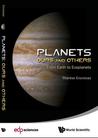
Planets: Ours and Others: From Earth to ExoplanetsPlanets: Ours and Others: From Earth to Exoplanets by Therese Encrenaz
My rating: 4 of 5 stars

The art of an insightful, timely, and scientifically rigorous overview is a difficult one. This is compounded when the subjects are as broad as planets and stars, respectively. Fortunately for the educated non-specialists, there two slender volumes succeed where many astronomy texts fail: they provide a comprehensive, up-to-date survey of two fields with enough breadth to be useful and accessible to the astronomy educator while retaining enough technical grit for those desiring more depth.

The first volume (Planets), by an atmospheric planetologist at the Paris Observatory, frames the current state of exoplanetary research and the search for life in the context of comparative planetology, starting with Earth and moving through our planetary system.

Beginning with a brief introduction to observing and exploring planets (including exoplanetary detection), Encrenaz moves into a description of theories of planetary formation and then on to the bulk of the book, treating the physical properties of planets. Using Earth as test case and exploring things like geological activity and the water cycle, she provides in-depth comparison of the atmospheres, compositions, and internal structures of the planets of our solar system, touching briefly on some outer-system moons as well.

All of this sets the stage for the final third of the book, a look at exoplanetary systems– their discovery, their properties, and a quick overview of the status of the search for life in the cosmos. The chapters here remind that this is not a book on exoplanets exclusively: rather, it’s a survey of what we know about planets, which any more must include a detailed exposition of the ways other planetary systems are informing this knowledge.

In some respects, this is more helpful than a book on exoplanets alone, allowing an understanding of our own planetary context in light of these new discoveries.

Birth, Evolution and Death of StarsBirth, Evolution and Death of Stars by James Lequeux
My rating: 4 of 5 stars

The second volume is a survey of the physical processes (including a fascinating and detailed analysis of the interstellar medium) governing the life of stars. Lequeux, also of the Paris Observatory, takes a slightly more technical approach. Indeed, it was at times difficult to follow his account of the complex processes taking place within a star at various points in its life cycle.

However, the technical aspects provide a conceptual rigor often glossed over in more popular texts. Topics covered include the birth, physics, evolution, and death of single stars as well as a chapter on the “zoo” of double stars. It concludes with a glimpse of the larger questions of galactic evolution that stellar life and death play into.

Perhaps most importantly, this account discusses the many open questions in stellar evolution, especially star death, and the importance of modeling stellar interiors.

Both books are slender, less than 200 pages each, and filled with diagrams, images, and (especially in Lequeux’s) equations. Both are translations of works originally published in French, and the awkward language at times bears witness to this though never actively detracting from the text.

Neither volume is a textbook (there are no problem sets, for instance), nor are they purely popularizations, maintaining a balance between general survey and in-depth technical treatment. Often I read a survey text and learn nothing new; in contrast, these works are introductions written by active experts in their respective fields, lifting the veil on the physics behind the concepts but keeping a wide and fairly accessible scope, filled with a wealth of new information.

This review first appeared in the September 2015 issue of The Planetarian.

Dwarf Planets and Asteroids: Minor Bodies of the Solar System

Dwarf Planets and Asteroids: Minor Bodies of the Solar SystemDwarf Planets and Asteroids: Minor Bodies of the Solar System by Thomas Wm. Hamilton
My rating: 3 of 5 stars

My first research project as an undergraduate was attempting to determine orbital parameters of some asteroids. I remember being fascinated by these obscure bodies and their mysterious classical names. If I had Dr. Hamilton’s slender volume at that time, some of my questions would have been answered.

The minor bodies of the solar system are an eclectic group with interesting histories, and Hamilton’s volume cracks the door onto this subject. The book (under 70 pages) gives a brief introduction to asteroids (nine pages), but is primarily a catalogue of information– physical characteristics, orbital data, and explanation of name and discovery– for select bodies. There is a lot of interesting information here, but unfortunately none of it is referenced. One example: according to Hamilton, asteroids 300 Geraldina was named by Auguste Charlois, an apparently prodigious asteroid-discoverer who was murdered by a former brother-in-law. There’s obviously a story here, but without references the reader is left with no avenue by which to learn more.

Worse yet is the omission of information related to the objects themselves. Dwarf planets are mentioned (and distinguished by bolding their names), but there is no discussion of their distinction from asteroids. Comets are mentioned without any explanation of how they differ from asteroids and dwarf planets and what this indicates about the physical nature of the solar system. The Yarkovsky Effect is mentioned three separate times without an explanation of what it is.

Finishing the book, I was left with far more questions than I had upon beginning it. Why do some asteroids discovered later have lower numbers than those discovered earlier (i.e., 6312 Robheinlein and 6470 Aldrin, for instance)? Why do some have names consisting of only numbers and letters (2012VP113, for example)? Is Quaoar officially considered a dwarf planet?

A simple response to these might be, “Look it up and find out,” but this leads to my major question regarding this book: in a day when I imagine information about all minor planets is available online somewhere (another reference that would have been helpful in this book), why publish a book with limited information about only a selection of asteroids? It might look on the observatory shelf, but as a catalogue it is inherently incomplete and immediately out of date.

This review first appeared in the September 2015 issue of The Planetarian.

Norstrilia

NorstriliaNorstrilia by Cordwainer Smith
My rating: 3 of 5 stars

There’s something a bit strange about only children. Maybe it’s not polite to point it out, but not having siblings seems to leave one without context and make one a little bit more difficult to relate to. That’s what I felt with Norstrilia, the only completed novel of Paul Linebarger, a diplomat, foreign operative, and expert on psychological warfare who wrote and published science fiction under the moniker of Cordwainer Smith. Norstrilia is a strange only child.

Not only was it strange in content and tone, it was a bit awkward in form. The work was published originally as two separate pieces (serialized?) in magazines. It was only stitched together into a whole narrative later. And this particular work was compiled by a specialty press and included all the textual variations in an appendix at the end. Why do I get suspicious with textual variations? An author is never sure exactly what to say or how to say it, but usually they manage to hide this uncertainty. I suppose I don’t like the reminder of having it made manifest.

That all probably sounds like complaining, but I enjoyed reading Norstrilia quite a bit. I think I was prepared for it because even though it doesn’t have any siblings, it does have some cousins: those strange half-breeds and vagabonds that are the fiction of R. A. Lafferty. Norstrilia wasn’t a Lafferty, but it had several similar features: the strange, rollicking pace; the larger-than-life characters; the comfort with the bizarre; and the lack of emphasis on a tight, cogent plot.

So here’s what it’s about: in the far future there’s a planet called Norstrilia (a contraction of “North Australia”) that grows a viral serum that ensures long life for the rest of the galaxy and makes Norstrilia incredible rich by its export. (Think Arrakis with giant mutant sheep.) The planet is the epitome of the hardy, frontier lifestyle that Smith saw in his own time in Australia, and to preserve this way of life (as well as population control), Norstrilia has kept itself poor on purpose– even though most of its inhabitants are fabulously wealthy. One of the ways they do this is by making imports to the world incredibly expensive. The other is a test at the age of adulthood to determine whether the Norstrilian youth will receive full legal status or be killed (think the gom jabbar, also from Dune).

Against this weird background one Norstrilian grows up handicap, unable to telepathically spiek or hier like his peers. He uses a forbidden computer to play the markets and more or less by accident becomes the wealthiest man in the universe, and he buys the Earth. Traveling to Earth, he’s manipulated by various agencies– including Cordwainer’s famous Instrumentality of Man, the animal-engineered servants of humanity, and a mysterious agency living beneath the surface of the planet. Along the way a lot of things happen, with wild, lazy, larger-than-life brushstrokes that remind of Lafferty.

There’s a lot of bigness and beauty here, shot through with much weirdness. I don’t know if I would have appreciated it as much had I not already read things along these lines– again, had I not been inoculated, so to speak, by Lafferty. I don’t know if this means Lafferty is a gateway drug, but he certain helped. There are rambles here, large figments of imagination floating like icebergs in a froth of Silver Age science fiction, and meanderings enough to annoy someone used to the clipped, brisk pace of contemporary scifi.

But there is kindness as well. When a friend recommended this book, he said he thought kindness was a theme of Smith’s work. I see what he means, though the turn is abrupt and inexplicable halfway through the novel. The main character has a crisis of faith– mitigated by a psychological hall of horrors akin to the trial that started the narrative– from which he emerges with a sense of humility, gratitude, and benevolence. He is filled with pity for the erstwhile enemy that instigated his banishment from Norstrilia (though the denouement with this character is quite weak). From what I’ve read, Smith’s high church Anglicanism shaped his writing here in some respects.

In all, this was a book I enjoyed reading for its comfort with the bizarre and its quirks, but I’m not sure how strongly I’d recommend it to readers at large. I could see it being a bit impenetrable. But if you’ve cut your teeth on someone like Lafferty or even the meandering far futures of Gene Wolfe’s New Sun, you might give Smith a try.