Tag Archives: reviews

Phantastes

PhantastesPhantastes by George MacDonald

My rating: 4 of 5 stars

Lots of thoughts on this book. It’s not great fantasy. The plot meanders, leaves things unfulfilled and under-explained or simply unfinished. A man wanders into the land of Faerie and then wanders out again. The language at times is eye-rollingly bad. But it’s also easy to see the gems, the bits of wonder and humility, that so effected C. S. Lewis. Consider what MacDonald writes near the end, as an analogy of love for Christ:

“This . . . is a true man. I will serve him, and give him all worship, seeing in him the embodiment of what I would fain become. If I cannot be noble myself, I will yet be servant to his nobleness.”

Or later, about love:

“I knew now, that it is by loving, and not by being loved, that one can come nearest the soul of another . . . All true love will, one day, behold its own image in the eyes of the beloved, and be humbly glad.”

Here the bits that  “baptized” the imagination of Lewis, as well as the universalism that apparently got MacDonald in trouble as a minister. The conclusion of the narrator’s wanderings in Faerie, the moral for him, is given at the end:

“May the world be brighter for me, at least in those portions of it, where my darkness falls not. Thus I, who set out to find my Ideal, came back rejoicing that I had lost my Shadow.”

And the final farewell, reminiscent of Wolfe’s “good fishing” line at the end of the Short Sun books:

“A great good is coming– is coming– is coming to thee, Anodos . . . Yet I know that good is coming to me– that good is always coming; though few have at all times the simplicity and the courage to believe it.”

Godric

GodricGodric by Frederick Buechner

My rating: 4 of 5 stars

The life of a saint is a peculiar thing. As I mentioned in a recent review of the writings of St. Seraphim, hagiography can make me acutely uncomfortable. Time and distance tend to polish the contours of anyone’s life, and a saint viewed through the lens of their own writings is often more comfortable than one in the flesh or even one depicted by contemporary accounts.

Frederick Buechner brings a saint to life in Godric, but it’s a real life, and in more ways than one. Buechner took an account of a historical saint from medieval England and built a life with the pieces history had provided. The skill with which he accomplishes this alone makes the book worthwhile, as England is a land with a rich and deep history entwined with Christianity. Godric would pair well with something like the Ecclesiastical History of the Venerable Bede. Buechner’s Godric is born the year before the Norman invasion and provides a Zinn-like “people’s history” view of the rise and fall of monarchies through the eyes of a merchant, a pilgrim, and finally a monk.

Then there is what the book says about sanctity, and this is where Buechner’s genius really shines. The book is not plot-driven, not riveting in the sense of chapters ending on cliffhangers or some over-arching mystery to solve or eminent peril to resolve. It’s something much more real: it’s a life. It’s about how Godric tried to find God. There are brushes with the supernatural, but they are merely hints and shadings. What Buechner drives home is Godric’s own, very human, search. There is no dramatic conversion. There are instead seemingly aimless wanderings as Godric tries to come to grips with his own fear, his own selfishness, and his seeming inability to do true good to those around him. It is in some respect an account of everyone’s life.

What makes Godric a saint? For Buechner it was two things: the perception that people formed of his sanctity, as he lived out the final half of his life in a hermitage beside the River Wear, and something much harder to define. It wasn’t his miracles. Those could be explained away. It wasn’t his holiness or sinlessness, as Buechner makes abundantly clear. As an anchorite, Godric is crotchety, impatient, and sometimes despairing. Moreover, the single more or less constant theme in his life is a relationship that provides the impetus that sends Godric wandering in the first place and which is ultimately culminated in incest and murder.

The thing about sanctity that Buechner might be telling us (and he is indeed saying much, and saying it very well in this book) is that Godric is a saint because he is desperate. He desperately wants to divorce himself from his own sinfulness. He desperately wants to know the love of God, and he’s crazy and stubborn enough to become one of those people who live out this desperation not enmeshed in the relationships within which most of the rest of us live out the struggle but in isolation, discipline, and constant prayer.

There is something else that makes this book wonderful. This is the voice Buechner creates for Godric; it is what makes the novel truly come to life. There’s not only the tone and the style in which he speaks, nor the harsh clarity that makes you know there was a real, breathing person behind these thoughts. There’s also the rhythm. The entire novel reads like a prose poem, with the flow of each sentence and phrase running with a steady cadence, fitting for the life of a saint who is credited as the first English lyric poet. It is almost intoxicating, carrying the reader along like the River Wear must have whispered constantly to Hermit Godric. Godric is a beautiful book beautifully crafted, and I’d love to find an audiobook version by a talented reader.

St. Seraphim of Sarov

Little Russian Philokalia: St. Seraphim of SarovLittle Russian Philokalia: St. Seraphim of Sarov by Seraphim Rose

My rating: 3 of 5 stars

I’m still enough of an evangelical that hagiography strikes me as foreign. I don’t know what to make of it, this idea that holiness can come out from the introspective realm of spiritual instruction to impinge on historical figures and alleged historical events. Which is perhaps why this first volume of the Little Russian Philokalia, the writings of St. Seraphim, seemed progressively stranger as I read through it.

St. Seraphim lived from the middle of the eighteenth century to the early nineteenth, during which time he became one of the best-known mystics of the Russian Orthodox Church. He lived as a monk and ascetic in the Sarov Monastery in eastern Russia (a city known today as being the center of the Russian nuclear industry). This volume collects the saint’s “Spiritual Instructions” and “Acquisition of the Holy Spirit” as well as an account of the rediscovery and return of his relics.

I found the first portion of the book, the “Spiritual Instructions,” the most accessible. They provided, as I had hoped, some challenging and focusing readings for Lent. Similar to The Practice of the Presence of God, The Imitation of Christ, or other classic works of Christian instruction, these are the sorts of words it seems necessary to always have on tap as a Christian reader. The concise, clear, sharp challenges that, if maybe I let them wash against me constantly like a stream against stone, might actually do some good. How to be silent. How to be generous. How to cultivate a true love of God and others. St. Seraphim’s instructions were also useful because they could provide an avenue into the writings of other Orthodox fathers, as he intersperses them with the words of older saints as well as scripture.

In the second portion of the book I was on less familiar ground, taking the first steps into the thick, alien forest of Russian hagiography. This portion, the “Acquisition of the Holy Spirit,” is a conversation purported to have taken place between the saint and one of his disciples, recorded and only found years later in the days leading up to St. Seraphim’s canonization. Here my cynicism begins to raise its head a bit as the author of the spiritual instructions becomes move into the historical narrative. Because historical figures are always notoriously human, and when they’re not, when they’re portrayed as somehow otherworldly beings, I don’t quite know what to make of it. Several hundred years ago is one thing; the 1830s is something else.

Finally, the volume concludes with (again, to my post-evangelical, Western sensibilities) the strangest and yet most compelling portion of the story. Strange in the sense that here we’re fully in the realm of hagiography, with a dash of apocalyptic prophecy thrown in for good measure. Compelling in the glimpse it provides into the sudden and tragic destruction of the religious heritage of Orthodox Russia during the Bolshevik Revolution and its slow and fitful rebirth in the closing decades of the twentieth century. St. Seraphim’s relics are recovered and returned to Sarov, where a church is rebuilt to receive him. Pilgrims flock to the procession. Miracles ensue. What to make of it all?

The paradox is that sanctity, the idea that holiness can truly intrude into the world in very real and tangible circumstances, remains for me one of the most viable arguments for the pursuit of the Christian life. And the first portion of this book illustrates to me the appeal: that a life pursued in humility, love, and devotion is possible. Yet if there are people who truly embody this, as St. Seraphim was reported to, why is it so hard to accept that the results that follow might be the sort of miracles and happenings outlined in the third part? We want our saints at a safe distance, their words coming down to us through the filter of the centuries. It’s harder to deal with them otherwise.

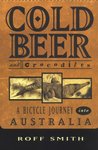
Cold Beer and Crocodiles

Cold Beer and Crocodiles: A Bicycle Journey into AustraliaCold Beer and Crocodiles: A Bicycle Journey into Australia by Roff Smith

My rating: 3 of 5 stars

I first met Roff Smith in Northwestern Australia, as he was in the middle of his bike trip around the continent. Not in person, of course. I read one of his National Geographic articles among some back issues shelved at my folks’ house. But I recently finished Bryson’s In a Sunburned Country, and Bryson was right: this was an incredible place that I needed to learn more about. I recalled Smith’s articles and wondered if they were collected into a book. A bit of searching, an interlibrary loan, and I was off.

Roff’s book documents his 10,000-mile biking odyssey around the perimeter of Australia. Departing from Sydney, he travels north up the coast and proceeds to bike across every Australian state (and one territory), including Tasmania. Smith’s prose is that of a reporter, documenting his travels and the places through which he passes. His account primarily focuses on the people though– from ranchers to campers to Catholic missionaries. He sees the land on a level that makes Bryson’s account seem penned by a funny fat man breezing through the country in a car. But Bryson is the better writer, and Smith (perhaps because he’s pedaling the better part of 100 miles each day) doesn’t spend the time going into the natural history and accounts of past explorers that make Bryson’s work such fascinating read. If you want an eye-level account of the aching emptiness of much of Western Australia though, as well as snapshots into the life of those who make such out-of-the-way places home, Smith’s account is a good place to start.

My only complaint (besides the terrible puns he uses as chapter headings) is that because the account we get of the landscape is tied to this single bicycle expedition, by the time he’s reached Southern Australia he’s tired and sick and pushing for home. I would have liked to have spent more time here. Also, there’s a laconic nature to the descriptions. There are lots of spots on his maps he breezes through, and the only picture we get of them is what he ate, drank, and the room he slept in. After nine months and 10,000 miles, I would liked to have read more.

Still though, I came away from this book with lots of other leads of classical accounts of travel in the Outback to check out, but the main thing I took away?

I need to get a bicycle like that.

Essays from the Edinburgh and Quarterly Reviews

Essays from the Edinburgh and Quarterly Reviews by John F.W. Herschel

My rating: 3 of 5 stars

Historians of Victorian science often speak about a common intellectual context that fragmented in the latter half of the nineteenth century. The growth of scientific disciplines, the specialization of fields, and the proliferation of specialized journals made it difficult to stay abreast of all developments in science or maintain a synthetic view of the entire field. What’s more, as science became professionalized, science writing moved to periodicals and publications written specifically for scientists. There arose a divide between science and popular writings or cultural criticism that largely remains to this day.

The Edinburgh and Quarterly Reviews represented what popular, high-brow literature looked like before these changes took place. In their glory days at the beginning of the nineteenth century, the Reviews were a place to discuss politics and culture– including science. This collection of essays and poems by John Herschel illustrates the place that science held in popular culture. Though largely forgotten today, Herschel was arguably the leading popular figure in science in the generation before Einstein. In these essays he discusses everything from Laplace’s celestial mechanics to Whewell’s philosophy of science to Quetelet’s statistics. What’s fascinating is the detailed (though largely non-mathematical) treatment he goes into for a “popular” audience. These essays, important for historians of Victorian society in general and astronomy in particular, are recommended reading (or, more likely, skimming) for anyone who is interested in the sort of treatment science was given in the Victorian period for the general, educated reader.

The Place of the Lion

The Place of the LionThe Place of the Lion by Charles Williams

My rating: 3 of 5 stars

Williams is an author in whose work the plot itself (at times obscure and even tedious) is second to the style in which it is written, which is in turn second to the ideas he wants to communicate. It’s the ideas that are rich. This is appropriate for a book about Platonic ideals breaking into the physical world. I read Williams for the first time years ago, after a return from Oxford and the realization that there was an Inkling of whom I had never heard. If you’ve read Lewis’s THAT HIDEOUS STRENGTH, you’ve some idea of what to expect. Philosophical fantasy in 1930s England. Returning to Williams now, after having some proper grounding in philosophical studies, I’m enjoying him much more. He is admittedly more dense and verbose than a Lewis or Tolkien. I still found myself rolling my eyes a bit as the novel reached its conclusion. But throughout there is also that bright strangeness one finds in the other Inklings, Gene Wolfe, sometimes in Borges, more boisterously in Chesterton, and more hilariously in Lafferty– the idea that the world is a terrifyingly good place. That is a world these writers live in, and they believe it to be the true world. I’d like to believe it too– or at least, act and write as though it were.

The Idea of a Christian College

The Idea of a Christian College: A Reexamination for Today's UniversityThe Idea of a Christian College: A Reexamination for Today’s University by Todd C. Ream

My rating: 2 of 5 stars

This book was not what I wanted it to be. That may be my own fault. When I read an interview with the authors, I was immediately interested. As someone who graduated from a Christian university, did graduate work at another Christian university, and will soon resume teaching at my alma mater, I believe an articulation of the idea and ideals of what is distinct about Christian higher education is much needed. From my experience, many students, many faculty, and even many (most?) administrators don’t have a cogent or cohesive understanding of what Christian education means. I made the assumption that this book would be written to academics to fill this need.

What it was instead was a freshman connections textbook. Maybe that’s okay. Many Christian colleges (mine included) have an “Intro to College” course that freshman take their first semester with a goal of introducing them to the philosophy and history of higher education in general and their own institution in particular. This book seems pretty clearly to have been written for such a course. Ream and Glanzer use scripture, history, and the words of scholars both historical and contemporary to argue that Christian education is unique in its (ideally) holistic approach with the goal of forming complete individuals who love God and love learning. This is, they claim, in contradistinction to secular universities in which learning has no true goal or telos beyond career preparation or the propagation of particular academic disciplines. They argue that against the fragmentation and individualistic ethos of the modern university, the Christian university has a distinct and separate mission with the classical understanding that all knowledge must hold together and find its completion in knowledge of God. They also briefly introduce students to the work of Christian scholars like Noll, Polkinghorne, and Hauerwas.

There wasn’t much I disagreed with in this book. Ream and Glanzer are consciously building on the work of Arthur Holmes, who is quoted throughout. I have not yet read Holmes’s 1987 study, but according to the authors that work focused on a Christian college in the traditional liberal arts sense: a place where knowledge is passed along but not where new knowledge is necessarily created. Because of the rise of Christian research universities in recent years, the authors believe it is time for Christian institutions to give more mind to the creation of knowledge and the conduct of research in a Christian context. Here they seem to be following the likes of Marsden and Noll in arguing for an evangelical life of the mind and love of learning. (Note: though the language is inclusive and we’re treated to a summary of the rise of medieval universities in a Catholic setting, the book is definitely written from an evangelical perspective.)

My major complaint with the book was its delivery. I had hoped it would be a good book for a faculty discussion group to provide an avenue into some of the key topics Ream and Glanzer emphasize: in particular, the challenge of holistic education in the face of pressures toward technical or vocational training. I quickly realized academics were not the intended audience. With the “college life” vignettes beginning each chapter and the concluding discussion questions, this is a freshman college text. A good one, maybe. I’d have to try it out with a class to be sure. But a challenging and insightful text for college faculty and administrators? Not so much.

Bone

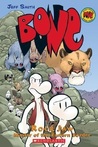
Bone, Vol. 5: Rock Jaw, Master of the Eastern Border (Bone, #5)Bone, Vol. 5: Rock Jaw, Master of the Eastern Border by Jeff Smith

My rating: 4 of 5 stars

It’s very hard not to like BONE. When people want to know a good place to start as far as graphic novels go, this is always near the top of my list. Especially if the person who is asking has kids or is a kid. Because besides being heart-warming, adorable, compelling, humorous, and well-drawn, BONE is also pretty wholesome. Imagine Mickey Mouse, Goofy, and Donald (or rather, Uncle Scrooge) stumbling upon an enchanted valley where they get mixed up with dragons, rat-creatures, a princess, prophecy, etc., etc. And to add to that level of surreality, throw in some lovable Bambi-esque woodland creatures. Our heroes fighting alongside, for example, some orphaned turtles, raccoons, talking bugs, and possum kids. Yet the drawing and the story-telling make this Disney-meets-Lord of the Rings schtick work. And work as more than schtick. This isn’t simply a fantasy epic drawn through the medium of a cartoon. It’s cartoon characters– with all the slapstick and mayhem that entails– actually entering into a fantasy epic as characters (and of some depth) in their own right.

I’ve read BONE up through Volume 8, though it was a while ago. Our kids have gotten into them now, so I’ve had the chance to re-read them again up to Volume 5, and I’ll take completion of this volume as a chance to review the entire series so far. The Bone cousins– Fone Bone, Phoney Bone, and Smiley Bone (the loosely Mickey, Uncle Scrooge, and Goofy analogues)– were chased out of Boneville after one of Phoney’s schemes to get rich backfired, and at the beginning of Vol. 1 they find themselves in a strange valley and thrust into the center of a conflict that involves everything from a lost kingdom to cow races to an invasion of an army of rat-creatures. Epic really is a fitting description of what Smith does with these volumes. It takes a few volumes of the story to even get a complete picture of the conflict the Bones have found themselves in.

It’s whimsical without being flippant. Smith’s artwork runs the gamut from suitably cartoonish (the minimalist Bone cousins are in some respects ‘toons boiled down to their essential properties) to subtle (as in some of Fone’s dream sequences or the sweeping panoramas of the valley we’re occasionally treated to). Originally black and white, the volumes have been colored, and having never read the black and white versions I can’t imagine them without it. The colors are vivid and bring an additional depth and drama to the artwork.

Smith’s work is somehow, absurdly, a nod to both cartoons along the lines of Ducktales at its best and your standard sword-and-sorcery epics. And perhaps even more absurdly, it works incredibly well. Every character– including Phoney– is likable. The story continues to build in complexity and raise the stakes but in a well-paced manner without throwing out a huge web of characters or inscrutable backstory. By volume 5 we learn that the girl Fone has fallen for is the lost heir of a kingdom, that a Sauron-like power has return to threaten peace in the valley, and that Phoney’s money-making schemes coupled with the townsfolk’s gullibility spell trouble. And that Smiley has adopted a rat-creature cub. Where it will go from here is anyone’s guess, but one thing is certain: Smith proves that there’s nothing at all flat about two-dimensional characters.

The Wind’s Twelve Quarters

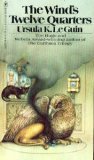
The Wind's Twelve QuartersThe Wind’s Twelve Quarters by Ursula K. Le Guin

My rating: 2 of 5 stars

Le Guin convinced me with the first two volumes of her Earthsea Cycle that she was worth classifying with Tolkien and Lewis as a writer whose fiction stabbed at the deep, bright heart of things. But while Tolkien and Lewis were not known for their short fiction, Le Guin’s first publications were short stories. The Wind’s Twelve Quarters is what Le Guin calls a retrospective sampling of the first decade of her short fiction, spanning 1964 to 1974. I don’t know Le Guin’s complete bibliography, but it’s clear this collection contains the seeds of many of the novels for which she would ultimately gain such recognition.

The collection shows a growing author playing in the wide fields of science fiction and fantasy. Some of the tropes, especially in the early stories, are almost painfully worn now, the plots predictable, but it’s hard to tell whether this was because Le Guin was young or because the field itself was young and what seems prosaic now was ground-breaking then. The language is always layered, lovely, and descriptive, but stories like “Semley’s Necklace,” with its relativistic twist, or “The Masters,” with its theme of forbidden science, have not aged well. There were others stories– “The Good Trip” and “A Trip to the Head”– that were largely inscrutable to me. And “The Word of Unbinding” and “The Rule of Names” set out some of the groundwork for the later Earthsea work but without the depth or beauty held by the full-fledged novels.

Yet the collection got better and better the further I read. “Winter’s King” finally convinced me of something I had long suspected– that I need to read The Left Hand of Darkness. “Vaster than Empires and More Slow” was a truly excellent story about forests and a planetary intelligence that I’ve been trying to write for years. “The Ones Who Walk Away from Omelas” shows Le Guin at her best as the poser of riddles based on magic and morality, and “The Stars Below” was my favorite story by far: the haunting tale of an astronomer in a skyless world, looking for the light below that he once saw above.

The thing I keep coming back to in Le Guin is this sense of light in the universe, never far from the surface in her work. “Beyond all imagination,” the astronomer says in “The Stars Below,” “in the outer darkness, there is light: a great glory of sunlight. . . . There is no place bereft of light, the comfort and radiance of the creator spirit. There is no place that is downcast, outlawed, forsaken. There is no place left dark. . . . There is light if we will see it.” My suspicion is that this belief informs much of Le Guin’s work. There is a huge strata of speculative fiction, far too much to wade through in a single lifetime, but there are certain authors in whose work veins of gold and brightness run thick, and I think Le Guin is one of these.

The Sun Kings

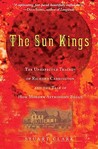
The Sun Kings: The Unexpected Tragedy of Richard Carrington and the Tale of How Modern Astronomy BeganThe Sun Kings: The Unexpected Tragedy of Richard Carrington and the Tale of How Modern Astronomy Began by Stuart Clark

My rating: 3 of 5 stars

I don’t get to read a lot of popularizations in the course of my research on nineteenth-century astronomy, so when this one came across my desk I was on the one hand excited about a change of pace (“captivating, fast-paced” says Dava Sobel on the cover) and on the other figuring I’d be skimming much of it and rolling my eyes a lot. I tend to do this with books that have long and overly-dramatic subtitles like “The Unexpected Tragedy of Richard Carrington and the Tale of How Modern Astronomy Began.”

I was half right. I did indeed do a lot of skimming, but I also did much less eye-rolling than I anticipated. Clark weaves a compelling tale, even if you don’t consider an understanding of the dynamic Earth-Sun relationship (think SOHO and Spaceweather.com) to be the beginning of modern astronomy. (I don’t.) The book is a bit less than the subtitle makes it out to be, as I’m still not  sure what Carrington’s “unexpected tragedy” was or how it relates to the scientific quest to understand the Sun’s interaction with the Earth, but it was a quite enjoyable romp through the world of Victorian astronomy.

Because it’s such an interesting place, Victorian astronomy, you almost can’t help to tell a compelling story if you go into it with some historical grounding and a flair for narrative. Clark treats one aspect of what was happening during this period: the development of solar astronomy. At the beginning of the 1800s, no one had any idea what the structure of the Sun was or how it generated its energy. One prevailing theory was that it was composed of a solid (and possibly inhabited!) core surrounded by a luminous atmosphere. Sunspots were rifts in this solar atmosphere. Clarke recounts how a series of dedicated astronomers– both professional and amateur– deduced a link between sunspots, the solar cycle, and effects on the Earth such as magnetic disturbances and auroral activity. Carrington is simply one of a cast that includes many important astronomers from this period, though Carrington’s drive and complex personal life, as well as his final demise (and this is likely the tragedy referred to in the subtitle, though seemingly unrelated to solar physics) make him an especially compelling figure.

Even if you’re not interested in the ins and outs of the interaction between the Sun and the Earth’s magnetic field or the advances in spectroscopy and photography that made the discoveries documented in this book possible, it’s the historical characters like Carrington who make studies in Victorian science so readable. Carrington was one of many amateur astronomers during this period who made their fortune in business (in Carrington’s case a brewery) and then used this wealth to build elaborate personal observatories where they could pursue astronomy as a hobby. Carrington devoted himself to solar astronomy and became a recognized authority on the subject. Besides him though, the pages are filled with other characters equally interesting: Airy, the Astronomer Royal and the story’s villain, storming about at Greenwich pursuing mathematical accuracy and largely dismissive of the new physical astronomy; de la Rue laboring in Spain to photograph the Sun’s atmosphere for the first time during a solar eclipse; Maunder taking up Carrington’s work after Carrington’s death and marrying the young mathematician hired to aid his calculations. Interesting characters pursuing interesting work. Maybe exaggerated or characatured just a bit, but they all come in and out of the story so quickly and in such succession that Clark can’t be blamed much for emphasizing their most interesting features.

It was an exciting time in astronomy, and Clark captures this. I’ll keep it on the shelf, because it would be ideal book report material for an undergraduate astronomy course. A historian will find Clark’s lack of careful documentation maddening and his rhetoric at times excessive or overblown, but a student (or reader) with a passing interest in the history of astronomy might find it a door to a truly remarkable period in history.