Category Archives: Stories

The Unborn God

KayborGate_AlexRies_coverC2_top
KayborGate_AlexRies_coverC2_bottom

I love to fly. When I get on a plane, I try to get the window seat, and then I spend a good portion of the flight with my nose pressed against the smudged glass studying the clouds. I took a weather course at some point, and I just read a book about the classification of clouds, but I can never remember all the different types or their physical explanations. They fascinate me though, especially the tumbling towers of cumulus that rear up and fall apart like temporary mountains. There’s an entire cartography up there that’s constantly changing and being re-written.

It was vistas like these I wanted to capture in a story I wrote called “The Wizard’s House” about a boy who lives under these skies and finds his way up into them. Then I wrote a sequel to that story called “The Unborn God” that talks about what the boy and the wizard have to do with their floating house. As these things sometimes work out, I sold the second story first, and it appeared in Beneath Ceaseless Skies (my fourth story in that publication) this week.

Give it a look. I had a lot of fun writing it. After you read my piece, check out the other stories in this issue (which is a special double-size issue in honor of it being BCS’s 150th). Richard Parks has a sharp tale of demonic imprisonment and lost opportunities. “The Black Waters of Lethe” by Oliver Buckram is a brief, haunting vision of oblivion. I haven’t had a chance to read Adam Callaway’s piece yet, but his story “Jonah’s Daughter,” which appeared alongside mine in the Sword and Laser anthology, was one of the best and most pleasingly bizarre in that collection.

The prequel to “The Unborn God,” “The Wizard’s House,” is forthcoming in Beneath Ceaseless Skies. It’s been a good summer for sales. I also have a story appearing soon in Daily Science Fiction entitled “What the Elfmaid Brought.” Lest you believe I’m getting too prolific though, here’s a list (in no particular order) of pieces I’m still trying to sell:

“Gold, Vine, and a Name”
“Flame is a Falling”
“The Gunsmith of Byzantium”
“Bone Orchard”
“When Cold Man Went to Hell”
“Drying Grass Moon”
“The Crow’s Word”
“Polycarp on the Sea”

Big news though, and more on which soon: I’ve signed a contract with Retrofit Films to write a novel based on a previously-published short story. The story (retitled and reworked a bit) will be released soon, and then the novel will be published as a series of three novelettes. I won’t say much about it now beyond that it’s a science fiction thriller we’re calling Dead Fleet.

In the meantime, you can read “The Unborn God” here.
Trees and Other Wonders

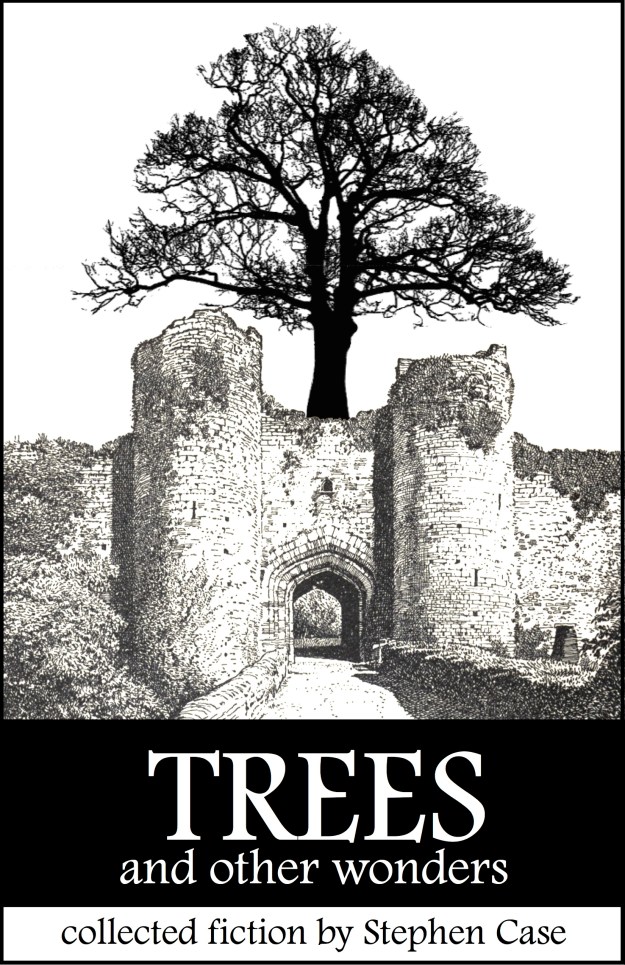
castle version

After I had published ten stories in various print and electronic magazines– at least one of which was published on another continent and many of which were quickly out of print– I figured I’d collect them all and try my hand at an anthology. Here they are. Ten of my published pieces from 2008 to 2013, along with two unpublished stories that I felt were worthy of inclusion. This was my experiment with electronic publishing. Currently the work is only available on Kindle, though Kindle as a platform can be downloaded for free on pretty much any operating system. A few people have asked me about getting a print copy. As of right now, I haven’t spent enough time on Createspace to get one worked up, and I haven’t been very pleased with the quality of the print-on-demand books I’ve seen. I did the cover myself and had fun creating an afterword explaining a bit about each piece. I haven’t gotten much feedback, though there are a few nice reviews on Amazon. The one print review I garnered was published in the Australian magazine Andromeda Spaceways Inflight Magazine. I thought it said some pretty nice things, which I’ve quoted below: “There’s a richness of the imagination here, a calmly-measured pace, a solidity. . . . There’s a vivid quality to his writing, and an underlying ability to evoke wonderment at the worlds or tableaux pictured within these pages. There are echoes, too, of a Golden-Age-anything-is-possible kind of sensibility to many of these stories. . . . Case has produced a collection in which almost every story reads like a fable, the moral of which is a secret the reader may hope to discover before the end. There’s an easy acceptance of the fantastical, a hint of the impossible.” I like that. If you’re interested, you can get a copy here.

Driving East

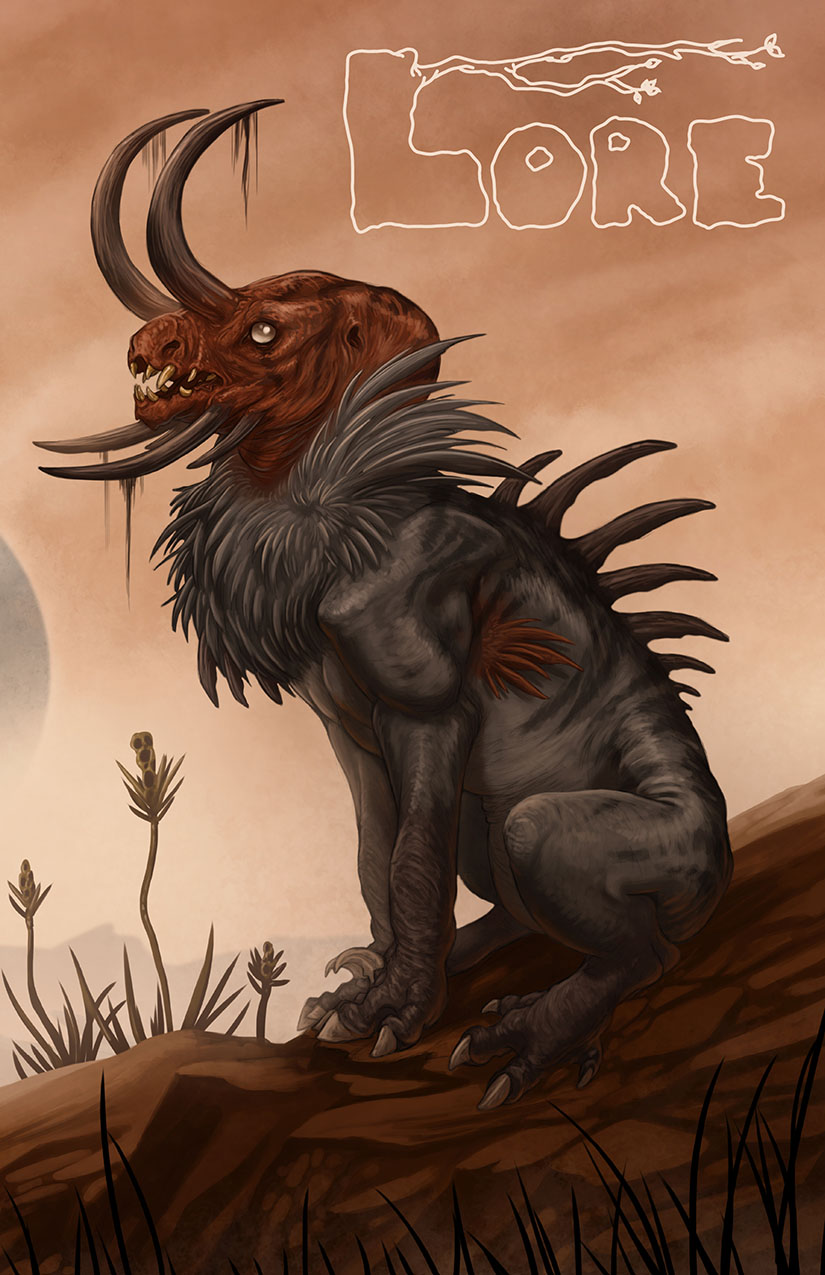
lore3cover

Well this is sort of a creepy guy, huh? He graced the cover of Lore, volume 2, issue 3, which was published back in April of 2013. Lore has an interesting flavor to it. It’s a sturdy, perfect-bound journal paying professional rates and publishing semi-regularly. The stories in it (or at least in this issue, I confess I have not read others) tend to be polished and subdued but also haunting and sometimes grotesque.

In this issue you’ll find a surrealist piece I wrote called “Driving East.” It’s about the commute I made weekly during the first couple years of graduate school. It’s also about (maybe) dying. I’d like to think the ending has something Wolfean to it, that it’s my attempt at his type of endings that are really just beginnings. It’s also the sort of story that makes my friends and family (the ones who read my work) pause and say slowly, “Well, that was interesting. But I didn’t really understand it.”

Neither did I. Sometimes they just need to be written.

To read “Driving East” you need to get your hands on a copy of this issue of Lore, which you can do here. You should do it. You’ll be supporting a smart magazine, and you’ll have that guy up there staring at you for a while.

Sword and Laser Anthology

Sword & Laser AnthologySword & Laser Anthology by Veronica Belmont

My rating: 4 of 5 stars

Please, judge this book by its cover. Because it is such a wicked cool one. And in this case, it’s a good indication of what you can find inside.

Sword and Laser is a “science fiction and fantasy-themed book club, video show, and podcast,” featuring Tom Merritt and Veronica Belmont, the editors of this anthology. The anthology itself consists of twenty stories split between “sword” (fantasy) and “laser” (science fiction). It is, as a good anthology should be, a hodgepodge, rough-and-tumble collection of stories with as many polished faces as jagged edges, sparking with ideas and a lot of raw enthusiasm. Its aim is showcasing new voices in the science fiction and fantasy community.

The enthusiasm is indeed palpable and refreshing. I suppose that’s what happens with a choir of fresh, new voices. Not every story is fantastic, but many are. And the beauty of an anthology is that each reader will likely differ about which stories to put within each category. If you’re a science fiction and fantasy fan, you’ll feel like you’re in a room with a bunch of friends. And they’re telling their best stories.

The ones that stood out to me were by writers who obviously know how the genre works and can have fun with it. In this vein “Partly Petrified” by Auston Habershaw, “The Same International Orange” by Luke R. Pebler, and “Honeybun” by Austin Malone were fine examples. “Honeybun” in particular I thought was a good representation of a lot of this anthology: potential. The bones of some excellent ideas that, perhaps catalyzed by inclusion in this anthology, could spiral out into something deeper and bigger. In this respect, the cover of this work is truer than perhaps anticipated: like the shelved world-bubbles in the image, there are a lot of seeds planted here.

There are glimmers of deeper waters as well. Perhaps because I’m in the midst of stitching together the bones of my own deep space endeavor, my sympathies in this anthology leaned toward the “laser” end of the book. The concepts in “Jonah’s Daughter” by Adam Callaway, “False Lights” by Victoria Hooper, and the very strong finish to the volume, David Emery’s “Only Darkness,” sounded the depths of the weirdness and the wonder that makes great science fiction shimmer.

Then there was my piece, “How Fox Fixed the Sky,” nestled in the final half of the “sword” section. It’s a fablesque epilogue to the story of Chicken Little. What if Chicken had been right and the sky was really falling? What if Fox made a knife from a fallen fragment of sky? What if he climbed through the hole to see what was beyond? I’m probably borrowing tone from Miyazaki, but Fox’s character was put to paper before I ever saw The Fantastic Mr. Fox (though if Miyazaki were to animate this story, Clooney would be a great voice for Fox). It’s surrealist and fun, maybe even a bit haunting, and if you pick up this book I hope you like the bit I contributed.

As far as I know, the anthology isn’t yet available for general purchase. I think it’s gone out to the contributors and the folks who backed Sword and Laser’s next season via Kickstarter. Check back here for updates though, because as soon as I know how you can get your hungry mitts on a copy (besides coming over here and borrowing mine), I’ll let you know.

UPDATE: Sword and Laser Anthology is available for purchase (electronic or traditional format) here. Buy a copy! Support fledgling writers and good science fiction! If you buy a paper copy I’ll promise not to drive its value down by trying to sign it.

The Stone Oaks

Beneath Ceaseless Skies, The Frost Valley

“The Stone Oaks” was my third publication in Beneath Ceaseless Skies (issue #112, in January of 2013). My wife is a huge Robin McKinley fan, and she (my wife) keeps pushing me to write stronger female characters into my stories (and, truth be told, if fiction is supposed to reflect life, and if my fiction is supposed to reflect my life, then– yes– my stories should be filled with very strong female characters).

So this story has one. I like Claire. I also like trees, nuns, and knights. I put them all together (with one additional element) in “The Stone Oaks.” The trees are exaggerated versions of actual trees that filled a park we used to go to in Mississippi. A friend recently asked me what the trees in this story symbolized. I had to think about that, but if forced I’d probably say something like, “They represent any time we’re given a job we don’t understand but try to do obediently and well. And they represent the unexpected fruit such labors may bring.”

I’m “working on” a follow-up to this piece, but I’m also working on a dissertation, so we’ll see.

You can read about Claire and her trees here.


Starlight, Her Sepulchre

Light_and_Shadow_in_the_Carina_Nebula_-_GPN-2000-000880

I wrote a scary story once. I was trying to write a Lovecraftian science fiction piece for an anthology called (wait for it) FutureLovecraft. But it wasn’t a very good story. It was an interesting idea with a weak ending. It got a lot of deserved rejections. Then I sent it to TMPublishing, a Christian publisher that is now (judging by its dead website) unfortunately defunct, for consideration in their Emerald Sky magazine. The editor there liked it enough to ask me to make it better, which I think I did.

That’s what good editors do: they make you look hard at your story and dig out the twist that was lying in wait the whole time. “This technology you introduce,” the editor told me, “it needs to have a more pivotal role in the resolution of the plot.” So I threw out the ending and tried again, and then the story bucked and kicked in my hands and I saw the twist. It involves tissue regeneration and memory downloads and– because it is, after all, Lovecraftian– ancient and horrifying evils from the dawn of time.

I like it, and, from the comments I’ve gotten, many of my (albeit few) readers have liked it as well. Space is dark and scary, and I think I’ve captured a bit of that here. You can read “Starlight, Her Sepulchre” here.

My Bicycle, 4500 A.D.

Print

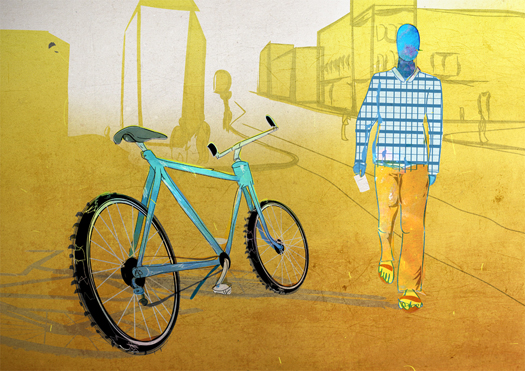
A couple summers ago my bicycle was stolen. It was my own fault. I left it unlocked outside my office. I had owned that bike since before I had a car, and I mourned its passing with this story, which involves time-travel and (a first for me) zombies. It appeared (with the lovely illustration above) in the Spring 2012 of AE: The Canadian Science Fiction Review.

You can read about my bicycle here.

Read this quickly, for you will only have a moment . . .

Beneath Ceaseless Skies, Marching Off

I’m left-handed. My father was left-handed. I have four kids (two of whom are twins), and none of them are left-handed.

I’m a little disappointed.

Being left-handed, I am also slightly ambidextrous almost by default. I have on occasion kept myself occupied during particularly long presentations or lectures by attempting to take notes in my right hand. This often devolves into mirror-writing, where I write a word backward with my right hand while writing it forward with my left.

Then sometimes I just get distracted by how words look backward. There’s something fascinating about seeing a familiar word reversed.

This is what was happening when the germ for this story, “Read this quickly, for you will only have a moment . . .,” was planted. It was my second sale to Beneath Ceaseless Skies, back in November of 2011, and the first (and so far only) of my stories that has been made into a podcast.

It’s about words and names. It’s also about a woman who can kill with them, a castle drenched in rain and silence, crows, and a love letter.

You can read it (quickly) here.

The Story of the Ship that Brought Us Here

51cover_229_317

This was my second honest-to-goodness-physical-magazine sale, again semi-pro and this time in an overseas market. Andromeda Spaceways Inflight Magazine is (from what I understand) a leading science fiction magazine in Australia. It is certainly a quality rag that, like Shimmer, takes seriously putting together a professional publication with lovely covers and illustrations, thick and perfect-bound.

They’re also great because they published a review of my anthology, of which more anon. (I have a secret desire to become a huge hit in the Australian speculative fiction world so I have an excuse to travel there and sign books and explore. My Australian career hasn’t quite taken off yet.)

“The Story of the Ship that Brought Us Here” was published in issue 51 of Andromeda Spaceways, back in June of 2011. (You can still purchase the issue here.) It was my first story that featured an illustration, which meant that an artist actually had to read it and then depict what my brain was imaging when I wrote words. That is sort of fascinating for me. I think the artist did a pretty good job, even though I imagined the Princess with fewer tendrils.

Science fantasy is a sub genre in which technology is so far developed that it seems like magic and in which authors spend more time playing with the effects (often largely aesthetic) of such technologies than puzzling out how they might actually work or their implications. That’s what I do in “The Story of the Ship,” which is basically a fairy tale set in space. There’s a hero and a Princess and a planetary intelligence and a three-bodied prince and gem-encrusted ribbonships.

You should buy the magazine and read it.

Barstone

Shimmer13Cover_small

“Barstone” was my first publication in an honest-to-goodness real print magazine, back in April 2011. The kind with actual physical paper that you can pick up and thumb through and then put on a shelf. And not a crappy cheapsie magazine either that looks like it was run off on a Xerox and stapled together in someone’s basement. No, a real high-quality perfect-bound magazine with a glossy cover and sharp, crisp pages.

At the time of publication Shimmer was a semi-pro magazine, but they’ve since begun paying professional rates. They’re a great market for urban fantasy or surrealist pieces with a melancholy tone and a literary flavor. Which is why “Barstone” fit nicely. It’s a surrealist piece about a giant or a hill or a giant who became a hill or something. A love story about conservation of momentum, loosely based on an actual three-legged dog and a park in Mississippi. The word “Barstone” popped into my head one night as I was falling asleep, and then I tried to build a story around him.

Unfortunately, this is the first story of mine that’s also behind a paywall. I guess it’s not perfectly inexpensive to publish nice, glossy magazines of good stories and pay authors for contributing. If you want to read “Barstone” (and some other fine stories) you can come over to my house and borrow my contributor’s copy. Or you can purchase Issue 13 of Shimmer here. You’ll be supporting good art, good people, and a good publication.