Tag Archives: fantasy

Rice Boy

354

About a month ago, the website io9 ran a very dangerous story. It was a list along with short descriptions of 17 completed science fiction and fantasy web comics. I spent some time perusing it, knowing that they represented at least 17 potential worlds to fall into but that I couldn’t read them all. Their description of Evan Dahm’s Rice Boy as “fantasy word-building with a heavy dose of the surreal” caught me though, so I gave it a shot. I was not disappointed.

I have a few favorite web comics (Hark a Vagrant and David Troupe’s Buttercup Festival top my list), but reading a full-on graphic novel in a web medium was a new experience for me. I can see the appeal that such a form has for the creator and the freedom it affords. Ideally it allows an artist more creative freedom, without editors or publishers. It also seems a fairly smart business model: build a following by allowing people to read it for free, and then offer hard-copy version for sale. (This is the same model used by online services from WordPress to Spotify: those who pay the premium fees, along with advertisers, subsidize the cost that allows it to be free for everyone else.) As the io9 article indicates, there are a lot of talented individuals out there building graphical worlds along these lines.

Dahm’s Rice Boy is colorful and surreal. It follows the travels of the machine man The One Electronic (T-O-E), an agent of God looking to find the fulfiller of an ancient prophecy, and Rice Boy, a small, meek, polite, uh, thing, who may or may not be said fulfiller. Like any classical fantasy-quest story, there is lots of running around to lots of different ancient and magical realms. Interesting characters are met, words of magic are spoken, enemies gather, and the prophecy is fulfilled, though of course not in the way you expect. If that all sounds like fairly standard fantasy fare, it is. Indeed, the running hither and yon as Rice Boy slowly learns more about the history of Overside (the world in which the tale is set) and his own past gets a bit tedious, especially as Rice Boy himself seems to lack all agency until the very final chapter of the work.

What saves Dahm’s work though, indeed what makes it quite wonderful, is that this fairly standard fantasy trope is told through completely enchanting visuals. Imagine a fantasy epic set in the various vistas of Dr. Seuss’s Oh the Places You’ll Go or Oh the Thinks You Can Think and you have a starting point. Dahm’s world is vibrant, and it’s easy to set aside you frustration as Rice Boy is sent off to meet yet another mysterious figure in yet another distant land, because every place he visits is beautiful and singularly new. Really, Seuss’s worlds are the closest thing I can compare this to, though in Dahm’s work the whimsy of Seuss is supplemented by eerie loneliness and haunting vastness. This isn’t a place to rhyme about whether or not the sneetch has a star on its chest; this is a place to fight the Bleach Beast and venture into the foreboding desert of Skorch.

If the landscapes lack a Seussian whimsy, Dahm finds it again in his characters. Besides the innocence of Rice Boy himself (who reminds me randomly enough of the main character of Troupe’s Buttercup Festival), this land is filled with creatures who both in their friendliness and cuddliness might have tumbled off of an Ugly Dolls display. That’s not to say there are no villains. We have creepy black assassins and a frog army as well as some monsters, but Dahm’s bright colors and clear drawing style seem more suited for squishy friend than scaly foe.

Rice Boy is Dahm’s first complete tale set in his world of Overside, and on his website you can find another complete epic (this one in black and white) as well as his current, uncompleted project. And this is the real danger or gift of online web comics. Once you venture down that rabbit hole and realize how many talented folks there are out there continually creating worlds, where does it end?

It doesn’t, I suppose, and that’s kind of the point.

The Land Across

The Land AcrossThe Land Across by Gene Wolfe

My rating: 3 of 5 stars

Gene Wolfe won my undying devotion by being the author of the books that pushed me across the borderland from science fiction and fantasy to literature. (There’s no hard and fast border between the two. It’s a spectrum, but when you start reading Wolfe you realized you’ve definitely wandered– or plunged– into the literary side of this spectrum.) The Fifth Head of Cerberus, Peace, and all of the Sun books are enough to cement his reputation, and they remain among my all-time favorite books. Yet the man is still writing, and I’m still obligingly reading everything that comes from his pen or whatever word-processing software he uses. The Land Across, a standardly (for Wolfe) unclassifiable novel that straddles the boundary between crime mystery, international espionage thriller, and supernatural fantasy, is his latest.

I’ll be honest, some of his most recent stand-alone novels seem like they could be a bit inaccessible to someone not familiar with Wolfe and his tricks. I come to them with a predisposition to love the writing and the writer. Even so, I left An Evil Guest with a confused frown and The Sorcerer’s House with a wry sigh. I closed The Land Across with a perplexed grin. It was nowhere near (to me) as impenetrable as Castleview (for which I lack the Arthurian key). Of all Wolfe’s novels, the one of which it reminded me the most was There Are Doors, but with the soft alienness of a foreign country instead of a parallel dimension. (I also recall Doors as having lots of conversations in cafes, as does Land.)

On the surface, the plot is not straightforward at all. In fact, it’s bewilderingly complex. The main character, Grafton, wants to write a travel book about an unnamed and difficult-to-reach Eastern European country. While traveling there by train he gets picked up by the border patrol and arrested as a possible spy. Under a loose sort of house arrest, he agrees to rent a (probably) haunted house in which there is reputed to be treasure. He gets kidnapped by an underground revolutionary movement and eventually arrested again by the country’s secret police. When his cell-mate escapes, the secret police enlist Grafton to help track the man down. The escapee seems to know some magic, and a secret society of Satanists gets involved. Mysteries are solved. Long conversations are held in cafes. Women (who, married or not, seem to throw themselves at the narrator) are obligingly slept with. Grafton gets awarded a medal by the country’s dictator. Then he goes back to see if he can find the treasure in the haunted house.

If all that seems rather random and scattered, it is. But the genius of Wolfe’s writing is the way he makes it all seem natural. There are aspects of the supernatural and the surreal, but as with most of Wolfe’s writing these aspects are subtle and the bones of the story are the people and the conversations they have. Wolfe is the only writer I know who can create what seems like an action-packed novel but where most of the action is actually taking place in conversations over cafe tables. He is a master of relaying dialogue the way it actually occurs in conversations. People talk like real people in Wolfe’s novels, with all the logical leaps and half-understood or misunderstood transfers of information that this normally entails. The challenge is that Wolfe doesn’t put you in the narrator’s head, so you’re required to make the leaps and conclusions on your own. The narrator might throw you a clue, but for the most part he assumes you can keep up.

I was left, as I so often am after reading Wolfe, with the feeling that there was a lot more going on in the novel than I figured out. Even though, as far as Wolfe novels go, there was a fair degree of closure. There are lingering puzzles: the jarring and dream-like way in which Grafton was first taken off the train at the beginning of the novel, the unnamed lady he meets a few times and then exits the narrative with, and finally the ghostly figure of the Leader himself (as well as Vlad the Impaler) that haunts Grafton throughout the story. But these aren’t large enough or central enough that their mystery detracts from feeling as though I’ve understood the story at all. (Though, with Wolfe, you can’t get away from the feeling that he’s laughing at you because the real story, the secret story taking place in the sewers beneath or the back alleys behind the narrative hinges on solving these lingering mysteries.)

Wolfe’s novels should be read multiple times, ideally immediately after having finished it for the first time. But I am still a bit of a lazy reader, so I was pleased The Land Across did not immediately draw me into a story of tangential pathways and dizzying divergences like Abel’s quest in the Wizard Knight books. Indeed, once Grafton fell in with the secret police, the “case” of solving where his escaped cellmate was and finding the identity of the head of the secret Satanist cult formed a more or less consistent thread on which the novel rested. And this thread was, at least superficially, resolved.

Phantastes

PhantastesPhantastes by George MacDonald

My rating: 4 of 5 stars

Lots of thoughts on this book. It’s not great fantasy. The plot meanders, leaves things unfulfilled and under-explained or simply unfinished. A man wanders into the land of Faerie and then wanders out again. The language at times is eye-rollingly bad. But it’s also easy to see the gems, the bits of wonder and humility, that so effected C. S. Lewis. Consider what MacDonald writes near the end, as an analogy of love for Christ:

“This . . . is a true man. I will serve him, and give him all worship, seeing in him the embodiment of what I would fain become. If I cannot be noble myself, I will yet be servant to his nobleness.”

Or later, about love:

“I knew now, that it is by loving, and not by being loved, that one can come nearest the soul of another . . . All true love will, one day, behold its own image in the eyes of the beloved, and be humbly glad.”

Here the bits that  “baptized” the imagination of Lewis, as well as the universalism that apparently got MacDonald in trouble as a minister. The conclusion of the narrator’s wanderings in Faerie, the moral for him, is given at the end:

“May the world be brighter for me, at least in those portions of it, where my darkness falls not. Thus I, who set out to find my Ideal, came back rejoicing that I had lost my Shadow.”

And the final farewell, reminiscent of Wolfe’s “good fishing” line at the end of the Short Sun books:

“A great good is coming– is coming– is coming to thee, Anodos . . . Yet I know that good is coming to me– that good is always coming; though few have at all times the simplicity and the courage to believe it.”

The Place of the Lion

The Place of the LionThe Place of the Lion by Charles Williams

My rating: 3 of 5 stars

Williams is an author in whose work the plot itself (at times obscure and even tedious) is second to the style in which it is written, which is in turn second to the ideas he wants to communicate. It’s the ideas that are rich. This is appropriate for a book about Platonic ideals breaking into the physical world. I read Williams for the first time years ago, after a return from Oxford and the realization that there was an Inkling of whom I had never heard. If you’ve read Lewis’s THAT HIDEOUS STRENGTH, you’ve some idea of what to expect. Philosophical fantasy in 1930s England. Returning to Williams now, after having some proper grounding in philosophical studies, I’m enjoying him much more. He is admittedly more dense and verbose than a Lewis or Tolkien. I still found myself rolling my eyes a bit as the novel reached its conclusion. But throughout there is also that bright strangeness one finds in the other Inklings, Gene Wolfe, sometimes in Borges, more boisterously in Chesterton, and more hilariously in Lafferty– the idea that the world is a terrifyingly good place. That is a world these writers live in, and they believe it to be the true world. I’d like to believe it too– or at least, act and write as though it were.

Read this quickly, for you will only have a moment . . .

Beneath Ceaseless Skies, Marching Off

I’m left-handed. My father was left-handed. I have four kids (two of whom are twins), and none of them are left-handed.

I’m a little disappointed.

Being left-handed, I am also slightly ambidextrous almost by default. I have on occasion kept myself occupied during particularly long presentations or lectures by attempting to take notes in my right hand. This often devolves into mirror-writing, where I write a word backward with my right hand while writing it forward with my left.

Then sometimes I just get distracted by how words look backward. There’s something fascinating about seeing a familiar word reversed.

This is what was happening when the germ for this story, “Read this quickly, for you will only have a moment . . .,” was planted. It was my second sale to Beneath Ceaseless Skies, back in November of 2011, and the first (and so far only) of my stories that has been made into a podcast.

It’s about words and names. It’s also about a woman who can kill with them, a castle drenched in rain and silence, crows, and a love letter.

You can read it (quickly) here.

Bone

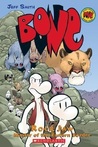
Bone, Vol. 5: Rock Jaw, Master of the Eastern Border (Bone, #5)Bone, Vol. 5: Rock Jaw, Master of the Eastern Border by Jeff Smith

My rating: 4 of 5 stars

It’s very hard not to like BONE. When people want to know a good place to start as far as graphic novels go, this is always near the top of my list. Especially if the person who is asking has kids or is a kid. Because besides being heart-warming, adorable, compelling, humorous, and well-drawn, BONE is also pretty wholesome. Imagine Mickey Mouse, Goofy, and Donald (or rather, Uncle Scrooge) stumbling upon an enchanted valley where they get mixed up with dragons, rat-creatures, a princess, prophecy, etc., etc. And to add to that level of surreality, throw in some lovable Bambi-esque woodland creatures. Our heroes fighting alongside, for example, some orphaned turtles, raccoons, talking bugs, and possum kids. Yet the drawing and the story-telling make this Disney-meets-Lord of the Rings schtick work. And work as more than schtick. This isn’t simply a fantasy epic drawn through the medium of a cartoon. It’s cartoon characters– with all the slapstick and mayhem that entails– actually entering into a fantasy epic as characters (and of some depth) in their own right.

I’ve read BONE up through Volume 8, though it was a while ago. Our kids have gotten into them now, so I’ve had the chance to re-read them again up to Volume 5, and I’ll take completion of this volume as a chance to review the entire series so far. The Bone cousins– Fone Bone, Phoney Bone, and Smiley Bone (the loosely Mickey, Uncle Scrooge, and Goofy analogues)– were chased out of Boneville after one of Phoney’s schemes to get rich backfired, and at the beginning of Vol. 1 they find themselves in a strange valley and thrust into the center of a conflict that involves everything from a lost kingdom to cow races to an invasion of an army of rat-creatures. Epic really is a fitting description of what Smith does with these volumes. It takes a few volumes of the story to even get a complete picture of the conflict the Bones have found themselves in.

It’s whimsical without being flippant. Smith’s artwork runs the gamut from suitably cartoonish (the minimalist Bone cousins are in some respects ‘toons boiled down to their essential properties) to subtle (as in some of Fone’s dream sequences or the sweeping panoramas of the valley we’re occasionally treated to). Originally black and white, the volumes have been colored, and having never read the black and white versions I can’t imagine them without it. The colors are vivid and bring an additional depth and drama to the artwork.

Smith’s work is somehow, absurdly, a nod to both cartoons along the lines of Ducktales at its best and your standard sword-and-sorcery epics. And perhaps even more absurdly, it works incredibly well. Every character– including Phoney– is likable. The story continues to build in complexity and raise the stakes but in a well-paced manner without throwing out a huge web of characters or inscrutable backstory. By volume 5 we learn that the girl Fone has fallen for is the lost heir of a kingdom, that a Sauron-like power has return to threaten peace in the valley, and that Phoney’s money-making schemes coupled with the townsfolk’s gullibility spell trouble. And that Smiley has adopted a rat-creature cub. Where it will go from here is anyone’s guess, but one thing is certain: Smith proves that there’s nothing at all flat about two-dimensional characters.

The Wind’s Twelve Quarters

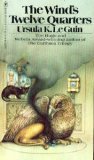
The Wind's Twelve QuartersThe Wind’s Twelve Quarters by Ursula K. Le Guin

My rating: 2 of 5 stars

Le Guin convinced me with the first two volumes of her Earthsea Cycle that she was worth classifying with Tolkien and Lewis as a writer whose fiction stabbed at the deep, bright heart of things. But while Tolkien and Lewis were not known for their short fiction, Le Guin’s first publications were short stories. The Wind’s Twelve Quarters is what Le Guin calls a retrospective sampling of the first decade of her short fiction, spanning 1964 to 1974. I don’t know Le Guin’s complete bibliography, but it’s clear this collection contains the seeds of many of the novels for which she would ultimately gain such recognition.

The collection shows a growing author playing in the wide fields of science fiction and fantasy. Some of the tropes, especially in the early stories, are almost painfully worn now, the plots predictable, but it’s hard to tell whether this was because Le Guin was young or because the field itself was young and what seems prosaic now was ground-breaking then. The language is always layered, lovely, and descriptive, but stories like “Semley’s Necklace,” with its relativistic twist, or “The Masters,” with its theme of forbidden science, have not aged well. There were others stories– “The Good Trip” and “A Trip to the Head”– that were largely inscrutable to me. And “The Word of Unbinding” and “The Rule of Names” set out some of the groundwork for the later Earthsea work but without the depth or beauty held by the full-fledged novels.

Yet the collection got better and better the further I read. “Winter’s King” finally convinced me of something I had long suspected– that I need to read The Left Hand of Darkness. “Vaster than Empires and More Slow” was a truly excellent story about forests and a planetary intelligence that I’ve been trying to write for years. “The Ones Who Walk Away from Omelas” shows Le Guin at her best as the poser of riddles based on magic and morality, and “The Stars Below” was my favorite story by far: the haunting tale of an astronomer in a skyless world, looking for the light below that he once saw above.

The thing I keep coming back to in Le Guin is this sense of light in the universe, never far from the surface in her work. “Beyond all imagination,” the astronomer says in “The Stars Below,” “in the outer darkness, there is light: a great glory of sunlight. . . . There is no place bereft of light, the comfort and radiance of the creator spirit. There is no place that is downcast, outlawed, forsaken. There is no place left dark. . . . There is light if we will see it.” My suspicion is that this belief informs much of Le Guin’s work. There is a huge strata of speculative fiction, far too much to wade through in a single lifetime, but there are certain authors in whose work veins of gold and brightness run thick, and I think Le Guin is one of these.

Barstone

Shimmer13Cover_small

“Barstone” was my first publication in an honest-to-goodness real print magazine, back in April 2011. The kind with actual physical paper that you can pick up and thumb through and then put on a shelf. And not a crappy cheapsie magazine either that looks like it was run off on a Xerox and stapled together in someone’s basement. No, a real high-quality perfect-bound magazine with a glossy cover and sharp, crisp pages.

At the time of publication Shimmer was a semi-pro magazine, but they’ve since begun paying professional rates. They’re a great market for urban fantasy or surrealist pieces with a melancholy tone and a literary flavor. Which is why “Barstone” fit nicely. It’s a surrealist piece about a giant or a hill or a giant who became a hill or something. A love story about conservation of momentum, loosely based on an actual three-legged dog and a park in Mississippi. The word “Barstone” popped into my head one night as I was falling asleep, and then I tried to build a story around him.

Unfortunately, this is the first story of mine that’s also behind a paywall. I guess it’s not perfectly inexpensive to publish nice, glossy magazines of good stories and pay authors for contributing. If you want to read “Barstone” (and some other fine stories) you can come over to my house and borrow my contributor’s copy. Or you can purchase Issue 13 of Shimmer here. You’ll be supporting good art, good people, and a good publication.

Earthsea vol. 1 and 2

A Wizard of Earthsea (Earthsea Cycle, #1)A Wizard of Earthsea by Ursula K. Le Guin

My rating: 4 of 5 stars

The blurb on the book said Le Guin was to be ranked among Lewis and Tolkien, which was probably why the tattered paperback had survived through so many shelf purges even though I had never yet read it. I finally did, and I think the blurb was correct. There’s a richness, a thickness to the prose coupled with a simplicity in the telling. It’s a simple story, lacking the complexities and mechanics of much of contemporary fantasy, but it’s better for it. It’s about growing up, friendship, learning wisdom, learning to take responsibility for one’s choices. It is also about magic and the wonder of a new world. I think the magic here might be one of the most compelling aspects, because again, it’s simple and somehow true without a bunch of trappings. Magic is about knowing things, about naming things truly. That seems right. I read it, and I should have read it when I was twelve, so I immediately passed it along to a bright twelve-year-old I know.

The Tombs of Atuan (Earthsea Cycle, #2)The Tombs of Atuan by Ursula K. Le Guin

My rating: 3 of 5 stars

Do you remember the scene in The Horse and His Boy where Shasta has to spend the night at the tombs outside the city of Tashbaan and how creepy it was and how Lewis never really explained the tombs but you knew they were old and foreboding and had entire dark stories of their own? The Tombs of Atuan, the setting for the second book of the Earthsea trilogy of the same title, have that same feel, but we as readers spend the greater portion of the book exploring their secrets. The book focuses on Arha, the Eaten One, the high (and only) priestess of the Nameless Ones who live in the Tombs. Taken from her family at a young age, the only life she knows is that of service to these gods almost forgotten by all outside the desert shrine that houses the Tombs.

The book starts slowly. Coming on the heels of the first volume, it almost lost me in the first two chapters. The main character of the previous novel, Ged, does not make his appearance until almost halfway through the book. But soon the mystery of the tombs themselves makes itself felt, and you’re drawn into Arha’s world and the Gormenghast-like rituals of the tombs and the labyrinth beneath. When Ged finally does show up, the sense of incongruity he represents as a foreigner and stranger to this dark world is effective and dramatic. From there, the plot unfolds quickly (though somewhat predictably).

Where was LeGuin when I was a kid looking for “Christian” fantasy? According to Family Christian Stores, this genre extended to pretty much Lewis, Stephen R. Lawhead, and Frank Peretti. Why wasn’t LeGuin there, bringing some literary depth to these shelves? If the theme of the previous volume, A Wizard of Earthsea, was growing into wisdom and true friendship, this one is redemption. Consider what Ged tells Arha upon leaving the Tombs: “You were the vessel of evil. The evil is poured out. It is done. It is buried in its own tomb. You were never made for cruelty and darkness; you were made to hold light, as a lamp burning holds and gives its light.”

Highly recommended, especially if you know a young person looking for some quality fantasy that speaks wisdom and goodness without beating you over the head with an explicitly Christian metaphor or allusion every other page.

What I Wrote for Andronicus

eeaa06b4bca210b2c8235d754b2c8023

This may be my favorite story I’ve written so far. Much of my work is a love song to trees, and that’s evident in this piece. It’s about the afterlife too, a concept I like to play with in fiction. (I also like it because I was able to work in one of my favorite Chesterton quotes.)

If you only ever read one of my pieces, I think I would want it to be this one.

“What I Wrote for Andronicus” appeared in Ideomancer back in 2010. Ideomancer is a sharp, shiny online magazine that pays semipro rates, which according to Duotrope means between 1  and 4.9 cents per word. (Ideomancer currently pays 3 cents per word with a maximum payment of $40 per story.)

You can read “What I Wrote for Andronicus” here.